Oslo Accords: The Framework and Legacy of the Israeli-Palestinian Peace Process
The Oslo Accords represent a pivotal attempt to resolve the Israeli-Palestinian conflict through a series of bilateral negotiations. These agreements, consisting of Oslo I and Oslo II, established a framework for Palestinian self-governance and a path toward a permanent peace treaty based on United Nations Security Council Resolutions 242 and 338.
The process began with secret negotiations in Oslo, Norway, which broke a long-standing diplomatic deadlock. For the first time, the Palestine Liberation Organization (PLO) recognized the state of Israel, and Israel recognized the PLO as the legitimate representative of the Palestinian people and a partner in negotiations.
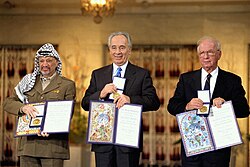
Key Facts
- Oslo I: Signed on September 13, 1993, in Washington, D.C.
- Oslo II: Signed in 1995 in Taba, Egypt.
- Core Goal: To create an interim period of self-government leading to a final peace settlement within five years.
- Key Figures: Yitzhak Rabin (Israeli PM), Yasser Arafat (PLO Leader), and facilitated by Norway.
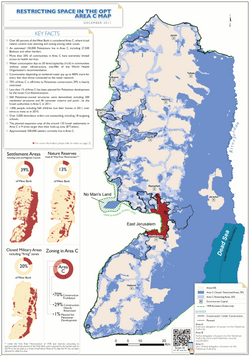
- Territorial Division: The West Bank was divided into Areas A, B, and C to manage security and administration.
Historical Background and Evolution
The Oslo Accords drew inspiration from the 1978 Camp David Accords, which had envisioned autonomy for the local inhabitants of the West Bank and Gaza. However, while Camp David focused on a broader regional peace involving Egypt and Jordan, the Oslo process was a direct bilateral effort between Israel and the PLO.
Prior to these accords, Israel had viewed the PLO as a terrorist organization and refused direct contact, preferring to negotiate with other regional powers or local representatives. The shift to direct negotiations marked a fundamental change in the diplomatic landscape of the Middle East.
The Structure of the Peace Plan
The accords were designed as interim agreements, meaning they were not intended to be the final solution but rather a bridge to a permanent status agreement. This transitional period was meant to last five years, ending on May 4, 1999.
The Transitional Period
During this phase, the Palestinian Interim Self-Government Authority and the Palestinian Legislative Council were established. The goal was to manage daily governance while permanent status negotiations—covering the most contentious remaining issues—were conducted.
Security and Coordination
A critical component of the accords was security coordination between Israel and the Palestinian Authority (PA). While this cooperation fluctuated—ceasing during the second Intifada and again in May 2020—it was often praised by security agencies for preventing terrorism. By early 2016, the IDF reported that Palestinian security forces were responsible for approximately 40% of terrorism suspect arrests in the West Bank.
Territorial Administration and Oslo II
The Oslo II Accord further detailed the administrative division of the West Bank, fragmenting it into different zones of control. This system created numerous enclaves and limited Palestinian access to roughly 60% of the West Bank.
Summary of the Oslo Process Agreements
| Agreement | Year | Primary Focus |
|---|---|---|
| Oslo I (Declaration of Principles) | 1993 | Mutual recognition and establishment of interim self-government. |
| Oslo II (Interim Agreement) | 1995 | Division of West Bank into Areas A, B, and C; troop redeployment. |
| Wye River Memorandum | 1998 | Renewal of security coordination and further redeployments. |
| Sharm el-Sheikh Memorandum | 1999 | Addressing implementation gaps at the end of the interim period. |
Challenges and Aftermath
The peace process faced severe opposition from extremists on both sides. Shortly after the Declaration of Principles, the Cave of the Patriarchs massacre occurred, followed by a series of suicide bombings by Hamas intended to derail the negotiations.
Furthermore, the expansion of Israeli settlements continued despite the accords' stipulation that neither side should change the status of the West Bank and Gaza. The Jewish population in these areas grew from 115,700 in 1993 to 203,000 by 2000. This expansion, along with the imposition of comprehensive closures that restricted the movement of people and goods, is widely cited as a primary obstacle to achieving a final peace treaty.
Frequently Asked Questions
What was the main purpose of the Oslo Accords?
The main purpose was to establish a framework for Palestinian self-governance in the West Bank and Gaza Strip and to create a five-year interim period that would lead to a permanent peace treaty between Israel and the PLO.
Who were the primary mediators of the agreements?
Norway served as the primary facilitator, providing the secret location for negotiations and political cover, while the United States played a prominent role in the formal signing ceremonies.
What happened to the "permanent status" negotiations?
The interim period ended on May 4, 1999, but a final permanent settlement was never reached due to ongoing conflicts, settlement expansion, and security failures.
How did the accords change the status of the PLO?
The accords led to the mutual recognition of the two parties: the PLO recognized Israel's right to exist, and Israel recognized the PLO as the representative of the Palestinian people.
What were Areas A, B, and C?
These were administrative divisions of the West Bank created under Oslo II. Area A was under full Palestinian control, Area B was under joint Palestinian and Israeli control, and Area C remained under full Israeli control.