Orthodox Judaism: History, Evolution, and Global Demographics
Orthodox Judaism represents the continuation of traditional Jewish practice and belief, emphasizing the divine origin of the Hebrew Bible and the binding nature of Halakha (Jewish law). While often perceived as a static tradition, the self-aware movement known as "Orthodoxy" actually emerged as a response to the challenges of modernity and the rise of progressive movements in the 18th and 19th centuries.
Originally, the term "Orthodox" was not used by traditionalists themselves; it was borrowed from German Enlightenment discourse to describe those who opposed the era's secularizing trends. Many traditionalists preferred the term gesetztreu (Torah-true), viewing "Orthodox" as a Christian-derived label. However, by the 1920s, the term became widely accepted across Europe and the Americas to denote those adhering to traditional Jewish law and custom.
Key Facts
- Global Population: Approximately 2 million practicing and 4-5 million affiliated members.
- Core Beliefs: Adherence to the Hebrew Bible and the binding authority of Halakha.
- Primary Languages: Hebrew and Yiddish.
- Major Hubs: Israel, the United States, and the United Kingdom.
- Growth Drivers: High birth rates, particularly within Haredi communities, and low rates of intermarriage.
The Emergence of Modern Orthodoxy
The Hamburg Temple Dispute
Historians generally trace the birth of Orthodox Judaism to the Hamburg Temple dispute (1818–1821). The founding of the Hamburg Temple sought to modernize rituals to appeal to acculturated Jews, introducing a revised prayer book that omitted petitions for the Messiah and the renewal of sacrifices. This doctrinal breach, combined with the use of an organ on the Sabbath, alarmed traditionalists. In response, rabbis across Europe united to ban these practices, marking the transition from a general traditional lifestyle to a self-aware conservative ideology.
The Struggle Against Modernity in Germany and Hungary
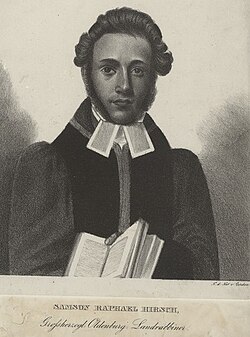
In Germany, the movement split between those who sought a total break from liberal communities and those who remained within them. Rabbi Samson Raphael Hirsch advocated for secession, urging Orthodox Jews to form independent congregations to avoid the influence of Reform Judaism. Conversely, many others remained "Communal Orthodox," believing that staying within the larger community was essential for maintaining Jewish unity.
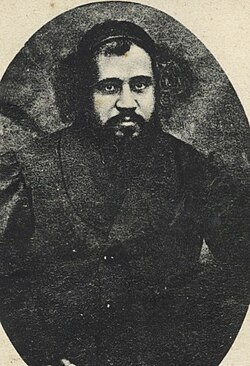
The schism was even more radical in Hungary. In 1869, fearing the dominance of the Neologs (progressive Jews), the Orthodox seceded from the General Jewish Congress. This led to the government recognizing a separate Orthodox national committee in 1871, creating a formal institutional divide between the two groups.
Regional Developments
Eastern Europe
In Eastern Europe, traditionalism remained the norm longer than in the West. However, the October Revolution and subsequent secularization in Russia and Poland forced traditionalists to adapt. By the 1930s, only about 20% to 33% of Polish Jews were strictly observant. During this era, the long-standing conflict between Hasidim (mystical traditionalists) and Misnagdim (rationalist opponents of Hasidism) largely subsided, with the latter often referred to as "Litvaks."
The United States
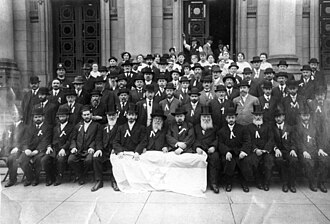
Nineteenth-century American Jewry was characterized by voluntary congregations rather than corporate communities. Early conservative elements rallied around Isaac Leeser, who introduced the term "Orthodox" to the U.S. in 1845 to oppose the rapid spread of Reform Judaism. By 1902, the Union of Orthodox Rabbis was formed to oppose acculturation and the use of English in sermons. Later, institutions like RIETS (Rabbinical College of the Jewish Theological Seminary) evolved into Modern Orthodox centers, balancing traditional law with modern rabbinic training.
Demographics and Diversity
Orthodox Judaism is a diverse spectrum ranging from the Haredim (ultra-Orthodox), who maintain a strict separation from secular society, to Modern Orthodox and Religious Zionists, who integrate traditional observance with contemporary professional and civic life.
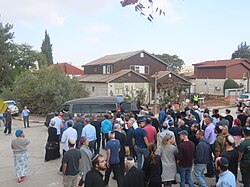
Demographically, the Orthodox community is growing rapidly due to high birth rates—averaging six children per household in some Haredi sectors. While some disaffiliation occurs among youth, projections suggest that Orthodox Jews may numerically dominate British Jewry by 2031 and American Jewry by 2058.
| Region | Estimated Population | Notes |
|---|---|---|
| Israel | 1M (Strict) – 2.2M (Identifying) | Includes Haredim and Datiim |
| United States | ~500,000 | Concentrated in NY and NJ |
| United Kingdom | ~150,000 | High percentage of synagogue affiliation |
| Belgium | ~13,000 | Significant local community |
Frequently Asked Questions
What is the difference between Haredi and Modern Orthodox Jews?
Haredi Jews generally seek to minimize influence from the secular world and adhere to a very strict interpretation of Halakha. Modern Orthodox Jews seek to integrate traditional Jewish law with participation in modern society, including secular education and professional careers.
When did the term "Orthodox" first appear?
The term first appeared in the Berlinische Monatsschrift in 1795, borrowed from German Enlightenment discourse to describe those who opposed the Enlightenment's influence on Judaism.
Why is the Hamburg Temple dispute significant?
It is considered the starting point of Orthodox Judaism because it triggered a concerted backlash against Reform movements, leading traditionalists to develop a self-aware, organized ideology to defend traditional practice.
How is the Orthodox population growing?
Growth is primarily driven by high birth rates within Haredi communities and a very low rate of intermarriage with members of other faiths.
What are "Litvaks"?
Litvaks are traditionalist Jews from Lithuania (the Misnagdim) who historically opposed the Hasidic movement, though this distinction has become less antagonistic over time.