Order of the British Empire
The Most Excellent Order of the British Empire is a prestigious order of chivalry established in 1917 by King George V. Designed to recognize prominent national or regional achievements, it fills critical gaps in the British honours system by rewarding a broader range of service than previous orders, which were largely reserved for high-ranking royals, statesmen, and senior military commanders.
Today, the Order remains active, with King Charles III serving as the Sovereign and Queen Camilla as the Grand Master. It is awarded across various fields, including the arts, science, health, education, and community service.
Key Facts
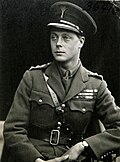
- Established: 1917 by King George V.
- Motto: "For God and the Empire".
- Sovereign: King Charles III.
- Grand Master: Queen Camilla.
- Scope: Awarded by the Monarch of the Commonwealth Realms.
- Membership: Over 100,000 living members worldwide.
The Hierarchy of Grades
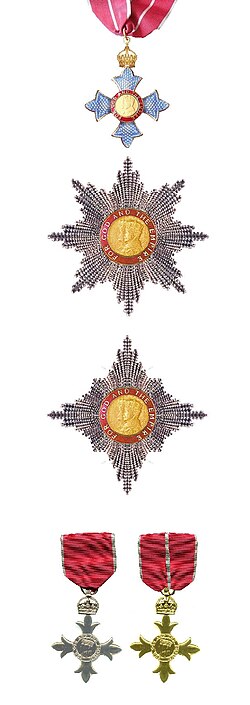
The Order is structured into six distinct classes of appointment. While the lower grades have no strict limit on total membership, the higher ranks are strictly capped to maintain their prestige.
- Knight Grand Cross or Dame Grand Cross (GBE): The highest rank, limited to 300 members.
- Knight Commander or Dame Commander (KBE or DBE): Limited to 845 members.
- Commander (CBE): Limited to 8,960 members.
- Officer (OBE): No total limit, but annual appointments are capped at 858.
- Member (MBE): No total limit, but annual appointments are capped at 1,464.
- British Empire Medal (BEM): A medal associated with the order.
Historical Evolution
When King George V founded the Order, he sought to create a system that could honor a wider variety of people than the Order of the Garter or the Order of the Bath. Over time, the Order expanded its reach and refined its criteria.
Gallantry and Meritorious Service
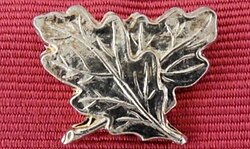
In 1922, a distinction was made for the Medal of the Order between "gallantry" (marked by laurel leaves) and "meritorious service" (marked by oak leaves). The gallantry award became known as the Empire Gallantry Medal (EGM) in 1933. However, in 1940, the EGM was ceased, and holders were encouraged to exchange it for the more prestigious George Cross.
The meritorious service medal was renamed the British Empire Medal (BEM) in 1941. Until 1974, the BEM was also used for bravery that did not warrant a George Cross or George Medal, eventually being replaced by the Queen's Gallantry Medal.
Design Changes and Insignia
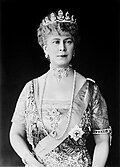
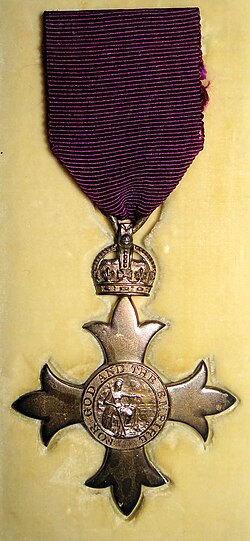
The insignia underwent a significant redesign in 1937 to commemorate the reign of King George V and Queen Mary. The central figure of Britannia was replaced by the crowned heads of the late King and Queen. Additionally, the riband (the ribbon from which the badge hangs) was changed from purple to rose-pink with pearl-grey edges.
Commonwealth and International Reach
Originally, recommendations were made by UK ministers or various British offices (Foreign, Colonial, India, and Dominions). By the early 1940s, overseas dominions like Canada and South Africa began making their own nominations.
As Commonwealth nations gained independence and established their own honours systems, the use of the Order of the British Empire declined in some regions. For example, Canada's last recommendation was in 1966, and Australia ceased recommendations by 1992. However, several realms continue to use the Order today.
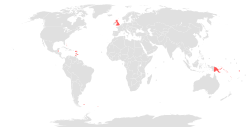
Current Participating Realms (2025–2026)
Governments that still make recommendations for the Order include Antigua and Barbuda, The Bahamas, Belize, Cook Islands, Grenada, Papua New Guinea, Saint Christopher and Nevis, Saint Vincent and the Grenadines, Saint Lucia, Solomon Islands, and Tuvalu.
Insignia and Symbols
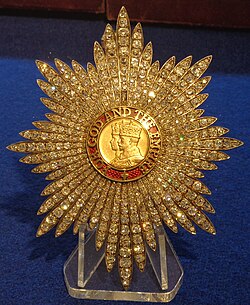
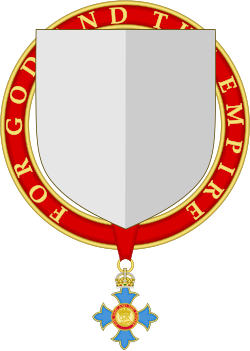
The physical markers of the Order vary by rank and division (Civil or Military). Knights and Dames Grand Cross wear a broad riband or sash from the right shoulder to the left hip, along with a bejeweled breast star.
Knights Commander and male Commanders wear their badge from a ribbon around the neck. Male Officers and Members wear the badge on the left chest, while female recipients (unless in military uniform) typically wear it from a bow on the left shoulder.
The Order's Chapel
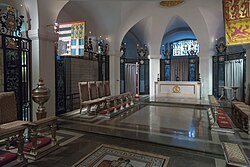
Since 1960, the Order has had a dedicated chapel located within the crypt of St Paul's Cathedral in London, which serves as the official church of the Order.
Summary of the Order's Structure
| Grade | Post-nominal | Membership Limit | Primary Insignia |
|---|---|---|---|
| Knight/Dame Grand Cross | GBE | 300 | Sash, Star, Mantle, and Collar |
| Knight/Dame Commander | KBE/DBE | 845 | Neck ribbon (men) / Bow (women), Star |
| Commander | CBE | 8,960 | Neck ribbon (men) / Bow (women) |
| Officer | OBE | Annual cap (858) | Chest ribbon (men) / Bow (women) |
| Member | MBE | Annual cap (1,464) | Chest ribbon (men) / Bow (women) |
Notable Recipients and Refusals
While many accept the honour, some have declined it for personal or political reasons. The author C. S. Lewis declined an honour in 1951 to avoid political associations. Members of The Beatles were appointed Members (MBE) in 1965; however, John Lennon returned his insignia in 1969 as part of his peace protests.
Frequently Asked Questions
What is the difference between the Civil and Military divisions?
The primary difference is reflected in the insignia. The military division's riband includes a vertical pearl-grey stripe in the centre, whereas the civil division's riband does not.
Who is the current Grand Master of the Order?
The current Grand Master is Queen Camilla, who took office on April 23, 2024.
Can the Order be awarded posthumously?
The gallantry awards associated with the Order (specifically those using the silver oak leaf emblem) could not be awarded posthumously.
What does the motto "For God and the Empire" signify?
It is the official motto of the Order, reflecting the values and the imperial context of the British Empire at the time of the Order's founding in 1917.
How is the BEM different from the MBE?
The MBE (Member of the Order of the British Empire) is a class of appointment within the Order itself, while the BEM (British Empire Medal) is a medal associated with the Order, often awarded for meritorious service.