OPEC: The Evolution and Influence of the Global Oil Cartel
The Organization of the Petroleum Exporting Countries, commonly known as OPEC, is an intergovernmental organization and international cartel that coordinates petroleum policies among its member nations. Established to stabilize oil markets and ensure a steady income for producing countries, OPEC has remained a central pillar of global energy diplomacy for over six decades.
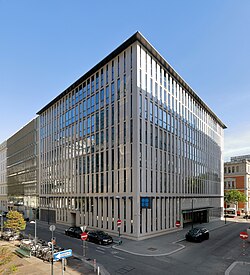
Headquartered in Vienna, Austria, the organization operates in English and is currently led by Secretary General Haitham al-Ghais. By managing production levels, OPEC attempts to influence the global price of crude oil, a commodity that serves as the lifeblood of the modern industrial economy.
Key Facts
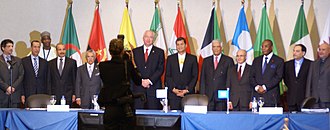
- Founded: September 14, 1960, in Baghdad, Iraq.
- Purpose: To coordinate and unify petroleum policies of member nations.
- Current Membership: 11 member states, with an expanded alliance known as OPEC+.
- Key Influence: Ability to impact global oil prices through production quotas and cuts.
- Headquarters: Vienna, Austria.
The History and Impact of OPEC
Founding and Early Expansion (1960–1975)
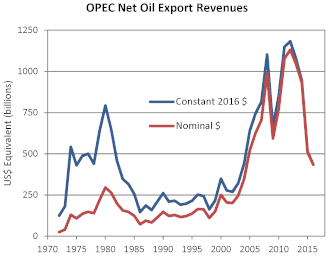
OPEC was born out of frustration among oil-exporting nations regarding the pricing policies of major oil companies. It officially came into effect in January 1961. The organization gained global notoriety during the 1973–1974 oil embargo, a period where oil was used as a political tool, leading to severe fuel shortages in Western nations.
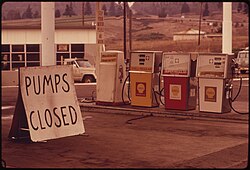
The embargo caused widespread economic disruption, characterized by long lines at gasoline stations and a sudden spike in heating costs for households.

Volatility and Market Shifts (1975–2011)
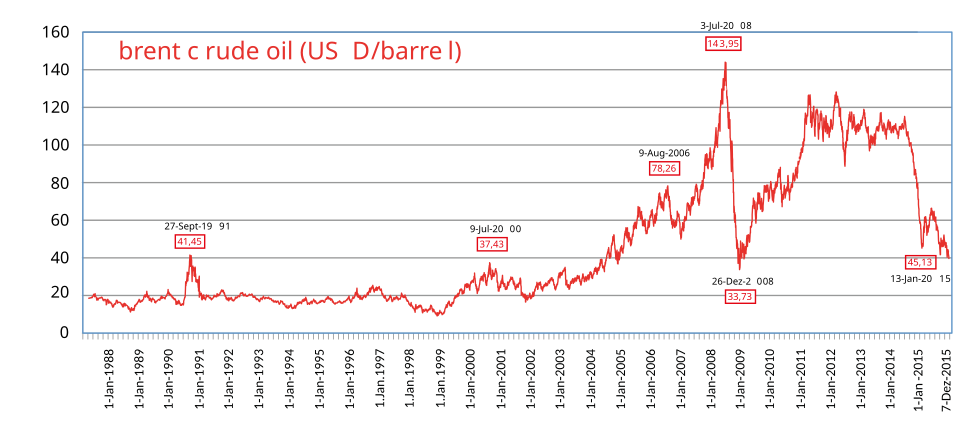
Following the initial price surges, the organization established the OPEC Fund for International Development to manage aid activities. However, the following decades were marked by extreme volatility. The late 1970s saw another oil crisis, followed by an "oil glut" in the 1980s where supply far exceeded demand, crashing prices.
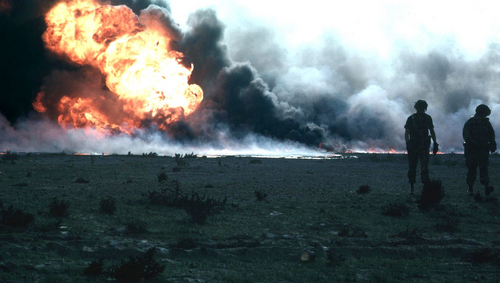
The 1990s and early 2000s brought further disruptions, including the 1991 Kuwaiti oil fires during the Gulf War and various production disputes among members.
The Modern Era: Shale Oil and OPEC+ (2014–Present)
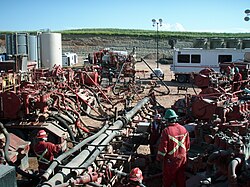
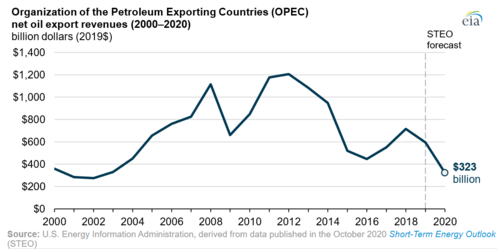
The rise of shale fracking—a technique used to extract oil from shale rock—particularly in the United States, presented a significant challenge to OPEC's market share. This led to a period of price wars and production cuts to maintain price floors.
In 2017, OPEC expanded its influence by forming OPEC+, a coalition that includes non-member allies such as Russia. This alliance allows for broader coordination of production cuts to stabilize the global market during crises, such as the 2020 price war and the subsequent global energy crisis of 2021–2023.
![UAE's President Mohamed bin Zayed Al Nahyan with Russian president Vladimir Putin, days after OPEC+ cut oil production, 11 October 2022[168]](/images/fd/04/fd046e00d1981441d0ce75cc56e6d8b86be2b8f7d3c7b9b06c51fe350ab12e86.jpg)
Membership and Structure
OPEC consists of 11 core member states, though membership has fluctuated over time. The organization also works with observers and the OPEC+ partners to manage global supply.
| Category | Member Countries |
|---|---|
| OPEC Members | Algeria, Republic of the Congo, Equatorial Guinea, Gabon, Iran, Iraq, Kuwait, Libya, Nigeria, Saudi Arabia, Venezuela |
| OPEC+ Allies | Azerbaijan, Bahrain, Brazil, Brunei, Kazakhstan, Malaysia, Mexico, Oman, Russia, South Sudan, Sudan |
Market Information and Benchmarks
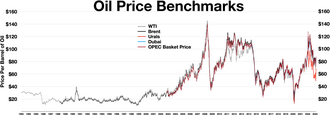
OPEC provides critical research and data through the OPEC Basket Price, a weighted average of the prices of crude oils produced by member countries. This serves as a key benchmark for the industry, alongside other markers like Brent crude.
The organization also monitors spare capacity—the volume of production that can be brought online quickly to respond to supply disruptions—to ensure global energy security.
Frequently Asked Questions
What is the difference between OPEC and OPEC+?
OPEC is the original intergovernmental organization of 11 member states. OPEC+ is an expanded alliance that includes OPEC members plus several non-OPEC oil-producing nations, most notably Russia, to coordinate production levels on a larger scale.
How does OPEC influence oil prices?
OPEC influences prices by setting production quotas. By reducing the amount of oil pumped (production cuts), they can create a shortage that drives prices up; conversely, increasing production can lower prices.
What is the OPEC Basket Price?
The OPEC Basket Price is a benchmark price calculated as a weighted average of the crude oil prices from all OPEC member countries, reflecting the average value of the oil the organization produces.
Why did the 1973 oil embargo happen?
The embargo was a political move by Arab members of OPEC to use oil as a weapon, leading to a sharp increase in prices and fuel shortages in countries that supported Israel during the conflict.
How has US shale oil affected OPEC?
The development of shale fracking in the US increased the global supply of oil independently of OPEC's control, reducing OPEC's ability to dictate prices and forcing the organization to form the OPEC+ alliance to regain market stability.