Old Korean: The Ancient Language of the Silla Kingdom
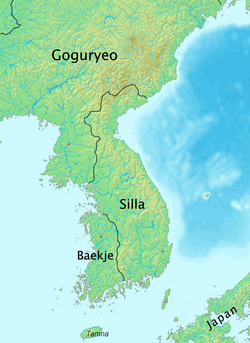
Old Korean refers to the ancient Koreanic language spoken during the Silla state, spanning from 57 BCE to 936 CE. While it is most prominently documented during the Unified Silla period (668–936 CE), it represents a critical evolutionary stage in the Koreanic language family. It is distinct from Proto-Koreanic, which is the hypothetical ancestor of all Koreanic languages reconstructed by linguists, whereas Old Korean is a historically attested language.
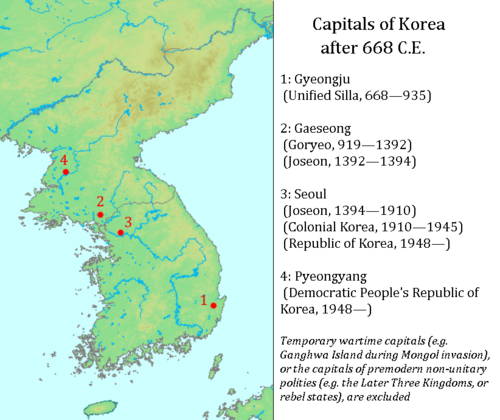
The transition from Old Korean to Middle Korean is estimated to have occurred between the tenth and thirteenth centuries, marking a significant shift in the peninsula's linguistic landscape.
Key Facts
- Era: Primarily associated with the Silla state (57 BCE – 936 CE).
- Language Family: Koreanic.
- Writing Systems: Utilized adapted Chinese scripts known as Idu, Hyangchal, and Gugyeol.
- Primary Sources: Epigraphic inscriptions, wooden slips (mokgan), and Hyangga poetry.
- Evolution: Developed into Middle Korean by the 10th to 13th century.
Sources of the Old Korean Language
Because a native alphabet did not exist during this era, Old Korean was recorded using various adaptations of Classical Chinese characters. These sources provide the primary evidence for reconstructing the language's phonology and grammar.
Epigraphic and Mokgan Sources
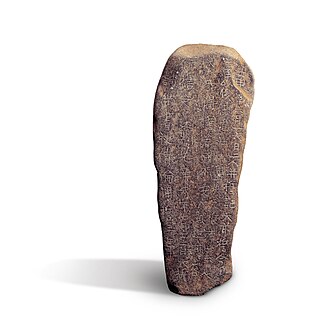
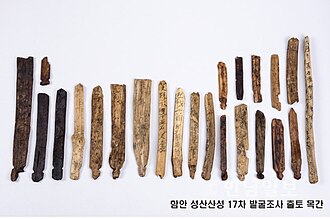
Epigraphic sources include stone inscriptions, such as the Imsin Vow Stone, which showcase early syntax. Additionally, mokgan (wooden slips) have provided invaluable glimpses into daily administrative and personal communication. For example, slips from Haman reveal reconstructed phrases regarding travel and emotional states of the people.
Hyangga and Textual Literature
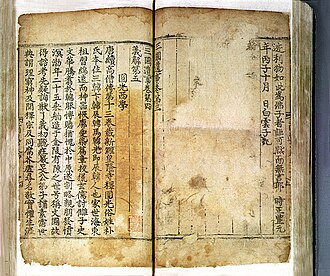
Hyangga are indigenous songs or poems of the Silla period. Most surviving examples are preserved in the Samguk yusa. These texts often used Hyangchal, a system that used Chinese characters both for their meaning (logograms) and their sound (phonograms) to represent native Korean words.
Buddhist Texts and Census Registers
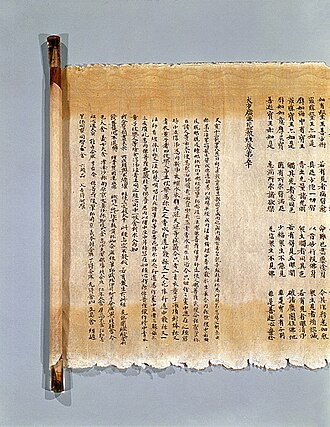
Old Korean elements are also found in glosses (explanatory notes) added to Classical Chinese Buddhist texts, such as the Avatamsaka Sutra. Furthermore, Silla census registers discovered at Tōdai-ji in Japan provide evidence of place names and administrative terminology from the 7th to 9th centuries.
Orthography and Writing Systems
The Silla people developed sophisticated methods to adapt Chinese characters to the Korean language. They employed four primary strategies to record their speech:
- Logograms: Using a character for its original meaning (e.g., using 國 for "country").
- Phonograms: Using a character solely for its sound to represent a Korean syllable.
- Syllabic Adaptation: Using characters to represent specific sounds in native words.
- Compound Ideograms: Creating new characters by combining existing ones (e.g., combining "big" and "bean" to create a logogram for "bean").
The following table summarizes how specific Old Korean words were represented using these strategies:
| English Meaning | Old Korean Text | Logogram | Phonogram | Modern Cognate |
|---|---|---|---|---|
| Night | 夜音 | 夜 | 音 | bam |
| Road | 道尸 | 道 | 尸 | gil |
| Fortress | 城叱 | 城 | 叱 | gat |
| Thousand | 千隱 | 千 | 隱 | cumu n |
Phonology and Grammar
Consonants and Vowels
The consonant system of Old Korean included nasals (m, n, ŋ), stops and affricates (plain, aspirated, and voiced), and liquids (l~ɾ). Linguists have noted a complex relationship between Middle Chinese phonemes and their Old Sino-Korean reflexes, particularly regarding aspirated consonants like /kʰ/ and /pʰ/.
Grammatical Structure
Old Korean utilized a system of case markers to define the role of nouns in a sentence. Key markers included:
- Nominative: -i (伊/是)
- Genitive: -ʌj or -s (衣/矣, 叱)
- Accusative: -(u)r (乙)
- Dative: -aj/-ej or -hʌj/-ahʌj (中, 良中)
- Instrumental: -ro ~ -ʌro (留)
Additionally, the language employed specific markers for topics (隱), additives (置), and honorifics (賜), reflecting a social hierarchy already embedded in the language.
Frequently Asked Questions
What is the difference between Old Korean and Proto-Koreanic?
Proto-Koreanic is a hypothetical, reconstructed ancestor of all Koreanic languages. Old Korean, however, is the historically attested language specifically associated with the Silla state and its records.
How was Old Korean written before the invention of Hangul?
Old Korean was written using adapted Chinese scripts. The most notable systems were Idu, Hyangchal, and Gugyeol, which used Chinese characters for both their meanings and their sounds to approximate Korean speech.
What are mokgan and why are they important?
Mokgan are wooden slips used for writing. They are crucial because they provide non-literary, everyday examples of Old Korean, such as administrative records and personal messages, which differ from formal poetry or religious texts.
When did Old Korean evolve into Middle Korean?
The transition is generally believed to have occurred between the 10th and 13th centuries, following the decline of the Unified Silla period.
What are Hyangga?
Hyangga are native songs or poems from the Silla period. They are among the most important literary sources for studying Old Korean because they were written in Hyangchal, allowing linguists to reconstruct ancient vocabulary and syntax.