Oeta and Ypati: A Journey Through Greek Mythology and History
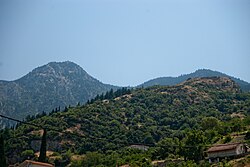
The region of Oeta and the town of Ypati stand as enduring witnesses to the intersection of myth and reality. From the legendary death of a demi-god to the strategic battles of the Middle Ages and the daring sabotage of World War II, this landscape has been a focal point of Greek identity and resilience for millennia.
The Mythological Legacy of Mount Oeta
In Greek mythology, Mount Oeta is most famous as the site of the death of Heracles. Roman authors held this connection in such high regard that they bestowed upon the demi-god the epithet Oetaeus. According to legend, Heracles ascended the mountain to build a funeral pyre. He entrusted his bow and arrows to Philoctetes before lying upon the pile, covered by his lion's skin with his head resting on his club, and commanding Philoctetes to ignite the flames.
An alternative version of the myth suggests that Zeus struck the site with a lightning bolt, an event that gave birth to the Gorgopotamos river. Today, visitors can still find the remains of a 3rd-century BC Doric temple (a classical Greek architectural style characterized by sturdy, plain columns) dedicated to Heracles and his funeral pyre, known as the Pyra Herakleous. Located near the village of Pavliani at an altitude of 1,800 meters at the entrance of the Katavothra plateau, this complex, along with an altar and surrounding ruins, remained in use until the late Roman period.
Ancient Settlements and Local Lore
Historically, Oeta served as the southernmost district of southern Thessaly, known as Oetaea. While some accounts mention a city called Oeta founded by Amphissus (the son of Apollo and Dryope) on Malian territory, historians believe this likely refers to the broader Oetaean League rather than a specific city.
Further north lay Hypate (also known as Hypata), the primary city of the Aenianes and a member of the Aetolian League. Modern-day Ypati occupies this ancient site. In antiquity, the women of Hypate were famously associated with witchcraft; specifically, the sorceresses Mycale and Agaonice, known as the Pharmacidae, were said to live there. This tradition of the occult persisted in local folklore, with the precipice of Anemotrypa later rumored to be the haunt of a crone named Lyousa Armagou.
From the Byzantine Era to Ottoman Conquest
The city of Hypate continued to be significant into the 6th century. The historian Procopius of Caesarea recorded that Emperor Justinian I ordered repairs to its walls, and the city is also noted in the Synecdemus. Following Slavic invasions in the 7th century, the city may have been abandoned, only to reappear in the 10th century under the names Neai Patrai ("New Patras") or Patrai Helladikai.
Between the 10th and 13th centuries, the city functioned primarily as an ecclesiastical center. It served as a metropolitan bishopric, growing from one suffragan (a subordinate bishop) in the 10th century to twelve by the 12th century.
The Rise and Fall of Neopatras
By the late 13th century, the city regained political prominence as the capital for the independent Greek rulers of Thessaly: John I Doukas, Constantine Doukas, and John II Doukas. However, in 1319, the Catalan Company seized Neopatras and large portions of southern Thessaly and Phthiotis. This led to the creation of the Duchy of Neopatras, which operated as a vassal to the Duchy of Athens.
The Duchy of Neopatras remained one of the final Catalan strongholds in Greece until it fell to the Ottoman Turks in 1394. Other notable structures from this era include the fortress town of Siderokastron on the eastern slopes of Oeta and the Agathonos Monastery, which dates back at least to the 15th century.
The Modern Era and the Greek Resistance
In the 20th century, the rugged terrain of Oeta once again became a strategic asset. During World War II, the region was a vital hub for the Greek Resistance against Axis occupation. On November 25, 1942, a joint operation between British saboteurs and Greek Resistance forces successfully destroyed the Gorgopotamos viaduct. This action is remembered as one of the most significant sabotage operations in occupied Europe.
Key Facts
- Mythological Site: Mount Oeta is the legendary location of Heracles' funeral pyre.
- Ancient Ruins: A 3rd-century BC Doric temple remains near Pavliani at 1,800m elevation.
- Historical Evolution: Hypate evolved into Neopatras, serving as a capital for Greek rulers and later a Catalan Duchy.
- WWII Significance: The Gorgopotamos viaduct was destroyed here in 1942 by Greek and British forces.
- Religious Heritage: The Agathonos Monastery dates back to at least the 15th century.
| Period | Key Entity/Event | Significance |
|---|---|---|
| Antiquity | Heracles' Pyre | Mythological site of the demi-god's death |
| Antiquity | Hypate | Chief city of the Aenianes; associated with the Pharmacidae |
| 6th Century | Emperor Justinian I | Repaired the walls of Hypate |
| 13th-14th Century | Duchy of Neopatras | Catalan rule until the Ottoman conquest in 1394 |
| 1942 | Gorgopotamos Sabotage | Major WWII Resistance action against Axis forces |
Frequently Asked Questions
What is the significance of Mount Oeta in mythology?
Mount Oeta is primarily celebrated as the place where Heracles died on a funeral pyre. Some myths also claim the Gorgopotamos river was created when Zeus struck the site with a lightning bolt.
What can be seen today at the Katavothra plateau?
Visitors can find the ruins of a 3rd-century BC Doric temple dedicated to Heracles, his funeral pyre, an altar, and other adjacent buildings near the village of Pavliani.
Who were the Pharmacidae?
The Pharmacidae were sorceresses, specifically Mycale and Agaonice, who lived in the area of Hypate during antiquity and were associated with witchcraft.
What was the Duchy of Neopatras?
The Duchy of Neopatras was a state formed by the Catalan Company after they seized Neopatras and parts of southern Thessaly in 1319. It was a vassal of the Duchy of Athens until 1394.
Why is the Gorgopotamos viaduct historically important?
The viaduct was the target of a spectacular sabotage operation on November 25, 1942, carried out by British saboteurs and Greek Resistance forces during World War II.