Nuthatches: Diversity, Behavior, and Habitat of the Sittidae Family
Nuthatches are a specialized group of small woodland birds belonging to the family Sittidae. Known for their agility and unique ability to climb trees, these birds are found across various temperate regions of the world. While they share some similarities with other songbirds, they are distinct from the Sittella (family Neosittidae) and are categorized under the genus Sitta.
From the dense forests of North America to the highlands of Asia and the woodlands of Europe, nuthatches have adapted to a wide range of environments. Their physical diversity is striking, with sizes ranging from the diminutive pygmy nuthatch to the significantly larger giant nuthatch.
Key Facts
- Taxonomy: All species belong to the family Sittidae and the genus Sitta.
- Size Range: Lengths vary from approximately 100 mm (pygmy nuthatch) to 195 mm (giant nuthatch).
- Weight Range: Weights range from about 10 g to a maximum of 55 g (Eastern rock nuthatch subspecies S. t. dresseri).
- Distribution: Primarily temperate climates, though the velvet-fronted nuthatch prefers tropical lowland forests.
- Lifespan: Average wild lifespan is between 2 and 3.5 years, with some individuals reaching 10 years.
Species Diversity and Physical Characteristics
The genus Sitta encompasses a wide array of species, each adapted to specific geographic niches. The giant nuthatch is the largest, reaching 195 mm in length and weighing up to 47 g. In contrast, the pygmy nuthatch and brown-headed nuthatch are among the smallest, both measuring around 100 mm and weighing roughly 10 g.
While length is a common metric, mass varies independently; for instance, the Eastern rock nuthatch subspecies Sitta tephronota dresseri is the heaviest of all nuthatches, weighing between 42.7 and 55 g.
Global Distribution of Notable Species
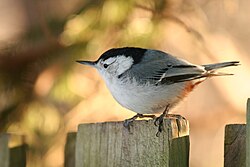
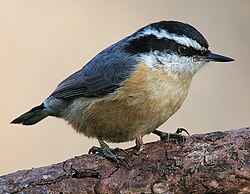
Nuthatches are distributed across several continents. In North America, the white-breasted nuthatch is common, while the red-breasted nuthatch is found in western and northern temperate zones. Eurasia is home to the Eurasian nuthatch, which has a massive population of approximately 10 million birds. Asia hosts a high diversity of species, including the blue nuthatch in Malaysia and Sumatra, and the yellow-billed nuthatch in Vietnam.
Habitat and Environmental Preferences
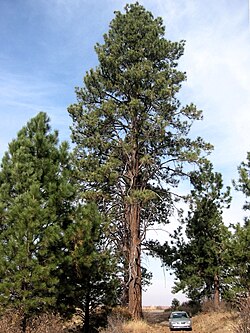
Most nuthatches prefer temperate climates. Their distribution often shifts based on altitude to maintain a preferred temperature range. For example, the Eurasian nuthatch breeds at sea level in Northern Europe but moves to altitudes between 1,750 and 1,850 meters in Morocco to find suitable conditions (specifically where July temperatures range from 16–27 °C).
The velvet-fronted nuthatch is a notable exception to this rule, as it is the only member of the Sittidae family that prefers tropical lowland forests.
Behavior, Survival, and Breeding
Survival in the wild is a constant challenge for nuthatches. They face predation from owls, squirrels, accipiters (hawks), and woodpeckers. Interestingly, their response to predators may be linked to their reproductive strategies. Research indicates that shorter-lived species, like the white-breasted nuthatch, prioritize the survival of their larger broods and respond more strongly to egg predators like house wrens.
Conversely, longer-lived species, such as the red-breasted nuthatch, place a higher value on adult survival to ensure future breeding opportunities, making them more reactive to adult predators like the sharp-shinned hawk.
![The great spotted woodpecker is an important predator of Eurasian nuthatch nests.[61]](/images/02/f9/02f9cbb2b83abd8eb53cd10fd5f29c8cb285cdc9a3ef9db0c3e11ac3db490c33.jpg)
Nesting Habits
Nuthatches are known for their clever nesting techniques. Some species create specialized cavities to protect their young. The western rock nuthatch, for example, constructs a nest cavity featuring a mud wall and a tunnel across the entrance to deter predators.

Conservation Status
Several nuthatch species are currently facing severe threats due to habitat loss. The white-browed nuthatch, endemic to the Mount Victoria area of Burma, is endangered. Its habitat has been heavily degraded by forest clearing, fires, and traps, leaving a population of only a few thousand birds.
Similarly, the Algerian nuthatch is restricted to just four areas in Algeria. With a population likely under 1,000 birds, it suffers from habitat degradation caused by erosion, grazing, and livestock disturbance, despite being located within the Taza National Park.
Summary of Selected Nuthatch Species
| Common Name | Scientific Name | Primary Range | Notable Feature |
|---|---|---|---|
| Eurasian Nuthatch | Sitta europaea | Temperate Eurasia | Population of ~10 million |
| Giant Nuthatch | Sitta magna | Asia | Largest species (195 mm) |
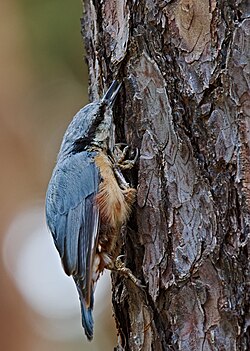
| Red-breasted Nuthatch | Sitta canadensis | North America | Population of ~18 million |
| Pygmy Nuthatch | Sitta pygmaea | Western North America | Small size (~100 mm) |
| White-browed Nuthatch | Sitta victoriae | Burma (Mt. Victoria) | Endangered status |
Frequently Asked Questions
What is the difference between a nuthatch and a Sittella?
While they may seem similar, nuthatches belong to the family Sittidae (genus Sitta), whereas the Sittella is a songbird belonging to the family Neosittidae.
Which nuthatch is the largest?
The giant nuthatch (Sitta magna) is the largest, measuring 195 mm (7.7 in) in length.
How do nuthatches adapt to different climates?
Nuthatches generally prefer temperate climates. In southern regions, they often move to higher altitudes (highlands) to find the cooler temperatures they require for breeding.
Why do some nuthatches react differently to predators?
Their reactions are often tied to their lifespan and reproductive strategies. Shorter-lived species tend to prioritize the survival of their current brood, while longer-lived species prioritize their own survival to ensure future breeding seasons.
Which nuthatch species are most at risk of extinction?
The white-browed nuthatch in Burma and the Algerian nuthatch are both critically threatened due to habitat loss, deforestation, and human disturbance.