Novaya Gazeta: A History of Independent Journalism in Russia
Founded in the wake of the Soviet Union's collapse, Novaya Gazeta has established itself as one of Russia's most prominent and courageous independent news organizations. From its early days as a small venture supported by a Nobel laureate to its current status as an exiled media entity, the newspaper has consistently pushed the boundaries of investigative reporting in a challenging political climate.
The publication began in 1993, organized by a group of former journalists from Komsomolskaya Pravda. Originally named Ezhednevnaya Novaya Gazeta (Daily New Gazette), the outlet received critical early support from Mikhail Gorbachev, who used the funds from his 1990 Nobel Peace Prize to help purchase the newspaper's first computers.
Key Facts
- Founded: 1993 by former Komsomolskaya Pravda journalists.
- Nobel Recognition: Editor-in-chief Dmitry Muratov won the Nobel Peace Prize in 2021.
- Legal Battles: Faced numerous libel suits and license revocations by Russian courts.
- Digital Warfare: Targeted by massive denial-of-service (DoS) attacks in 2010 and 2011.
- Exile: Launched Novaya Gazeta Europe in 2022 following government crackdowns.
- Reach: As of 2023, maintained a daily print circulation of 108,000 and 613,000 online visits.
Legal Challenges and Controversies
Throughout the 2000s, Novaya Gazeta became a frequent target of high-stakes litigation. In 2001, the paper reported on money laundering involving the International Industrial Bank and Sergey Pugachyov. This led to a 2002 court order for the paper to pay 15 million rubles (approximately $500,000), a sum that threatened the publication's existence. However, journalist Yulia Latynina later revealed that the bank's claimants were actually subsidiaries controlled by the bank's own board, leading the bank to renounce its claim.
Not all legal battles were won. In 2004, the paper published accusations that former Prime Minister Sergey Kiriyenko had embezzled $4.8 billion from the International Monetary Fund. These claims were based on a letter that was later revealed to be a prank by the tabloid The eXile. Consequently, the court ruled in favor of Kiriyenko, ordering a retraction and stating the paper must only publish officially proven information regarding embezzlement.
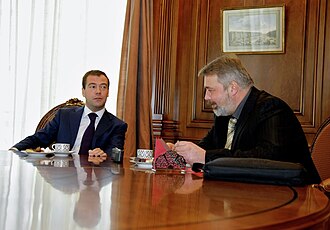
Despite these conflicts, the paper maintained high-level access, notably securing the first-ever print interview with President Dmitri Medvedev on April 13, 2009, to discuss the social contract and transparency.
Investigative Reporting and Cyber Attacks
The 2010s were marked by a shift toward digital warfare and high-risk investigations. In January 2010, the website suffered a massive denial-of-service (DoS) attack—a cyber attack that floods a server with traffic to take it offline—reaching 1.5 million connections per second. The paper was forced to move its presence to LiveJournal to survive.

The newspaper's investigative arm tackled some of the most sensitive issues in Russian society:
- Human Rights in Chechnya: In 2017, the paper exposed anti-gay purges in Chechnya. Journalist Elena Milashina provided a list of 27 killed individuals, though the paper suggested the actual death toll could be as high as 56.
- The "Blue Whale" Phenomenon: In 2016, a report on a social network game allegedly encouraging self-harm and suicide triggered a widespread moral panic across Russia.
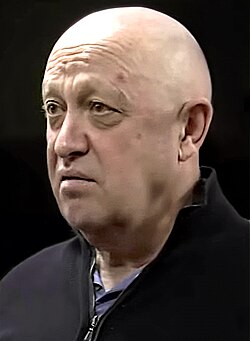
- Yevgeny Prigozhin: An October 2018 investigation into the mercenary leader and oligarch led to threatening deliveries of funeral flowers and a severed ram's head to the offices of the editor-in-chief and journalist Denis Korotkov.
The Transition to Novaya Gazeta Europe
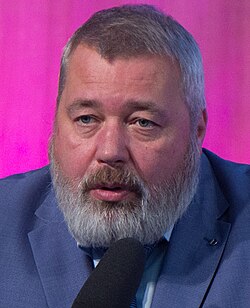
The 2020s brought both the highest honor and the greatest crisis for the organization. In October 2021, editor-in-chief Dmitry Muratov was awarded the Nobel Peace Prize for his efforts to safeguard freedom of expression.
The 2022 Russian invasion of Ukraine fundamentally altered the paper's operations. After attempting to publish editions in both Russian and Ukrainian, the paper received warnings from Roskomnadzor (the federal agency responsible for media censorship). By March 28, 2022, Novaya Gazeta suspended all online and print activities within Russia.
In response, journalists launched Novaya Gazeta Europe on April 7, 2022. Led by editor-in-chief Kirill Martynov, this new entity operates independently from the original Russian organization, with a newsroom of staffers who fled the country. The European branch established offices in Latvia, Germany, and later Paris, with its first print issue appearing in Riga, Latvia, in May 2022.
The crackdown culminated in September 2022, when the Basmanny District Court cancelled the newspaper's Russian license, and the Supreme Court revoked its online license. By June 2023, the Prosecutor-General of Russia designated Novaya Gazeta Europe as an "undesirable organisation." The struggle of the staff during this period was later documented in the 2024 film Of Caravan and the Dogs.
| Period | Key Event | Outcome/Impact |
|---|---|---|
| 1993 | Foundation | Established with support from Mikhail Gorbachev. |
| 2002 | Industrial Bank Lawsuit | Initial $500k fine later renounced after fraud revelation. |
| 2010 | DoS Cyber Attack | Website taken offline by 1.5 million connections/sec. |
| 2021 | Nobel Peace Prize | Dmitry Muratov recognized for freedom of expression. |
| 2022 | Launch of NG Europe | Independent outlet created in exile (Riga, Latvia). |
| 2023 | "Undesirable" Status | NG Europe designated as an undesirable organization by Russia. |
Frequently Asked Questions
Who helped fund the start of Novaya Gazeta?
Mikhail Gorbachev provided the initial funding to purchase the newspaper's first computers using the money he received from his 1990 Nobel Peace Prize.
What is Novaya Gazeta Europe?
It is an independent media outlet launched in April 2022 by former Novaya Gazeta staffers who left Russia. It operates legally and practically separate from the original Russian entity and publishes in multiple languages.
Why was the newspaper's license cancelled in Russia?
Roskomnadzor claimed the editorial office failed to provide its editorial statute within the legal timeframe, though editor-in-chief Dmitry Muratov described the move as political.
What happened during the 2010 cyber attacks?
The website was targeted by a denial-of-service attack that reached 1.5 million connections per second, forcing the newspaper to publish its content via LiveJournal.
How did the paper report on the situation in Chechnya?
In 2017, the paper published reports on anti-gay purges, including a list of 27 individuals allegedly executed by State Security forces, though they estimated the total number of victims could be as high as 56.