Nobody Knows the Trouble I've Seen
Nobody Knows the Trouble I've Seen is a poignant African-American spiritual that emerged from the profound hardships of the slavery era. While its roots are deep in the oral traditions of enslaved people, it first entered the written record in 1866. Over the decades, it has evolved from a song of survival and faith into a globally recognized piece of American musical heritage, recorded by legendary artists across jazz, classical, and gospel genres.
Key Facts
- Origin: Created by enslaved African Americans; first published in 1866.
- Genre: African-American spiritual.
- Notable Performers: Louis Armstrong, Mahalia Jackson, Marian Anderson, and Sam Cooke.
- Classical Influence: Incorporated into works by Florence Price and arranged by J. Rosamond Johnson.
- Cultural Status: Named one of the 250 essential American songs of the past 250 years by CBS News in 2026.
Historical Origins and Early Publications
The song first appeared in print in April 1866 within The Child at Home, published by the American Tract Society in Boston. It was presented as a specimen of hymns sung by freedmen in the South, specifically sent by a teacher working in Charleston, South Carolina. Early versions often featured a chorus emphasizing that only Jesus knew the singer's troubles.
Other early records include a May 1866 report in The Pennsylvania Freedmen's Bulletin, noting the song was sung in a school near Beaufort, South Carolina. By 1867, the song appeared in Slave Songs of the United States under the title "Nobody Knows The Trouble I've Had," a version later used by arranger Hugo Frey in his 1924 collection Famous Negro Spirituals.
| Year | Title Used | Publication/Source |
|---|---|---|
| 1866 | Nobody Knows | The Child at Home |
| 1866 | Nobody knows de trubble I seen | The Pennsylvania Freedmen's Bulletin |
| 1867 | Nobody Knows The Trouble I've Had | Slave Songs of the United States |
| 1872 | Nobody Knows the Trouble I See | Jubilee Singers publication |
Classical Arrangements and Artistic Evolution
In the late 19th century, African-American spirituals began to be integrated into classical music. Black composers such as Samuel Coleridge-Taylor, Henry Thacker Burleigh, and J. Rosamond Johnson created formal arrangements of these works. In 1917, Johnson arranged the song for voice and piano while directing the New York Music School Settlement for Colored People.
The song also found a place in orchestral and instrumental works. Composer Florence Price incorporated the spiritual into her 1934 Mississippi River Suite, where it heavily influences the texture of the fourth section and is quoted directly in the second. Additionally, violinist Maud Powell—the first white solo concert artist to perform classical spiritual arrangements—collaborated with J. R. Johnson in 1919 to create a version for piano and violin.
Modern interpretations continue this legacy, with Chicago violinist Rachel Barton Pine performing classical versions based on Powell's historical approach.
Notable Recordings and Performers
The song's emotional depth has attracted a vast array of performers. American contralto Marian Anderson achieved her first successful recording with the song in 1925. Other iconic voices to record the piece include Lena Horne (1946), Paul Robeson, and Mahalia Jackson.
In the realm of jazz and popular music, Louis Armstrong recorded a celebrated cover of the song, as did Sam Cooke and Harry James. More contemporary takes include a 2014 cover by Dr. John on his album Ske-Dat-De-Dat: The Spirit of Satch.
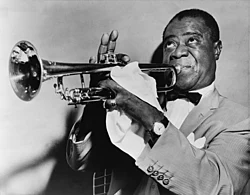
The song's reach extended internationally, as seen in the 1962 album Georgia Lee Sings the Blues Down Under by Georgia Lee, the first Indigenous Australian artist to record blues songs.
Presence in Popular Culture
Because of its universal themes of suffering and hope, the song has appeared frequently in film, television, and theater:
- Cinema: It appears in the 1942 musical Private Buckaroo, the 1944 race film Go Down, Death!, and Roberto Rossellini's Paisan (1946). It is also heard in Young Man with a Horn (1950), Police Academy 4 (1987), and Spaceballs (1987).
- Animation: Zazu sings the opening lines while imprisoned in the 1994 Disney film The Lion King.
- Television: In The Big Bang Theory, Sheldon Cooper uses the song to express dejection while practicing the theremin (an electronic musical instrument controlled without physical contact).
- Other Media: The song is featured in Michael Tippett's 1944 oratorio A Child of Our Time and was used humorously in The Muppet Show, where John Denver sang "Nobody knows the truffles I've seen!"
Frequently Asked Questions
When was "Nobody Knows the Trouble I've Seen" first published?
The song was first published in April 1866 in a book titled The Child at Home by the American Tract Society.
Who are some of the most famous artists to cover this song?
Many legendary artists have recorded the song, including Louis Armstrong, Mahalia Jackson, Marian Anderson, Sam Cooke, Lena Horne, and Paul Robeson.
How was the song used in classical music?
It was arranged for voice and piano by J. Rosamond Johnson and for piano and violin by Maud Powell and Johnson. It was also integrated into Florence Price's Mississippi River Suite.
What is the significance of the song's lyrics?
The lyrics reflect the sorrow and trials of the African-American experience during slavery, while expressing a spiritual reliance on Jesus for comfort and the hope of reaching Heaven.
Has the song appeared in modern movies or TV shows?
Yes, it has appeared in a wide variety of media, from The Lion King and Spaceballs to The Big Bang Theory.