Nobel Prize in Chemistry: History, Selection, and Legacy
The Nobel Prize in Chemistry is one of the most prestigious honors in the scientific world, awarded annually to individuals who have made outstanding contributions to the field of chemistry. Established by the will of Alfred Nobel in 1895, the prize aims to recognize those whose work confers the greatest benefit on mankind.
The award is administered by the Nobel Foundation and bestowed by the Royal Swedish Academy of Sciences. Every year, the scientific community looks toward Stockholm, Sweden, where the laureates are honored in a ceremony held on December 10, the anniversary of Alfred Nobel's death.
Key Facts
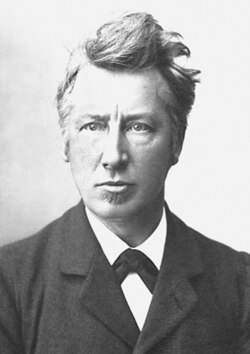
- First Awarded: 1901 to Jacobus Henricus van 't Hoff.
- Awarding Body: Royal Swedish Academy of Sciences.
- 2024 Reward: 11 million SEK.
- Most Awards: Frederick Sanger and Karl Barry Sharpless (2 each).
- Recent Laureates (2025): Susumu Kitagawa, Richard Robson, and Omar M. Yaghi.
- Selection Limit: Maximum of three recipients per year.
The Origins of the Prize
The prize was born from the last will and testament of Alfred Nobel, signed on November 27, 1895. Nobel bequeathed 94% of his total assets—approximately 31 million Swedish kronor—to endow five prizes in physics, chemistry, physiology or medicine, literature, and peace.
The process of establishing the prizes faced initial skepticism and was not approved by the Storting (Norwegian Parliament) until April 26, 1897. Following this, the Nobel Foundation was formed to manage the funds, and the Royal Swedish Academy of Sciences was designated as the body responsible for selecting the chemistry laureates.
The Nomination and Selection Process
The selection of a Nobel Laureate in Chemistry is a rigorous, multi-stage process designed to ensure that the recognized achievements are tested by time. This often results in a significant lag—typically around 20 years—between the original discovery and the award.
Step-by-Step Selection
- Nomination: Approximately 3,000 selected individuals are invited to submit nominations. These records remain sealed for 50 years.
- Initial Screening: The Nobel Committee for Chemistry, consisting of five elected members, screens nominations to create a list of about 200 preliminary candidates.
- Expert Review: Selected experts in the field further refine the list to approximately 15 names.
- Final Decision: The committee submits recommendations to the Royal Swedish Academy of Sciences for the final selection.
Posthumous nominations are not permitted, although an award can be granted if a nominee passes away between the nomination and the final decision.
The Laureates' Rewards
Recipients of the Nobel Prize in Chemistry receive three distinct honors: a gold medal, a uniquely designed diploma, and a monetary award.
The Medal and Diploma
The gold medal features the Goddess of Nature (Isis) and the Genius of Science. It is inscribed with a Latin phrase from Virgil's Aeneid: "Inventas vitam iuvat excoluisse per artes", meaning "It is beneficial to have improved [human] life through discovered arts." The diploma is presented by the King of Sweden and includes a specific citation of the laureate's achievements.
The Monetary Grant
The cash prize varies annually based on the Nobel Foundation's funding. For instance, the reward was 10 million SEK in 2009 and 8 million SEK in 2012. If there are multiple winners, the grant is divided; three winners may split the prize equally, or one may receive half while the others receive a quarter each.
Scope and Evolution of the Award
As science has evolved, the boundaries of "chemistry" have expanded. In recent decades, the prize has frequently been awarded for work in biochemistry and molecular biology. This has led to some criticism that the prize is occasionally awarded to non-chemists.
Analysis of prizes awarded between 1995 and 2017 suggests a clustering in specific disciplines, with molecular chemistry being the dominant field within the chemistry domain, accounting for 5.3% of all science Nobel Prizes in that period.
| Feature | Details |
|---|---|
| Awarding Institution | Royal Swedish Academy of Sciences |
| Ceremony Date | December 10 (Annually) |
| First Recipient | Jacobus Henricus van 't Hoff (1901) |
| 2025 Achievement | Development of metal–organic frameworks |
| Female Laureates | 8 (as of 2022) |
Frequently Asked Questions
Who is the only person to win Nobel Prizes in two different sciences?
Marie Curie is the only person to achieve this feat, winning the Nobel Prize in Physics in 1903 and the Nobel Prize in Chemistry in 1911.
How many people can share a single Nobel Prize in Chemistry?
A maximum of three laureates can be selected for the prize in any given year.
Why is there often a long delay between a discovery and the Nobel Prize?
The committee requires that the significance of the achievement be "tested by time," which typically results in a lag of 20 years or more to ensure the discovery's lasting impact.
What happens to the nomination records?
Nomination records are kept secret and remain sealed for fifty years.
Can a person be awarded the prize after they have died?
Posthumous nominations are not allowed. However, if a person is nominated and selected but dies before the prize is officially awarded, the prize can still be granted.