NIST: The Foundation of American Measurement and Technology Standards
Precision is the bedrock of modern innovation. From the GPS in our smartphones to the safety of the buildings we inhabit, the accuracy of measurements ensures that technology works reliably and safely. In the United States, this critical mission is led by the National Institute of Standards and Technology (NIST), a non-regulatory agency within the Department of Commerce dedicated to promoting U.S. innovation and industrial competitiveness.
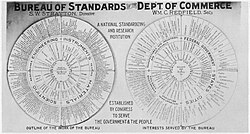
Originally established as the National Bureau of Standards, the agency has evolved over more than a century to address the shifting needs of science and industry, moving from simple weights and measures to complex cybersecurity frameworks and quantum metrology.
Key Facts
- Founded: March 3, 1901, as the National Bureau of Standards; renamed NIST in 1988.
- Parent Agency: U.S. Department of Commerce.
- Workforce: Approximately 3,400 employees, supplemented by about 1,800 associates.
- Budget: $1.03 billion (FY 2021).
- Headquarters: Gaithersburg, Maryland.
- Core Mission: Maintaining measurement standards and developing technology to enhance economic security and quality of life.
The Evolution of American Standards
The need for standardized measurements dates back to the earliest days of the United States. The Articles of Confederation (1781) and subsequent appeals by George Washington in 1791 highlighted the necessity of uniform weights and measures for a functioning economy. Between 1830 and 1901, these duties were managed by the Office of Standard Weights and Measures under the U.S. Department of the Treasury.
The formal creation of the National Bureau of Standards in 1901 centralized these efforts. As the scope of American science expanded, so did the agency's tools. By the mid-20th century, the agency was utilizing advanced equipment to push the boundaries of physics and chemistry.
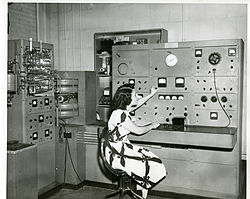
In 1988, the agency was renamed the National Institute of Standards and Technology to reflect a broader mission that integrated technology and industrial standards with traditional measurement science.

Organizational Structure and Capabilities
NIST operates through a network of specialized laboratories and extramural programs. These facilities focus on different domains of metrology—the scientific study of measurement—to ensure that a millimeter in California is the same as a millimeter in New York.
Core Laboratories
- Physical Measurement Laboratory (PML): Focuses on the fundamental constants of nature.
- Material Measurement Laboratory (MML): Studies the properties of materials.
- Information Technology Laboratory (ITL): Leads efforts in cybersecurity and computing standards.
- Engineering Laboratory (EL): Applies measurement science to engineering challenges.
- Communications Technology Laboratory (CTL): Advances the science of connectivity.
- Center for Neutron Research (NCNR): Uses neutron scattering to study materials at the atomic level.

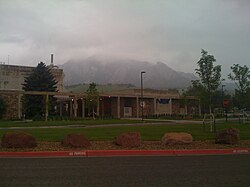
Beyond its labs, NIST maintains a massive collaborative network, partnering with 1,400 manufacturing specialists and nearly 350 affiliated centers across the country. This ecosystem is supported by a sprawling campus in Gaithersburg and additional facilities in Boulder, Colorado.

Critical Contributions to Public Safety and Security
While much of NIST's work happens in the lab, its impact is often felt during national crises. Under the National Construction Safety Team Act (NCST), NIST is mandated to investigate major structural failures to prevent future tragedies.
Structural Investigations
NIST conducted the official investigation into the collapse of the World Trade Center buildings following the September 11, 2001, attacks. Led by Shyam Sunder, the study analyzed fire safety and building factors to improve global construction codes. More recently, NIST deployed engineers to investigate the 2021 Surfside condominium collapse in Florida.
Cybersecurity and Digital Trust
In the digital age, NIST has become a global leader in cybersecurity. In 2014, it published the NIST Cybersecurity Framework, a voluntary set of guidelines for organizations to manage and reduce cyber risk. This framework became mandatory for U.S. federal agencies via Executive Order 13800. An extension of this effort is the Cybersecurity Maturity Model Certification (CMMC), which provides a standardized way to verify the cybersecurity readiness of defense contractors.

Standards and Publications
One of the agency's most enduring contributions is Handbook 44. Published since 1918 (under its current name since 1949), this document provides the specifications and tolerances for weighing and measuring devices, ensuring fairness in commercial trade. The 2010 edition aligns with the International System of Units (SI), commonly known as the metric system.
| Category | Detail |
|---|---|
| Current Director | Arvind Raman |
| Annual Budget (FY 2021) | $1.03 Billion |
| Primary Publication | Handbook 44 |
| Key Framework | NIST Cybersecurity Framework |
| Notable Achievement | Nobel Prize in Chemistry (Dan Shechtman, 2011) |
Frequently Asked Questions
What is the difference between the National Bureau of Standards and NIST?
The National Bureau of Standards was the original name of the agency from 1901 until 1988. It was renamed the National Institute of Standards and Technology (NIST) to reflect an expanded mission that included a greater focus on technology and industrial competitiveness.
What is Handbook 44?
Handbook 44 is a comprehensive guide published by NIST that outlines the technical requirements, specifications, and tolerances for weighing and measuring devices used in commerce, ensuring accuracy and fairness in trade.
How does NIST contribute to cybersecurity?
NIST develops the Cybersecurity Framework, which provides organizations with a standardized approach to managing and reducing cybersecurity risk. It also manages the Cybersecurity Maturity Model Certification (CMMC) for defense contractors.
Does NIST investigate building collapses?
Yes. Under the National Construction Safety Team Act, NIST conducts official investigations into major structural failures, such as the World Trade Center collapses and the Surfside condominium collapse, to improve building and fire codes.
Who leads NIST?
NIST is led by a Director who also serves as the Under Secretary of Commerce for Standards and Technology. The Director is a Presidential appointee confirmed by the U.S. Senate.