Nightclub History and Evolution: From Juke Joints to Superclubs
The modern nightclub is more than just a venue for music and dancing; it is a cultural phenomenon that has evolved over more than a century. From the clandestine gatherings of the Prohibition era to the massive, high-tech superclubs of the 21st century, nightclubs have served as hubs for musical innovation, fashion trends, and social rebellion.
Key Facts
- Origins: Early precursors included American honky tonks and juke joints (1900–1920).
- The Disco Era: The 1960s and 70s saw the rise of the discothèque, shifting the focus toward recorded music and professional DJs.
- Global Hubs: London, New York, Berlin, and Ibiza have historically been the primary epicenters of clubbing culture.
- Musical Diversity: Nightclubs host a vast array of genres, including House, Techno, Hip-Hop, Jazz, and Electronic Dance Music (EDM).
- Safety Concerns: The industry has been marked by tragic fire incidents and security challenges, leading to stricter global safety legislation.
The Early Era: Jukeboxes and High Society
Between 1900 and 1920, working-class Americans frequented honky tonks or juke joints, where music was provided by pianos or early jukeboxes. The landscape shifted dramatically after the repeal of Prohibition in February 1933, which sparked a revival of upscale venues. New York City became a focal point with legendary establishments like the 21 Club, Copacabana, El Morocco, and the Stork Club, all of which featured big bands.
In Europe, pre-World War II nightlife was centered in cities like Paris, Berlin, and London. In London's Soho district, a mix of cabaret, burlesque jazz, and bohemian clubs flourished. Some venues, such as the Kit Kat Club and Café de Paris, were closely tied to "high society." Others, like the 43 Club run by Kate Meyrick, operated on the fringes of the law, with Meyrick frequently facing prison for licensing breaches.
![The "Kakadu" (1919–1937), a Pre-World War II nightclub in Berlin,[17] offered a bar, a dance floor, live music played by jazz band, and cabaret.](/images/b3/56/b356399582f0626b020daccdccbe24a6a52b6928370e042f62bb792bee5c21a6.jpg)
The Rise of the Disc Jockey and the Discothèque
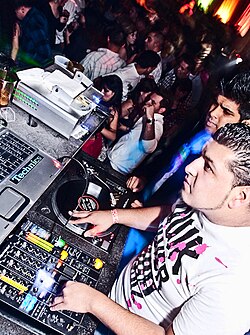
The post-war era introduced a fundamental shift: the transition from live bands to recorded music. In 1957, Betty Passes pioneered the concept of dancing to records in the basement of her London coffee-bar, Les Enfants Terribles, claiming to be the inventor of disco. Similarly, the Flamingo Club (1952–1967) became a vital catalyst for the growth of jazz and rhythm and blues in the UK.
By 1964, discothèques (venues where music is played from discs) began appearing in New York City. While early spots like the Village Vanguard were small, larger venues like Cheetah opened in 1966, accommodating up to 2,000 dancers. In 1962, the Peppermint Lounge in New York became the birthplace of go-go dancing.
Psychedelia and the Underground
Parallel to the disco trend, the hippie movement created psychedelic clubs. London's UFO Club (1966–1967) and the subsequent Middle Earth club hosted early performances by artists such as Pink Floyd and Jimi Hendrix. These venues laid the groundwork for the underground gig scenes of the 1970s and 80s.

The Golden Age of Disco and the Ibiza Boom
The 1970s marked the global explosion of disco. In Spain, the island of Ibiza became a magnet for hippie travelers and tourists. This led to the creation of the first "Superclub," the Festival Club (1969–1974), and the establishment of world-famous venues like Pacha, Amnesia, and Privilege (originally Ku-club).
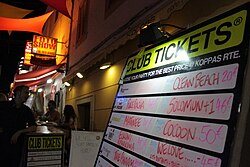
In London, the late 70s and early 80s saw a fragmented but vibrant scene. Basements and warehouses hosted a mix of punk, New Romantic, and gay clubs. This eclectic environment paved the way for the acid house movement of the late 1980s, spearheaded by venues like Shoom and nights at Heaven.

New Wave and the Modern Club Experience
The 1980s New Romantic movement emphasized a fusion of music and fashion. Clubs like The Blitz and the Batcave saw patrons embracing bold aesthetics, with men wearing makeup and women in suits. This era featured bands like Depeche Mode, Duran Duran, and Culture Club. Leigh Bowery's Taboo (1985) eventually bridged the gap between New Romanticism and the burgeoning acid house scene.
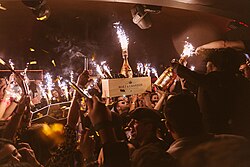
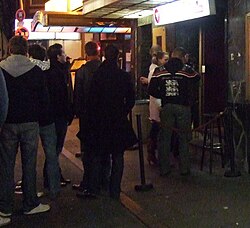
Modern nightclubs now incorporate complex operations, including bottle service (premium table service) and strict entry criteria managed by bouncers (security personnel who check IDs and manage crowds).
Cultural Expressions and Subcultures
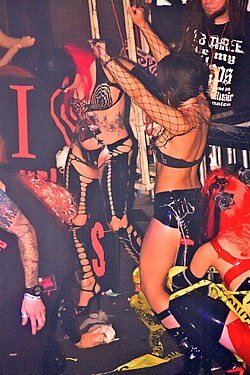
Nightclubbing continues to be a space for diverse subcultures, from fetish fashion to specific street rave dance styles such as the Melbourne Shuffle, Hakken, Para Para, and Rebolation.
Safety and Regulation
The history of nightclubs is also marked by tragedy, primarily due to fire and overcrowding. Major disasters, such as the Cocoanut Grove fire (1942) and the Station nightclub fire (2003), have led to stricter building codes and safety regulations worldwide.
Recent legislative changes have also focused on public health. For example, in the Sydney CBD Entertainment Precinct, stricter policies regarding club entry and information sharing between venues have resulted in a significant decrease in alcohol-related injuries.
![Number of patients with alcohol-related serious injury and trauma to the emergency department at different hours of the day, before and after a change in alcohol legislation that made partying stricter in the Sydney CBD Entertainment Precinct. These policies include: increased monitoring, increased strictness on entry of clubs, and sharing of information between venues to prevent intoxicated patrons to access different places. On average, there is significant decreases in any alcohol-related injury.[112]](/images/13/37/13373798984503e6a32c0a0b0bca9f8a8d3ae60784f10191ac78920582456900.jpg)
| Era | Key Characteristics | Primary Genres |
|---|---|---|
| 1900–1930s | Juke joints, Big Bands, High Society | Jazz, Piano music |
| 1950s–1960s | Rise of the DJ, Discothèques, Psychedelia | R&B, Jazz, Psychedelic Rock |
| 1970s | Superclubs, Disco boom, Ibiza tourism | Disco, Early House |
| 1980s | New Romanticism, Warehouse parties | Synth-pop, Acid House, New Wave |
| 1990s–Present | Digital mixing, EDM festivals, Global brands | EDM, Techno, Hip-Hop, House |
Frequently Asked Questions
What is a discothèque?
A discothèque is a nightclub where music is played from recorded discs rather than by a live band, a concept that became widely popular in the 1960s.
Where did the first "Superclubs" emerge?
The first superclubs emerged on the island of Ibiza, Spain, starting with the Festival Club in the early 1970s, followed by venues like Pacha and Amnesia.
What was the New Romantic movement?
The New Romantic movement was a 1980s club scene in London characterized by a strong emphasis on flamboyant fashion, makeup, and synth-pop music.
How has nightclub safety improved over time?
Safety has improved through stricter fire codes, increased monitoring of intoxicated patrons, and better coordination between venues to prevent overcrowding and substance abuse.
What are some common rave dance styles?
Common street rave dance styles include the Melbourne Shuffle, Hakken, Para Para, and Rebolation.