Newport Navigation Company: The Later Years of the Steamboat Newport
The maritime history of the Oregon coast is punctuated by the service of the steamboat Newport and its companion barge, the Julia. Operating as a vital link between rail hubs and waterfronts, these vessels facilitated the movement of passengers and cargo during a transformative era of regional transport.
Key Facts
- The steamboat Newport and barge Julia won first prize for decoration in a July 4, 1914, parade.
- In July 1914, the vessels handled massive crowds, with over 1,000 people traveling by rail between Albany and Yaquina City.
- John "Johnny" Marshall, president of the Newport Navigation Company, was a veteran engineer of the Columbia and Willamette rivers.
- The vessel underwent major repairs at the Anderson Boat Works (1918) and the Altree shipyard (1922).
- Declining rail infrastructure and rotting piers led to public criticism of the service by 1920.
Peak Operations and Public Celebration
By 1914, the Newport and the Julia were not only functional transport vessels but local attractions. During the July 4th parade that year, the pair won first prize for their decorations, which included flags, bunting, and Chinese lanterns.
The operational demand for these vessels was significant. On Sunday, July 19, 1914, the transport network saw a surge of over 1,000 passengers traveling via railroad from Albany, Oregon, to Yaquina City. To manage this volume, the Newport and the Julia completed five trips between Yaquina City and the Newport waterfront to accommodate the arriving and departing trains.
Maintenance and Technical Upkeep
Maintaining steamboats in the rugged coastal environment required frequent overhauls. In April 1918, the Newport underwent repairs at the Anderson Boat Works in Toledo, Oregon, followed shortly by repairs to the barge Julia.
Further extensive work was required by March 1922 at the Altree shipyard in Toledo. This overhaul included repainting, the installation of new guard rails, and the addition of new timbers. During this period of maintenance, the schooner Sea Foam was utilized as a temporary replacement until the Newport returned to service on March 30, 1922.
The Legacy of John "Johnny" Marshall
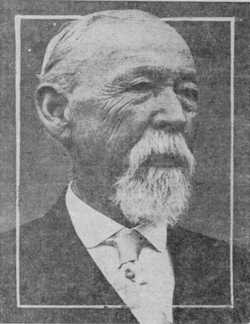
The Newport Navigation Company was led by John "Johnny" Marshall, a man whose career spanned the golden age of river navigation. By March 1920, at age 82, Marshall visited the Newport—then operating between South Beach and Yaquina City—to inspect its condition.
Marshall was one of the most senior steamboat men of his time. His professional history included serving as an engineer on several legendary vessels of the Columbia and Willamette rivers, such as the Enterprise (1855), Wide West, Hassalo, Senator, and Willamette Chief. Beyond his technical expertise, Marshall moved in elite circles, maintaining friendships with General George B. McClellan, General Hooker, and President Ulysses S. Grant, whom he visited at the White House.
Infrastructure Decline and Criticism
Despite the prestige of its leadership, the service faced systemic challenges by June 1920. Local newspapers began criticizing the efficiency of the rail-to-boat transfer at Yaquina City. The decline was evident in the logistics: rail service had dropped to only one train per day, and the physical infrastructure had deteriorated. Specifically, the pier used for train support had partially rotted away, hindering the transfer of cargo and passengers.
| Year | Event/Activity | Location/Detail |
|---|---|---|
| 1914 | Decoration Prize & Peak Traffic | Yaquina City to Newport waterfront |
| 1918 | Major Repairs | Anderson Boat Works, Toledo, OR |
| 1920 | Inspection & Infrastructure Decline | South Beach to Yaquina City |
| 1922 | Overhaul & Repaint | Altree shipyard, Toledo, OR |
Frequently Asked Questions
What was the role of the barge Julia?
The Julia served as a companion barge to the steamboat Newport, assisting in the transport of passengers and cargo between Yaquina City and the Newport waterfront.
Who was John "Johnny" Marshall?
John Marshall was the president of the Newport Navigation Company and a veteran river engineer who worked on famous vessels like the Enterprise and the Willamette Chief.
Why did the service face criticism in 1920?
The service was criticized due to a reduction in rail frequency to one train per day and the physical decay of the cargo transfer facilities, including a rotting pier.
Where were the vessels repaired?
Repairs were conducted at two different locations in Toledo, Oregon: the Anderson Boat Works in 1918 and the Altree shipyard in 1922.
Which vessel replaced the Newport during its 1922 repairs?
The schooner Sea Foam was placed on the run temporarily while the Newport underwent its overhaul and repainting.