New Zealand Royal Honours System
The New Zealand royal honours system is a structured framework of orders, decorations, and medals designed to recognize the exceptional achievements and service of New Zealanders, as well as others who have made significant contributions to the nation. Administered by the Honours Unit of the Department of the Prime Minister and Cabinet, the system blends traditional royal prerogative with national identity.
While the monarch of New Zealand grants these honours, most are awarded based on ministerial advice. However, a select few awards remain in the exclusive gift of the monarch, independent of government recommendation.
Key Facts
- Transition: New Zealand moved from the British honours system to a predominantly national system starting in 1975.
- Supreme Honour: The Order of New Zealand is the highest honour in the country.
- Administration: The Department of the Prime Minister and Cabinet manages the process.
- Titles: Knighthoods and damehoods were abolished in 2000 but restored in 2009.
- Scope: Honours cover civil service, military bravery, scientific research, and community volunteerism.
Evolution of the Honours System
From the mid-nineteenth century until 1975, New Zealand relied entirely on the British honours system. The first resident to receive such an honour was Governor George Grey in 1848, who was appointed a Knight Commander of the Order of the Bath. For over a century, this system included the granting of peerages and baronetcies to distinguished individuals.
Notable historical figures include Bernard Freyberg, who was ennobled in 1951 while serving as governor-general, and Arthur Porritt, a New Zealand-born physician and athlete who became a baronet in 1963 and later a peer in 1973.
The shift toward a distinct national identity began in 1975 with the introduction of the Queen's Service Order and Medal. This was followed by the creation of the Order of New Zealand in 1987 as the nation's supreme honour. By 1996, a comprehensive review led to the termination of most British honours, replacing them with the five-level New Zealand Order of Merit.
The use of titles has seen fluctuations; Prime Minister Helen Clark removed knighthoods and damehoods in 2000, but Prime Minister John Key restored them in 2009, allowing eligible recipients of the New Zealand Order of Merit to once again use these titles.
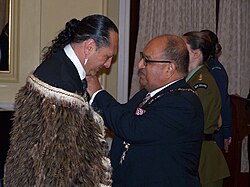
Orders and Decorations
The system is categorized into several tiers of prestige and purpose. The highest civilian honours include the Order of the Garter and the Order of the Thistle, followed by the Order of Merit and the Order of New Zealand.
The New Zealand Order of Merit
Established in 1996, this order recognizes meritorious service to the Crown and the nation, or those distinguished by their eminence and talents. It consists of five levels: Knight or Dame Grand Companion, Knight or Dame Companion, Companion, Officer, and Member.
Service and Special Awards
The King's Service Order and King's Service Medal (formerly the Queen's Service awards) recognize valuable voluntary community service or faithful service to the Crown in the public sector. Other specialized awards include the New Zealand Antarctic Medal, for contributions to Antarctic exploration and science, and the New Zealand Distinguished Service Decoration for military personnel.
The Order of St John
The Most Venerable Order of St John of Jerusalem is an official Order of Chivalry. While not a State Order, the monarch is its Sovereign Head and the Governor-General serves as the Prior in New Zealand. Members may use official post-nominals, though they do not use the title "Sir" associated with state knighthoods.
| Honour | Established | Primary Purpose | Key Levels/Grades |
|---|---|---|---|
| Order of New Zealand | 1987 | Outstanding service to Crown and people | Member (ONZ) |
| New Zealand Order of Merit | 1996 | Merit, eminence, and contributions | 5 levels (GNZM to MNZM) |
| King's Service Order/Medal | 1975 | Community and public sector service | Companion (KSO), Medal (KSM) |
| NZ Antarctic Medal | 2006 | Antarctic research and exploration | Medal (NZAM) |
| NZ Distinguished Service Decoration | 2007 | Distinguished military service | Decoration (DSD) |
Frequently Asked Questions
Who administers the New Zealand honours system?
The system is administered by the Honours Unit within the Department of the Prime Minister and Cabinet.
Can New Zealanders still receive British honours?
As of 2021, only dynastic British honours continue in active use, along with specific awards like the Order of the Companions of Honour.
What is the difference between the King's Service Order and the New Zealand Order of Merit?
The New Zealand Order of Merit generally recognizes eminence and distinguished merit across various fields, while the King's Service Order specifically focuses on voluntary community service and faithful public sector service.
Are knighthoods and damehoods still awarded?
Yes. Although they were removed in 2000, they were restored in 2009 and are currently available for the highest grades of the New Zealand Order of Merit.
What is the highest honour in the New Zealand system?
The Order of the Garter is the highest civilian honour, followed by the Order of the Thistle, the Order of Merit, and then the Order of New Zealand.