New Zealand Liberal Party: The Era of Seddon and Agrarian Reform
The late 19th and early 20th centuries marked a transformative period in New Zealand's political landscape. Following the unexpected death of John Ballance in 1893, the Liberal Party entered a phase of dominance characterized by a tension between intellectual liberalism and a new, charismatic brand of populism. This era saw the rise of Richard Seddon, a leader whose influence would reshape the nation's social and economic foundations.
The Rise of Richard Seddon
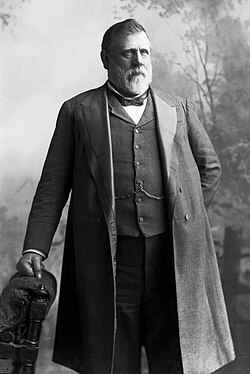
While it is believed that John Ballance intended for Robert Stout—a colleague known for his strong liberal views—to succeed him, the leadership ultimately passed to Richard Seddon. Although Seddon became New Zealand's longest-serving prime minister, his ascent was not without controversy. He initially assumed leadership on an interim basis, and despite challenges from Stout and other liberal colleagues, no formal caucus vote was ever held to confirm his position.
Seddon's leadership style was often described as autocratic and controlling. His social views were more conservative than those of his predecessors, yet he possessed a charisma that resonated deeply with the general public, ensuring his political survival and dominance.
Internal Conflict and Social Reform
The Liberal Party was divided into two distinct wings, leading to significant clashes over key social issues. The most prominent of these was women's suffrage (the right to vote). While Ballance had championed the absolute equality of the sexes, Seddon actively campaigned against suffrage. Despite the hostility of their own leader, pro-suffrage MPs successfully gathered enough support to pass the measure.
Labor and Welfare Initiatives
Despite these frictions, Seddon continued many of Ballance's original visions. Under the influence of theorist William Pember Reeves, the government introduced the world's first compulsory system of state arbitration—a legal process to resolve industrial disputes. However, Reeves's intellectual approach and desire for further union-friendly regulations eventually clashed with Seddon's cautious populism, leading to Reeves's resignation in 1895 to become the Agent-General in the United Kingdom.
Seddon also implemented pioneering welfare and pension measures. These reforms were comparable to those of H. H. Asquith's Liberal Party in the UK and provided the essential framework that Michael Joseph Savage would later use to build the modern New Zealand welfare state.
The Liberal and Labour Federation
To solidify their power, the Liberal and Labour Federation was established in 1899. This was New Zealand's first national party political organization, featuring a central council, subscribing members, and an annual conference. The Federation ensured that candidates were approved by the leadership—specifically Seddon—and promoted a consistent set of policies, mirroring the structure of modern political parties.
Agrarianism and Land Reform
Between 1891 and 1912, the Liberal Party aggressively pursued agrarianism. This philosophy held that a truly democratic society required a foundation of independent, small-scale land-owning farmers rather than large estates managed by hired help or urban factory systems.
To dismantle the influence of wealthy landowners, the government employed several strategies:
- Land Acquisition: From 1891 to 1911, the government purchased 3.1 million acres of Maori land and 1.3 million acres from large estate holders.
- Estate Subdivision: Large holdings were broken up for closer settlement. For example, the 84,000-acre Cheviot estate was divided, and 176 South Island pastoral estates (totaling 940,000 acres) were split into 3,500 individual farms.
- Taxation: The government used taxes on large land holdings to encourage pastoralists to sell.
This shift was supported by the 1882 invention of refrigerated shipping, which accelerated the growth of dairy farming. Additionally, the Advances to Settlers Act of 1894 provided low-interest mortgages, while the Agriculture Department offered technical guidance on farming methods. By 1903, these policies had created such widespread support in rural North Island electorates that there was no longer an organized opposition in Parliament.
| Category | Amount/Detail |
|---|---|
| Maori Land Purchased | 3.1 million acres (13,000 km²) |
| Large Estate Land Purchased | 1.3 million acres (5,300 km²) |
| South Island Estates Broken Up | 176 estates (940,000 acres) |
| New Small Farms Created | 3,500 farms |
| Key Financial Support | Advances to Settlers Act 1894 |
Key Facts
- Richard Seddon became New Zealand's longest-serving prime minister despite internal party opposition.
- The Liberal Party passed women's suffrage despite Seddon's personal opposition.
- New Zealand established the world's first compulsory state arbitration system.
- The Liberal and Labour Federation (1899) was the nation's first national party political organization.
- The government purchased over 4 million acres of land to promote a class of small, independent farmers.
- Refrigerated shipping (1882) was a critical catalyst for the success of the dairy industry.
Frequently Asked Questions
How did Richard Seddon come to power?
Following the death of John Ballance in 1893, Seddon assumed leadership on an interim basis. Although Robert Stout was seen as the preferred successor by some, Seddon's public charisma and popularity allowed him to maintain control without a formal caucus vote.
What was the Liberal Party's stance on women's suffrage?
The party was divided. While former leader John Ballance and Robert Stout strongly supported the absolute equality of the sexes, Richard Seddon was opposed to suffrage. However, pro-suffrage MPs eventually succeeded in passing the measure.
What was the goal of the Liberal Party's agrarian policy?
The goal was to create a democratic society based on a large class of independent, small land-owning farmers. This was intended to break the political and economic control held by wealthy landowners and the landed gentry.
What role did the Advances to Settlers Act 1894 play?
The Act provided low-interest mortgages to settlers, making it financially viable for small farmers to establish themselves on subdivided land.
How did the Liberal Party influence the future welfare state?
Seddon introduced various welfare and pension measures that served as the foundation for the modern New Zealand welfare state later developed by Michael Joseph Savage of the Labour Party.