New York Post: Editorial History, Controversies, and Media Influence
The New York Post stands as one of the most recognizable and polarizing fixtures in American tabloid journalism. Known for its bold headlines and aggressive reporting style, the publication has long been a lightning rod for debates regarding media ethics, political bias, and the boundaries of sensationalism. Under the ownership of Rupert Murdoch, the Post has evolved into a prominent voice for conservative perspectives, though this trajectory has been marked by significant legal battles and public criticism.
While supporters argue that the paper provides a necessary alternative to the "elitist" media establishment, critics point to a history of erroneous reporting and a tendency toward advocacy over objective journalism. From its influential gossip columns to high-stakes political scoops, the Post continues to shape the cultural and political discourse of New York City and the broader United States.
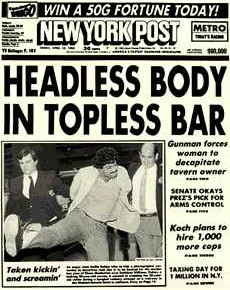
Key Facts
- Ownership: Owned by Rupert Murdoch, whose tenure has been characterized by accusations of conservative bias and sensationalism.
- Page Six: The paper's legendary gossip section, launched in 1977, famous for its "blind items."
- Credibility Ratings: A 2004 Pace University survey rated it the least-credible major news outlet in New York.
- Legal History: The publication has faced multiple libel suits, including a 2014 settlement following the Boston Marathon bombing coverage.
- Political Influence: Frequently aligned with conservative movements and figures, often facing scrutiny over the reliability of its political sourcing.
Editorial Style and the Influence of Page Six
The New York Post is defined by a high-energy, tabloid style that prioritizes impact and accessibility. A cornerstone of this identity is Page Six, the influential gossip section created by James Brady in 1977. Page Six became renowned for its "blind items"—stories where the subjects are not explicitly named but are identifiable to those in the know.
Over the decades, Page Six expanded its reach beyond the printed page. In 2006, it launched Page Six Magazine, and in 2017, it transitioned into a daily syndicated television series, Page Six TV. Although the television venture ended in 2019 due to low viewership, the brand remains a powerful tool for shaping the public image of celebrities and political figures.
Journalistic Controversies and Legal Challenges
The Post's pursuit of breaking news has occasionally led to significant factual errors and legal repercussions. One of the most prominent instances occurred during the 2013 Boston Marathon bombing. The paper inaccurately reported the death toll and erroneously identified two young men, Salaheddin Barhoum and Yassine Zaimi, as individuals being sought by police under the headline "Bag Men." This led to a libel lawsuit that was settled in 2014.
The publication has also faced accusations of racism and insensitivity. In 2019, the Post used an image of the burning World Trade Center in a story regarding Representative Ilhan Omar, sparking a widespread boycott by Yemeni-American bodega owners in New York City. Other criticisms include the 2004 publication of a full-page photo of a student's suicide, which was condemned as an appalling lack of judgment.
The Hunter Biden Laptop Story
In October 2020, the Post published a front-page story regarding emails found on a laptop belonging to Hunter Biden. The story, sourced from Rudy Giuliani and Steve Bannon, became a flashpoint for debates on censorship and disinformation. Social media platforms like Twitter and Facebook limited the story's reach, citing policies against hacked materials.
While the FBI and other agencies initially investigated the possibility of Russian disinformation, later reports from The New York Times and The Washington Post in 2022 confirmed that some of the emails were authentic. This sequence of events led to a broader reckoning within American media regarding the verification of high-stakes political stories.
Recent Ethical Scrutiny
In recent years, the Post has dealt with internal and external crises. In October 2022, a rogue employee posted racist and sexually explicit headlines on the paper's Twitter account, leading to the employee's termination. In May 2023, the paper ran a front-page story about homeless veterans being evicted for migrants, which was later revealed to have been fabricated by a local advocate.
Furthermore, in September 2024, reports emerged that several stories on Wisconsin politics were authored by an individual with deep ties to the state's Republican Party, raising questions about the transparency of the paper's contributors and their potential conflicts of interest.
Summary of New York Post Media Profile
| Category | Details |
|---|---|
| Primary Format | Tabloid Newspaper |
| Key Section | Page Six (Gossip/Celebrity) |
| Political Lean | Conservative / Right-leaning |
| Major Criticisms | Sensationalism, Bias, Erroneous Reporting |
| Notable Legal Issues | Libel settlements (e.g., 2013 Boston Bombing) |
Frequently Asked Questions
What is Page Six?
Page Six is the New York Post's famous gossip and celebrity news section. Launched in 1977, it is well-known for its "blind items" and its ability to influence the social and political reputations of New York's elite.
Why was the New York Post criticized for its Hunter Biden coverage?
The paper was criticized for relying on sources like Rudy Giuliani and Steve Bannon and for a lack of pre-publication outreach to the Biden campaign. This led to initial concerns about the story being part of a disinformation campaign, though some emails were later verified as authentic.
Has the New York Post ever lost a defamation case?
While many cases are settled privately, the Post settled a libel suit in 2014 brought by two men who were erroneously implied to be suspects in the 2013 Boston Marathon bombing.
How has the public perceived the credibility of the New York Post?
Public perception is deeply divided. While it has a loyal readership, a 2004 Pace University survey found it to be the least-credible major news outlet in New York, with more respondents calling it "not credible" than "credible."
What happened with the 2022 Twitter incident?
A rogue employee posted a series of violent, racist, and sexually explicit headlines on the official Post Twitter account. The company terminated the employee and condemned the posts as "vile and reprehensible."