New England Electric Power Industry: From Monopolies to Competitive Markets
The landscape of electricity in New England has undergone a profound transformation over the last several decades. What began as a collection of isolated, locally managed monopolies has evolved into a sophisticated, integrated regional network designed for reliability and competitive pricing.
The Era of Regulated Monopolies
Until the 1970s, the electric power industry operated under a vertical integration model. In this system, utilities were regulated local monopolies that handled every stage of the process: generating the electricity, transmitting it across long distances, and distributing it to end-users in homes and businesses. These entities operated independently, with little to no coordination between neighboring utilities.
The Catalyst for Change: The 1965 Blackout
A pivotal moment for the region occurred during the Northeast Blackout of 1965, a massive failure that left 30 million customers without power. This event highlighted the critical need for better coordination and system reliability.
In response, the Northeast Power Coordinating Council (NPCC) was established in January 1966 to improve overall system stability. Following this, power companies created "power pools"—collaborative agreements to ensure a dependable electricity supply. The New England Power Pool (NEPOOL) was formed in 1971 by municipal and private utilities to foster cooperation across the six-state region.
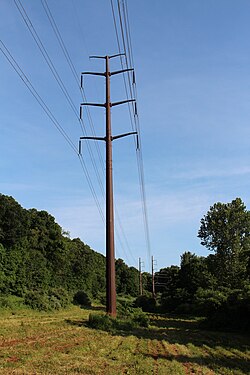
Over the next 30 years, NEPOOL developed a comprehensive regional grid. Today, this infrastructure encompasses more than 8,000 miles of transmission lines and over 300 separate generating plants.
The Shift Toward Deregulation
By the 1990s, the monopoly model began to show significant flaws. Without competition, there was little incentive for utilities to lower prices, improve customer service, or invest in modern technologies. Consequently, New England faced some of the highest electricity rates in the United States and suffered from an aging infrastructure.
To address these issues, the U.S. Congress and the Federal Energy Regulatory Commission (FERC)—the national body overseeing the electricity industry—began restructuring the wholesale electric power market. They aimed to introduce competition, mirroring the successful transformations seen in the telecommunications, financial services, and transportation sectors.
The Role of FERC and ISO New England
FERC worked to create a competitive environment by ensuring equal access to transmission grids. They encouraged states to require utilities to sell their power plants and move away from regulator-set rates toward market-determined pricing.
- 1996: FERC Order 888 deregulated specific portions of the electric power market.
- 1997: The Independent System Operator (ISO) created a management system for the regional bulk power system and proposed new wholesale markets.
- 1999: The ISO officially began managing the restructured regional wholesale power markets.
- 2005: ISO New England transitioned to operate as a Regional Transmission Organization (RTO), a specialized entity that coordinates the movement of high-voltage electricity.
Ensuring Future Reliability
To maintain a steady supply of power as demand fluctuates, the RTO introduced the Forward Capacity Market. The first auction under this system was held in 2008, with the final phase launching in 2010. This market is specifically designed to ensure the region continuously develops the necessary resources to meet demand and maintain grid reliability.
| Year/Period | Key Event/Organization | Primary Impact |
|---|---|---|
| Pre-1970s | Regulated Monopolies | Vertical integration of generation, transmission, and distribution. |
| 1965 | Northeast Blackout | Power loss for 30 million customers; triggered reliability reforms. |
| 1971 | NEPOOL Formation | Cooperation among utilities across six New England states. |
| 1996 | FERC Order 888 | Deregulation of portions of the electric power market. |
| 2005 | ISO New England (RTO) | Operation as a Regional Transmission Organization. |
| 2008-2010 | Forward Capacity Market | Implementation of auctions to ensure resource adequacy. |
Key Facts
- The 1965 Northeast Blackout affected 30 million customers.
- The regional grid now includes over 300 generating plants and 8,000 miles of transmission lines.
- FERC Order 888 was the catalyst for deregulating parts of the power market in 1996.
- ISO New England became a Regional Transmission Organization (RTO) in 2005.
- The Forward Capacity Market was fully phased in by 2010 to ensure long-term reliability.
Frequently Asked Questions
What was the impact of the 1965 Northeast Blackout?
The blackout shut down power for 30 million customers and served as a turning point that led to the creation of the Northeast Power Coordinating Council (NPCC) and various power pools to improve system reliability.
What is NEPOOL?
The New England Power Pool (NEPOOL) was formed in 1971 by private and municipal utilities to foster coordination and cooperation across the six-state New England region.
Why was the electric power industry restructured in the 1990s?
The industry shifted toward competition because regulated monopolies provided little incentive to lower prices, improve service, or modernize an antiquated infrastructure, leading to some of the highest rates in the country.
What is the purpose of the Forward Capacity Market?
Launched between 2008 and 2010, the Forward Capacity Market uses auctions to ensure the region develops and maintains enough power resources to meet demand and ensure grid reliability.
What does FERC do?
The Federal Energy Regulatory Commission (FERC) oversees the electricity industry nationally, creating the regulatory framework for competitive markets and ensuring equal access to transmission grids.