Neoliberalism: The Ideology of Free-Market Capitalism
Neoliberalism is a political and economic ideology that champions free-market capitalism. While it became the dominant force in global policy-making from the late 20th century onward, the term remains complex and often contested. In academic circles, it is frequently used to describe the broad societal transformation resulting from market-based reforms, though in popular discourse, it is often employed pejoratively.
At its core, neoliberalism seeks to increase the role of the private sector in both the economy and society. This is achieved through a specific set of economic liberalization policies designed to reduce state intervention and empower market mechanisms.
Key Facts
- Core Objective: To shift economic control from the public sector to the private sector.
- Primary Policies: Includes privatization, deregulation, lower taxes, and austerity.
- Global Influence: Heavily promoted by conservative and right-libertarian think tanks and political parties.
- Key Figures: Associated with the influence of Ronald Reagan and Margaret Thatcher.
- Institutional Reach: Integrated into the operations of international organizations like the International Monetary Fund (IMF).
The Pillars of Neoliberal Policy
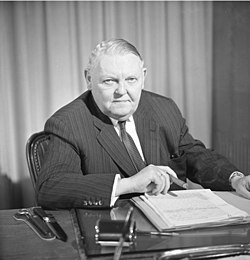
Neoliberalism is not a single theory but a collection of policies aimed at economic liberalization—the process of reducing government regulations and restrictions in the economy. These policies include:
- Privatization: Transferring ownership of public services or state-run enterprises to private companies.
- Deregulation: Removing government rules that constrain business operations.
- Austerity: Implementing strict reductions in government spending to reduce budget deficits.
- Monetarism: An economic theory focusing on controlling the money supply to manage inflation.
- Labor Market Flexibilization: Reducing protections for workers to make it easier for companies to hire and fire employees.
These reforms are often bundled into the Washington Consensus, a set of standard policy prescriptions for developing countries facing economic crises.
Historical Evolution and Global Spread
Early Foundations
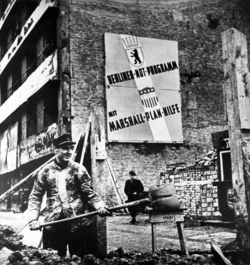
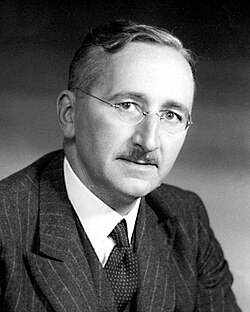
The roots of neoliberalism can be traced back to early intellectual gatherings, such as the Walter Lippmann Colloquium and the formation of the Mont Pelerin Society. These groups sought to revive classical liberal values in response to the rise of collectivism and state-managed economies following the Great Depression.
![Per capita income during the Great Depression[76]](/images/fd/6e/fd6e3b543be035bd2e3a4aa8b2f1fbc0b21b2e3016f33a3917215a0a1441a613.webp)
Intellectual traditions such as the Austrian School and the Chicago School provided the theoretical framework for these ideas, emphasizing individual liberty and the efficiency of the price mechanism.
Implementation in the West
Neoliberalism moved from the fringes of academia to the center of government in the 1980s. In the United States, President Ronald Reagan implemented "Reaganomics," while in the United Kingdom, Prime Minister Margaret Thatcher pursued a similar path of privatization and curbing the power of trade unions.
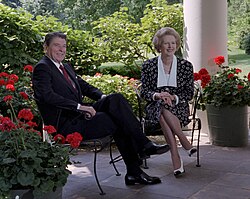
These leaders popularized the ideology, arguing that reducing the size of the state would stimulate economic growth and individual freedom.
Global Application and the "Chilean Miracle"
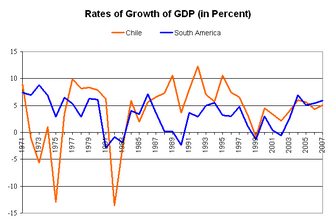
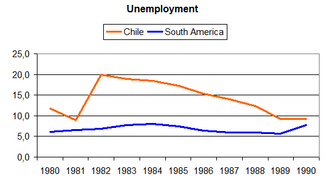
Latin America became a primary testing ground for neoliberal reforms. In Chile, under the regime of Augusto Pinochet, the country underwent radical marketization, often referred to as the "Chilean Miracle" by proponents, though critics point to the severe social costs and political repression involved.
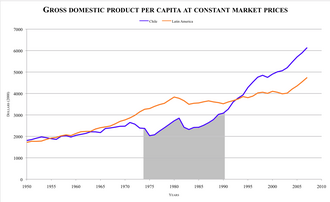
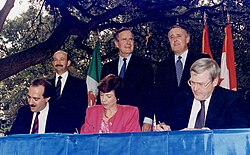
Similar patterns of liberalization were seen in Peru, Argentina, Mexico, and Brazil. In North America, this trend culminated in the North American Free Trade Agreement (NAFTA), which aimed to eliminate barriers to trade and investment between the US, Canada, and Mexico.
Summary of Neoliberal Characteristics
| Feature | Neoliberal Approach | Interventionist Approach |
|---|---|---|
| Role of State | Minimal; facilitator of markets | Active; provider of social welfare |
| Public Services | Privatized for efficiency | Publicly owned and managed |
| Trade Policy | Free trade and globalization | Protectionism or managed trade |
| Fiscal Policy | Austerity and spending cuts | Public investment and stimulus |
| Labor | Flexible markets; fewer unions | Strong worker protections; unions |
Criticisms and Societal Impact
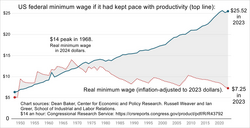
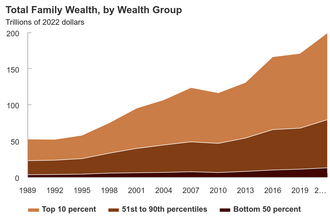
Critics of neoliberalism argue that the ideology leads to market fundamentalism, where the market is trusted to solve all social problems regardless of the human cost. One of the most prominent criticisms is the increase in wealth inequality, as the benefits of growth often accrue to the top earners while public safety nets are dismantled.
Other significant concerns include:
- Financialization: The increasing influence of financial markets over the real economy, which some argue leads to instability.
- Environmental Impact: The prioritization of profit and deregulation over ecological sustainability.
- Mass Incarceration: Some scholars link the neoliberal shift toward "punishing the poor" to rising incarceration rates.
![United States incarceration rate per 100,000 population, 1925–2014[395][396]](/images/e0/f6/e0f6e64d517e761498ec5d7a5fa5381c90456f78fe365d293c23bda870e2da05.png)
From the late 1990s onward, political opposition has grown, manifesting in protests against economic policies and the repression of workers' unions.
![Pamphlet calling for a protest of economic policy in 1983 following the economic crisis[115][116]](/images/f7/11/f7115d1aeb81469e34b427bfcf0b3a49c256f8b03826445236a78f0bca02ad90.jpg)
Frequently Asked Questions
What is the difference between classical liberalism and neoliberalism?
While both value individual liberty and free markets, neoliberalism is specifically oriented toward the active establishment of institutions and political frameworks that ensure the market functions as the primary organizer of all human activity.
How does neoliberalism affect public health?
Critics argue that neoliberalism infiltrates global health by prioritizing privatization and market-based solutions, which can lead to reduced access to essential services for marginalized populations.
What is the Washington Consensus?
The Washington Consensus is a set of ten economic policy prescriptions—including fiscal discipline, tax reform, and trade liberalization—that were promoted by the IMF and World Bank for developing countries.
Is neoliberalism still dominant today?
While neoliberal policies remain embedded in many global institutions, there is significant ongoing debate and political opposition regarding their efficacy, particularly following global financial crises and rising inequality.