Neo-Latin: The Evolution of a Global Academic Language
While many view Latin as a "dead" language, it underwent a vibrant rebirth known as Neo-Latin. Emerging from the humanist movements of the 14th century, Neo-Latin served as the primary vehicle for intellectual, scientific, and diplomatic communication across Western countries for centuries. From the poetry of the Renaissance to the foundational texts of modern biology, Neo-Latin bridged the gap between the ancient world and the modern era.
The transition began with Petrarch and the Renaissance Latin movement, reaching its zenith between 1500 and 1700. During this period, Latin was not merely a subject of study but a living tool for the Republic of Letters—an international community of scholars who used the language to share discoveries regardless of their native tongue.
Key Facts
- Timeframe: Began in the 14th century with Petrarch; peaked between 1500 and 1700.
- Primary Use: The dominant language of academia, law, science, medicine, and international diplomacy.
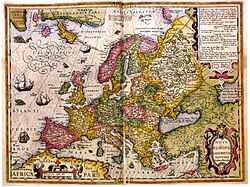
- Geographic Reach: Predominantly Western countries, with significant influence in the German-speaking world and Eastern Europe.
- Key Transition: Gradually replaced by vernacular languages (like English and French) in the 18th century.
- Legacy: Still used in binomial nomenclature (scientific naming of species) and certain religious contexts.
The Golden Age of Neo-Latin (1500–1700)
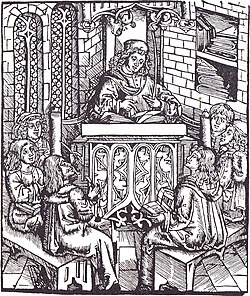
Between the 16th and 17th centuries, Neo-Latin was the undisputed language of the educated elite. It was the cornerstone of school and university education, ensuring that a scholar from Poland could communicate seamlessly with a peer from Italy or England.
Academia, Science, and Medicine
In the realms of science and medicine, Latin provided a standardized vocabulary that prevented the confusion caused by regional dialects. One of the most famous examples of this is Carl Linnaeus' 1st edition of Systema Naturae, which laid the groundwork for modern biological classification.
Literary and Religious Influence
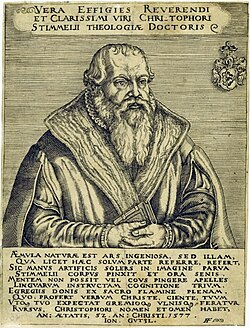
Neo-Latin was not limited to dry technical manuals; it was a thriving literary vehicle. Figures like Erasmus led the charge to reform Latin learning, while others used the language for satire, comedy, and poetry. In the religious sphere, it remained central to theology and ecclesiastical administration.


Diplomacy and the Spoken Word
Beyond the library, Neo-Latin functioned as an international auxiliary language. It was the official language of diplomacy, used to negotiate treaties that shaped the map of Europe. For example, the Treaty of Münster, part of the Peace of Westphalia, was negotiated and written in Latin.
Surprisingly, Latin remained a spoken language for some time. As late as the 1720s, it was used for conversation between leaders. A notable instance occurred between King George I of Great Britain—who did not speak English—and his Prime Minister, Robert Walpole, who communicated with the monarch in Latin.
The 18th Century Decline and Later Usage
The 1700s marked a gradual shift toward the vernacular (the native languages of a specific population). The transition varied by region and subject. In England, Isaac Newton's career mirrored this shift: he began writing in Neo-Latin but concluded his work, such as Opticks (1704), in English.
In contrast, the German philosopher Christian Wolff continued to write primarily in Latin until the mid-18th century to ensure his work reached an international audience. Despite this, the dominance of Latin waned. By the mid-18th century, French replaced Latin as the primary language of international diplomacy following the War of the Austrian Succession.
Administrative Persistence
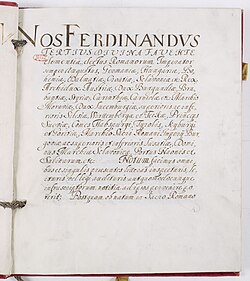
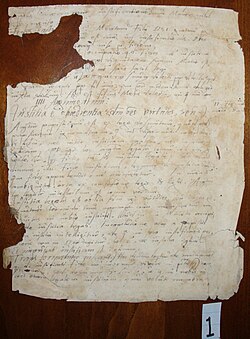
Latin clung to administrative roles longer in some regions. In Austria-Hungary, it remained the standard administrative language until 1844, when it was replaced by Hungarian. In Poland, its administrative use ended with the Third Partition in 1795.
Linguistic Characteristics and Pronunciation
Neo-Latin orthography and pronunciation evolved differently across Europe. While the Latin alphabet remained constant, the way letters were sounded varied by region.
| Letter/Combination | Classical | England | France | Italy | Germany |
|---|---|---|---|---|---|
| c (before e, i, æ) | / k / | / s / | / s / | / tʃ / | / ts / |
| g (before e, i, æ) | / ɡ / | / dʒ / | / ʒ / | / dʒ / | / j / |
| v | / w / | / v / | / v / | / v / | / v / |
| z | / zz / | / z / | / z / | / z / | / ts / |
Notable Neo-Latin Works
The corpus of Neo-Latin is vast, spanning philosophy, science, and fiction. Some of the most influential works include:
- Thomas More: Utopia (1516)
- Nicolaus Copernicus: De Revolutionibus Orbium Cœlestium (1543)
- Conrad Gessner: Historia animalium (1551–1587)
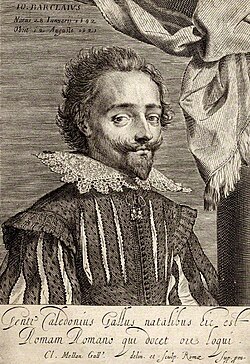
- Giuseppe Peano: Arithmetices principia, nova methodo exposita (1889)
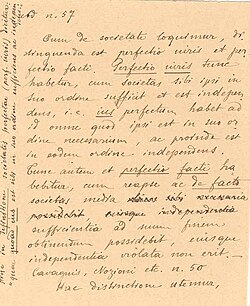
Even into the late 19th century, Latin appeared in specialized contexts, from the handwritten documents of Eugenio Pacelli (Pope Pius XII) in 1899 to medical instruments. One medical pocket watch featured the instruction enumeras ad XX pulsus ("count to 20 beats") for measuring pulse rates.

Frequently Asked Questions
What exactly is Neo-Latin?
Neo-Latin refers to the form of Latin used from the early Italian humanist Petrarch in the 14th century up to the present day, distinguishing it from Classical, Medieval, or Old Latin.
Why was Latin used for science instead of native languages?
Latin provided a universal, standardized language that allowed scientists and scholars from different countries to communicate their findings without the barrier of regional dialects.
When did Latin stop being used for diplomacy?
While some minor treaties were written in Latin as late as 1756, international diplomacy shifted predominantly to French after the War of the Austrian Succession (1740–1748).
Did people actually speak Neo-Latin?
Yes, it was used as a spoken international auxiliary language. For example, King George I of Great Britain used Latin to communicate with his Prime Minister, Robert Walpole, in the early 18th century.
Is Neo-Latin still used today?
Yes, it persists in "Contemporary Latin" and is essential in specialized fields such as binomial nomenclature for naming plants and animals, as well as in certain religious and legal contexts.