Nazareth: A Journey Through the History and Culture of a Holy City
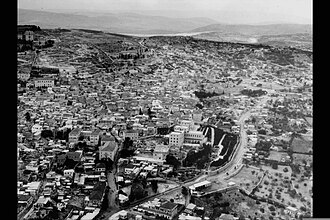
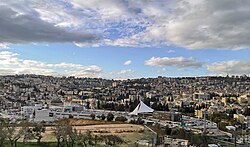
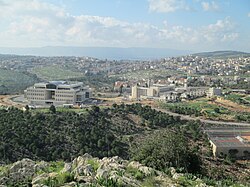
Perched in the Northern District of Israel within the Jezreel subdistrict, Nazareth is a city of profound spiritual significance and deep historical layers. Known globally as the childhood home of Jesus, it has evolved from an early settlement into a vibrant urban center where diverse faiths and ancient traditions coexist. Today, it stands as the largest Palestinian city in Israel, characterized by its unique blend of religious heritage and modern development.
The city's name has various etymological roots, including the Hebrew Netzer and the Arabic an-Nāṣira. Historically, the term Nazarene (or Nasranis and Notzrim) was used to describe early followers of Christ, linking the identity of the faith directly to this Galilean town.
Key Facts
- Population: 75,704 (as of 2024).
- Demographics: Predominantly Arab (99.8%).
- Elevation: 347 meters (1,138 feet) above sea level.
- Founding: Early settlements date back to 2200 BC, with major city development by AD 300.
- Governance: Managed by a mayor-council municipality established in 1885.
A Timeline of Transformation
Ancient and Byzantine Eras
Nazareth's roots stretch back to the Stone and Metal Ages. By the Byzantine period, the town became a hub for Christian pilgrims starting in the 4th century AD. However, this era was marked by volatility; in AD 614, during the Persian invasion of Palestine, conflicts erupted between the local Jewish and Christian populations. Following the expulsion of the Persians by Emperor Heraclius around AD 629–630, the Jewish population was removed, and the village became predominantly Christian.
Middle Ages to the British Mandate
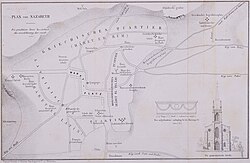
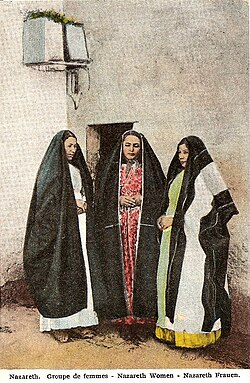
Through the Middle Ages and the subsequent Ottoman Empire rule, Nazareth remained a center of faith. By the early 20th century, under the British Mandate, the city's demographic makeup was a mosaic of religions. A 1931 census recorded 8,756 residents, including 5,445 Christians and 3,226 Muslims. By 1945, the population had grown to 14,200.
Modern Era and the State of Israel
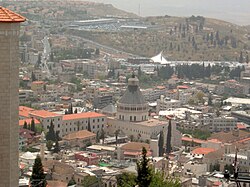
Following the 1948 War, Nazareth integrated into the state of Israel. The city has seen steady growth, peaking at over 77,000 residents in 2022. It has transitioned from a pilgrimage site into a modern city featuring a Hi-Tech Park and advanced healthcare facilities, while maintaining its identity as a center for the Arab community in Galilee.
Geography and Climate
Nazareth experiences a Mediterranean climate with distinct seasonal shifts. Winters are cool and wet, while summers are hot and dry. The city sees its highest precipitation in November and December, with July and August being the driest months.
| Metric | Winter (Jan) | Summer (Jul) | Annual Average |
|---|---|---|---|
| Mean Daily Max Temp | 15.2°C (59.4°F) | 31.2°C (88.2°F) | 24.3°C (75.8°F) |
| Mean Daily Min Temp | 7.1°C (44.8°F) | 20.8°C (69.4°F) | 14.4°C (58.0°F) |
| Avg Precipitation | 156 mm (6.1 in) | 1 mm (0.0 in) | Varies by month |
Sacred Sites and Architecture
Christian Landmarks
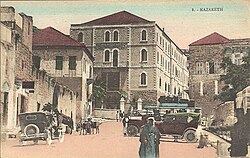
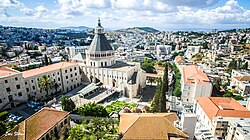
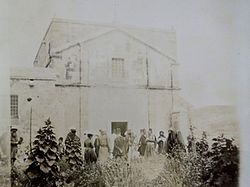
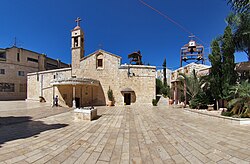
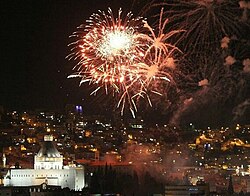
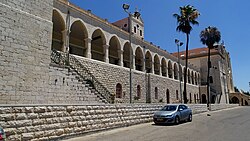
The city is home to several world-renowned churches. The Basilica of the Annunciation is the most prominent, marking the site where the Angel Gabriel appeared to Mary. Other significant sites include the Church of St. Gabriel (an alternative site for the Annunciation), the Synagogue Church where Jesus is said to have preached, and St. Joseph's Church, which marks the traditional location of Joseph's workshop.
Islamic Heritage
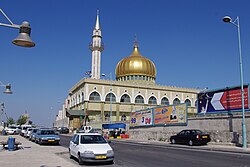
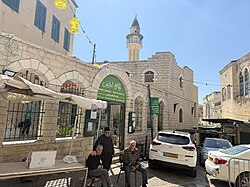
Nazareth also hosts important Muslim holy sites, including the Shrine of al-Sheikh Amer and the Shrine of "to the Prophet we go," alongside various mosques such as the White Mosque and the Nabi Saeen Mosque.
Archaeological Discoveries
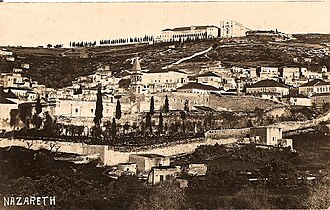
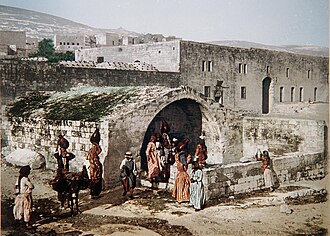
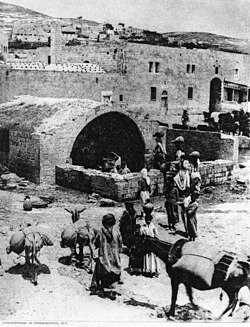
Archaeology in Nazareth continues to reveal the city's ancient layout. Key finds include Kokh tombs and an early Roman house. One of the most fascinating discoveries occurred in the mid-1990s when a shopkeeper found tunnels near Mary's Well. These were identified as the hypocaust (an ancient Roman underfloor heating system) of a bathhouse, with layers of remains dating from the Roman, Crusader, Mamluk, and Ottoman periods.
Community and Infrastructure
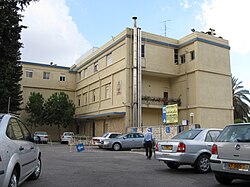
The city provides comprehensive services to its residents and the surrounding district. Education is a priority, with institutions like the Don Bosco School. Healthcare is managed by three major hospitals run by the Christian community: the Nazareth Hospital (English Hospital), the French Nazareth Hospital, and the Italian Nazareth Hospital.
Frequently Asked Questions
What is the primary ethnic composition of Nazareth?
Nazareth is overwhelmingly Arab, with approximately 99.8% of its population identifying as Arab, while Jews and other groups make up about 0.2%.
What is the significance of Mary's Well?
Mary's Well is a traditional site of veneration and a location of significant archaeological interest, where excavations revealed an ancient Roman bathhouse.
Which is the most famous church in Nazareth?
The Basilica of the Annunciation is the most prominent church, built over the site traditionally believed to be the home of the Virgin Mary.
How has the population of Nazareth changed over time?
The city has grown significantly from about 6,575 inhabitants in 1887 to a population of 75,704 in 2024.
What are the main healthcare providers in the city?
Healthcare is provided by three hospitals run by the Christian community: the English (Nazareth), French, and Italian hospitals.