National Register of Historic Places: Property Listings and Classifications
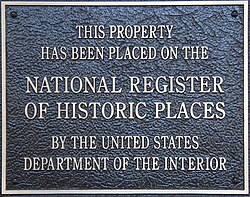
The National Register of Historic Places (NRHP) serves as the official list of the United States government's acknowledged historic districts, sites, buildings, and properties. While often viewed as an honorary status, a listing provides federal financial incentives and ensures that a property's historical significance is formally recognized.
The Register is comprehensive, automatically including all National Historic Landmarks and all historic areas managed by the National Park Service. This includes National Historic Sites (NHS), National Historical Parks, National Military Parks and Battlefields, National Memorials, and select National Monuments.
Beyond the mainland United States, the NRHP includes 35 sites across three island countries that maintain a Compact of Free Association with the U.S., as well as a single international site: the American Legation in Tangier, Morocco.
Key Facts
- Honorary Status: Listing is primarily honorary but offers certain federal financial incentives.
- Property Rights: NRHP listing does not restrict private owners from using their property.
- Global Reach: Includes sites in Morocco and Compact of Free Association island nations.
- Federal Oversight: Section 106 of the National Historic Preservation Act protects listed sites from adverse federal actions.
- Broad Scope: Covers everything from ancient ruins and natural sites to modern buildings and ships.
Legal Protections and Federal Oversight
A common misconception is that a National Register listing imposes strict restrictions on private property owners. In reality, the listing itself does not limit how an owner uses their land. However, local municipal ordinances or state laws may impose their own restrictions on properties within local historic districts, which can sometimes offer more protection than the NRHP.
The most significant federal protection comes from Section 106 of the National Historic Preservation Act of 1966. This law is triggered whenever federal funding or a federal permitting process is involved. It requires the responsible federal agency to assess how its actions will affect historic resources.
The Advisory Council on Historic Preservation (ACHP) plays a central role in this process. Federal agency directors must report to the ACHP and consider the council's advice regarding the effect of a project on a listed property. While the ACHP's advice is not mandatory, it carries substantial practical influence.
When a federal action is determined to have an "adverse effect," the parties typically negotiate a Memorandum of Agreement (MOA) to mitigate the damage. A notable success of this process occurred in the 1970s when a proposed 14-lane highway through Baltimore's Federal Hill neighborhood was rerouted and reduced in size, leading to the creation of Robert Baker Park.
The Department of Transportation Act
Passed on the same day as the National Historic Preservation Act in 1966, the Department of Transportation Act provides broader protections. Unlike Section 106, which focuses on listed properties, the DOT Act refers to properties more generally. This broader language was upheld by the U.S. Supreme Court in 1971 (Citizens to Preserve Overton Park v. Volpe), ruling that parklands could hold the same protected status as historic sites.
Types of Listed Properties
The NRHP categorizes properties into five primary types to ensure consistent evaluation and preservation standards.
| Category | Definition | Examples |
|---|---|---|
| Building | Constructions created primarily to shelter human activity. | Houses, barns, hotels, churches. |
| Structure | Functional constructions not intended for human shelter. | Bridges, aircraft, grain elevators, gazebos. |
| Object | Artistic works or small-scale items associated with a specific setting. | Monuments, sculptures, fountains. |
| Site | Locations of significant prehistoric or historic events/activities. | Battlefields, shipwrecks, rock shelters, natural features. |
| District | A concentration of buildings, sites, structures, and objects united historically or aesthetically. | Historic neighborhoods, landmark districts. |
Within a historic district, properties are further classified as either contributing or non-contributing based on their relationship to the district's historical significance.
![A cow barn in Enfield Shaker Village in Enfield, New Hampshire, built 1854, listed with NRHP[24]](/images/3e/30/3e309af5b8d63dc582196ea427254dc14e9c200d96257b39e834d589bdfe8fe1.jpg)
Specialized Evaluations
Because some properties do not fit neatly into these five categories, the National Park Service publishes specialized bulletins. These guidelines help apply evaluation criteria to unique assets, including:
- Aviation properties and vessels/shipwrecks.
- Cemeteries, burial places, and mining sites.
- Traditional cultural properties and rural historic landscapes.
- Properties associated with significant persons or those achieving significance within the last 50 years.
Frequently Asked Questions
Does being listed on the National Register prevent me from remodeling my home?
No. Listing on the National Register does not restrict private property owners from using or altering their property. However, you should check local municipal ordinances, as local historic district laws may impose restrictions that the federal listing does not.
What is the difference between a building and a structure in NRHP terms?
The primary distinction is purpose: buildings are designed to shelter human activity (like a house or church), while structures are functional constructions used for other purposes (like a bridge or a grain elevator).
What happens during a Section 106 Review?
A Section 106 Review occurs when a federal agency's project may affect a historic property. The agency must report to the Advisory Council on Historic Preservation (ACHP), take the effect of the project into account, and seek mitigation—often through a Memorandum of Agreement—if an adverse effect is identified.
Are there any NRHP sites outside of the United States?
Yes. The NRHP includes the American Legation in Tangier, Morocco, as well as 35 sites located in island countries that have a Compact of Free Association with the United States.
Can a natural area be listed on the National Register?
Yes. Natural features can be listed as "sites" if they possess cultural or archaeological value or are the location of significant events. An example of this is Walden Pond in Massachusetts.