National Park Service: Preserving America's Natural and Cultural Heritage
The National Park Service (NPS) is the federal agency responsible for managing some of the most breathtaking landscapes and significant historical sites in the United States. Established on August 25, 1916, the NPS operates under the United States Department of the Interior. Its primary mission is to conserve the scenery, natural and historic objects, and wildlife within the National Park System for the enjoyment of future generations.
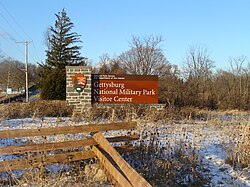
From the towering cliffs of the Grand Canyon to the hallowed grounds of Gettysburg, the NPS oversees a diverse portfolio of land and water, balancing the needs of millions of annual visitors with the critical necessity of environmental preservation.
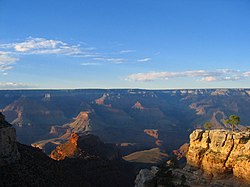
Key Facts

- Founded: August 25, 1916, via the National Park Service Organic Act.
- Total Land Area: Approximately 84 million acres of land and 4.5 million acres of water.
- Workforce: About 20,000 employees and nearly 280,000 volunteers (as of 2019).
- Annual Budget: $3.265 billion (FY2022).
- Scale: Manages 433 distinct units across the United States.
- Visitation: Over 319 million visitors annually (2023 data).
The National Park System: Scope and Scale
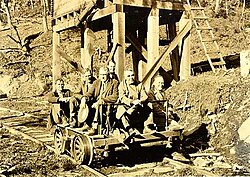
The National Park System is not composed solely of "National Parks." It includes a wide variety of designations, each with specific criteria for inclusion. These range from vast wilderness areas to specific historic buildings and monuments.
Diverse Designations
The system categorizes its holdings to better manage different types of resources. For example, National Monuments often protect specific objects of historic or scientific interest, while National Battlefields preserve sites of military significance.
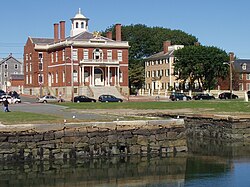
System Holdings and Assets
The sheer scale of the NPS's responsibility is evident in its holdings. Beyond land, the agency manages over 121 million museum objects, 27,000 historic structures, and thousands of miles of trails and roads.
| Classification | Number of Units | Area (Acres) | Visitors (2023) |
|---|---|---|---|
| National Park | 63 | 52,520,984 | 92,390,204 |
| National Monument | 87 | 1,993,636 | 13,786,614 |
| National Recreation Area | 18 | 3,710,771 | 51,443,904 |
| National Memorial | 31 | 10,499 | 41,152,084 |
| National Historic Sites/Parks | 140 | 231,558 | 35,738,635 |
Resource Stewardship and Environmental Policy

Managing millions of acres requires a scientific approach to resource stewardship—the responsible planning and management of resources. The NPS has evolved its strategies over decades to address changing environmental needs.
Evolution of Management Frameworks
- The Leopold Report (1963): A foundational document that shifted focus toward wildlife management and ecological integrity.
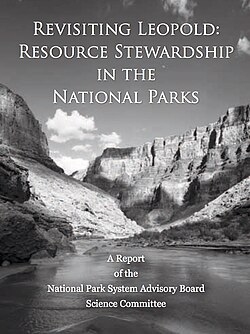
- Revisiting Leopold (2012): An update to stewardship policies to address modern challenges.
- Resist–Accept–Direct (RAD) (2021): A 21st-century framework for managers to handle "intensifying global change." Managers can choose to Resist change, Accept the autonomous trajectory of an ecosystem, or Direct the change toward a specific goal.
Agency Operations and Workforce
The NPS is powered by a diverse workforce of professionals. While Park Rangers are the most visible face of the agency, the NPS employs a vast array of specialists to maintain the parks.
Professional Roles
The agency's staff includes law enforcement, emergency medical providers, and search and rescue specialists. Scientific needs are met by biologists, botanists, geologists, and archeologists, while historic preservation is handled by curators, archivists, and historic architects.

Budgetary Allocation
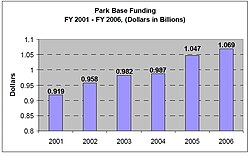
Funding is distributed across several operational areas. A significant portion of the budget is dedicated to facility maintenance and operations, which accounts for roughly 31.1% of spending (based on 2010 data), followed by park support and park protection.
Historical Milestones
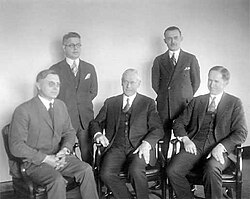
The growth of the NPS has been marked by key legislative acts and leadership. From the Antiquities Act of 1906 to the Great American Outdoors Act of 2020, legislation has continuously expanded the agency's ability to protect land.
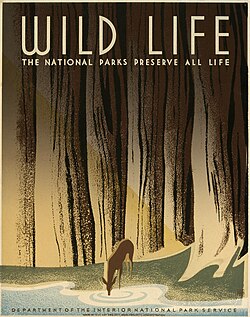
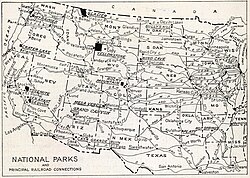
Early promotional efforts, such as the 1916 portfolio of nine major parks, helped generate public interest in the system. Over the century, the agency has transitioned from basic land management to complex climate-friendly initiatives and biodiversity monitoring, such as the BioBlitzes conducted in various parks.
Frequently Asked Questions

![National Park Service employment levels. Executives: abt 27; Gen Sch: 16–17,000; Others: 6–7,000[71]](/images/ba/d1/bad1a4733f56c89529011b7e564f28ae33ca383c181e6cfa5d109b8f0629bb1c.jpg)

What is the difference between a National Park and a National Monument?
While both are part of the National Park System, National Parks are typically larger and created by Congress to protect large-scale natural or cultural resources. National Monuments are often smaller and can be designated by the President under the Antiquities Act of 1906 to protect specific objects of historic or scientific interest.
What does the RAD framework mean for park management?
The Resist–Accept–Direct (RAD) framework is a strategy for managing ecosystems facing global change. It allows managers to decide whether to fight a change (Resist), let nature take its course (Accept), or steer the ecosystem toward a desired future state (Direct).
Who manages the National Park Service?
The NPS is led by a Director (currently Jessica Bowron, Acting Director) and falls under the jurisdiction of the United States Department of the Interior.
How is the National Park Service funded?
The NPS is funded through federal appropriations, including the annual budget (which was $3.265 billion in FY2022), as well as specialized funds like the Land and Water Conservation Fund and the Historic Preservation Fund.
What roles do volunteers play in the NPS?
Volunteers are critical to the agency's success. In 2019, there were approximately 279,000 Volunteers-In-Parks (VIP) who assist with various tasks, from visitor services to resource management.