National Museum of Beirut: A Journey Through Lebanon's Ancient Heritage
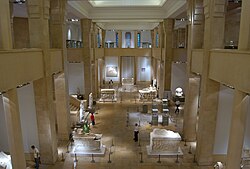
The National Museum of Beirut serves as the primary guardian of Lebanon's vast archaeological legacy. From the earliest hunter-gatherer societies to the medieval Mamluk period, the museum houses a collection that mirrors the complex history of the Levant. Officially opened in 1942, the institution preserves approximately 100,000 objects, offering a chronological window into the civilizations that shaped the region.
The museum is housed in a striking Egyptian Revival building, a style inspired by the monumental architecture of ancient Egypt. Despite facing immense challenges during the late 20th century, it remains a cornerstone of cultural identity in Beirut.
Key Facts
- Established: Officially opened May 27, 1942.
- Total Collection: Approximately 100,000 objects.
- Exhibited Items: About 1,300 artifacts on public display.
- Chronological Scope: Prehistory through the Ottoman era.
- Masterpiece: The Sarcophagus of Ahiram, featuring the oldest Phoenician alphabet text.
- Architecture: Egyptian Revival style, totaling roughly 5,500 square metres.
The History of the Institution
Origins and Foundation
The museum's roots date back to 1919, when French officer Raymond Weill exhibited a small collection of artifacts in the Kaiserswerth Deaconesses' building. This provisional start evolved as the Archaeological and Fine Arts Service began gathering items from the Beirut region, supplemented by major excavations in Saida, Tyre, and Byblos led by Dr. Georges Contenau and Ernest Renan.
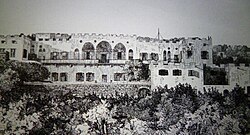
In 1923, the "Friends of the Museum Committee," led by Prime Minister Bechara El Khoury, was formed to fund a permanent home for these treasures. Construction began in 1930 on land donated by the municipality. Though completed in 1937, the onset of World War II delayed the official opening until 1942, when it was inaugurated by President Alfred Naqqache.
Survival During the Lebanese Civil War
The 1975 Lebanese Civil War placed the museum in a precarious position. Located on the demarcation line known as "Museum alley," the building became a front line between warring factions and was occasionally used as a military barracks. The structure suffered extensive shelling and bombing.
To save the collection, curator Mir Maurice Chehab and his wife implemented desperate protective measures. Small artifacts were hidden in a walled-up basement, floor mosaics were covered in concrete, and heavy statues and sarcophagi were shielded with sandbags and, eventually, wood and concrete encasements.
Renovation and Modern Era
Recovery began in 1992 under Minister Michel Edde. A significant milestone was the donation of a new main door by Ghassan Tueni, which secured the building against looting and allowed the removal of protective concrete walls. Following extensive restoration led by architect Jean-Michel Wilmotte, the museum reopened in 1997 and again in 1999.
In 1999, the government launched a campaign to recover stolen antiquities, citing Lebanese law that any item over 300 years old belongs to the state. Most recently, the 700-square-metre underground gallery was reopened in 2016 following a €1.2 million investment from the Italian government.
Exploring the Collections
Prehistory and the Bronze Age
The journey begins with the Lower Paleolithic (1M–150,000 BC) and Neolithic (9000–3200 BC) periods. These exhibits feature flint points, spearheads, and pottery found in caves across Lebanon.
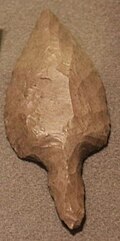
The Bronze Age (3200–1200 BC) marks the rise of fortified villages and the invention of the world's first alphabet in Byblos. The crown jewel of this era is the Sarcophagus of Ahiram, which contains the earliest known Phoenician alphabetic inscription.
The Iron Age and Phoenician Expansion
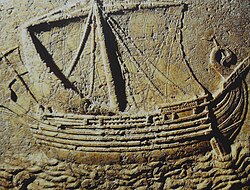
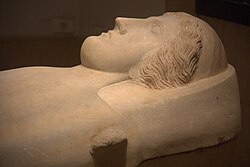
From 1200 to 333 BC, the Phoenician civilization reached its peak, expanding its maritime trade and spreading the alphabet. This era's collection reflects the influence of Assyrian, Babylonian, and Persian hegemony through intricate jewelry, ivory work, and royal sarcophagi.
Classical and Medieval Periods
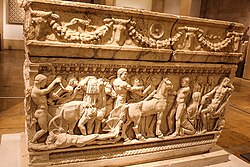
The Hellenistic period (333–64 BC) began with Alexander the Great's victory over Darius III, introducing Greek influence to Phoenicia. This was followed by the Roman period (64 BC–395 CE) and the Byzantine period (395–636 CE), both of which left behind significant architectural and sculptural remains.
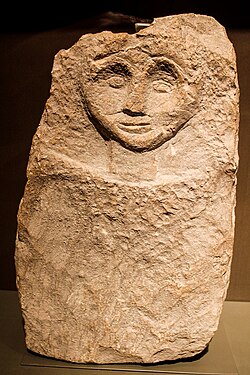
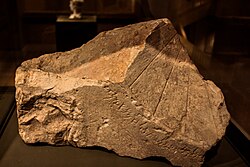
The final sections cover the Arab conquest and the Mamluk period (636–1516 CE). This era is represented by glazed terracotta bowls, gold jewelry, and coins, marking the transition to Arabic as the primary language of administration and daily life.
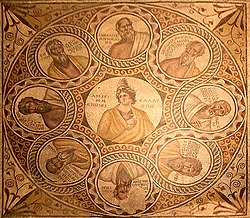
Museum Summary
| Category | Details |
|---|---|
| Total Objects | ~100,000 |
| Exhibited Objects | ~1,300 |
| Total Site Area | 5,500 sq metres |
| Exhibition Space | 6,000 sq metres |
| Key Eras | Paleolithic, Bronze Age, Iron Age, Hellenistic, Roman, Byzantine, Mamluk |
Frequently Asked Questions
What is the most important artifact in the museum?
The Sarcophagus of Ahiram is considered the museum's masterpiece because it bears the oldest known text written in the Phoenician alphabet.
How did the museum survive the Lebanese Civil War?
The collection was saved through preemptive measures by curator Mir Maurice Chehab, who hid small items in a walled-up basement and protected larger statues and mosaics with sandbags and concrete.
What is the architectural style of the building?
The museum is built in the Egyptian Revival style, which draws inspiration from the monumental forms of ancient Egyptian architecture.
How are the exhibits organized?
The museum follows a chronological circuit. The ground floor features 83 large objects like sarcophagi and mosaics, while the upper floor houses 1,243 smaller artifacts arranged by theme and date.
Who funded the restoration of the basement gallery?
The restoration of the 700-square-metre underground gallery was supported by the Italian government, which provided €1.2 million through the Italian Development Cooperation.