National Museum of Aleppo: A Treasury of Syrian Heritage
Located in the heart of northern Syria on Baron Street, the National Museum of Aleppo stands as the largest museum in the city. Established in 1931, this institution serves as a vital repository for the archaeology of Syria, with a primary focus on discoveries from the northern regions of the country. Situated near the iconic Baron Hotel, Bab al-Faraj Square, and the Clock Tower, the museum offers a comprehensive journey through millennia of human history.
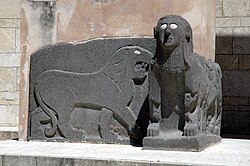
The museum's entrance immediately signals its historical significance, featuring a temple gateway from the Iron Age Neo-Hittite settlement of Tell Halaf, complete with a female sphinx dating back to the 9th century BC.
Key Facts
- Founded: 1931.
- Location: Baron Street, Aleppo, Syria.
- Primary Focus: Archaeology of Syria, specifically the northern regions.
- Key Eras: Strong emphasis on the Iron Age and the Islamic period.
- Architects: The modern building was designed by Zdravko Bregovac and Vjenceslav Richter.
- Notable Artifacts: Includes a 12th-century astrolabe and the oldest known civilized human shelter (8500 BC).
History and Architecture
The museum began its life in 1931 when Syrian authorities designated a small Ottoman palace to house the city's national collection. By 1966, the growing volume of artifacts necessitated a larger space. The original palace was demolished to make way for a modern structure, a project led by Yugoslav architects Zdravko Bregovac and Vjenceslav Richter, whose design won first prize in a competition.
The institution has faced significant challenges in recent years. In July 2016, the building suffered extensive structural and roof damage due to missiles and mortar shells. While much of the collection had been evacuated, some items remained at risk. More recently, the 2023 Turkey–Syria earthquakes caused cracks in the museum's façade and damaged various artifacts inside.
Museum Collections and Layout
The National Museum of Aleppo organizes its vast collection across two floors and two courtyards, spanning from prehistoric times to the modern era.
Ground Floor: Prehistory and Ancient Civilizations
The ground floor is split into two primary sections. The Prehistoric Culture section features a large hall with Stone Age tools and items found in Ebla, Ain Dara, and Aleppo. Notably, it houses a reconstructed civilized human shelter from Mureybet dating to 8500 BC.
The Ancient Syrian Civilizations section is divided into halls based on geography and culture. Visitors can find Bronze Age objects from Ugarit and Hama, cuneiform scripts (ancient wedge-shaped writing) and statues from Mari, and discoveries made by Max Mallowan at Tell Brak. The section also showcases Assyrian-style statues from the Euphrates and Al-Jazeera regions.
Key halls in this section include:
- The Hall of Al Jazeera Hills
- The Hall of Mari
- The Hall of Hama Region
- The Hall of Ugarit
- The Hall of Tell Halaf
- The Hall of Arslan Tash
- The Hall of Tell Ahmar
- The Hall of Ebla
- The Hall of Ancient Statues and Cuneiform Scripts
Second Floor: Classical, Islamic, and Modern Art
The upper level transitions into later historical periods through three distinct sections:
- Classical Remnants: Features pottery, glassware, mosaics, and coins from the Greek, Hellenistic, Roman, and Byzantine periods.
- Arabic-Islamic History: Houses manuscripts, Arabic coins, and pottery, alongside a 12th-century tomb and a 12th-century astrolabe (an ancient astronomical instrument).
- Modern Art: Showcases works by artists from Aleppo and other Syrian cities, featuring a sixth-century fantastic mosaic and a scale model of the old city of Aleppo.
The Courtyards
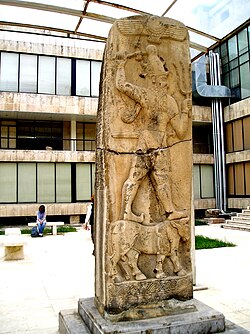
The museum's internal courtyard displays a large third-century mosaic figure and massive basaltic statues representing Roman and ancient Hittite mythological characters. The external courtyard is dedicated to monuments from the Arabic, Byzantine, Aramaic, and Assyrian civilizations.
Museum Summary
| Feature | Details |
|---|---|
| Established | 1931 |
| Location | Baron Street, Aleppo, Syria |
| Primary Eras | Iron Age, Islamic Period, Prehistoric |
| Key Architectural Style | Modern (designed by Bregovac and Richter) |
| Notable Finds | Tell Halaf gateway, Mureybet shelter (8500 BC), 12th-century astrolabe |
Frequently Asked Questions
When was the National Museum of Aleppo founded?
The museum was established in 1931, originally housed in a small Ottoman palace before moving to its current modern building in 1966.
What are the most prominent historical periods represented in the museum?
While the museum covers all historical periods, the largest sections are dedicated to the Iron Age and the Islamic period.
What is the significance of the museum's entrance?
The entrance is a temple gateway from the 9th century BC Neo-Hittite settlement of Tell Halaf, featuring a female sphinx.
Has the museum been affected by recent conflicts or disasters?
Yes, the museum suffered extensive structural damage from missiles and mortar shells in July 2016 and sustained façade cracks and artifact damage during the Turkey–Syria earthquakes in February 2023.
What can be found in the Prehistoric Culture section?
This section contains Stone Age tools from Aleppo, Ebla, and Ain Dara, as well as a civilized human shelter from Mureybet dating back to 8500 BC.