National Liberation Wars: A Global History of Decolonization
The history of the modern world is defined by the struggle for self-determination. National liberation wars—conflicts fought by colonies or occupied territories to achieve sovereignty—have reshaped global borders and political ideologies over the last two centuries. These movements often emerged from a growing national consciousness, fueled by the desire to end foreign domination and establish independent states.
Early Waves of Independence
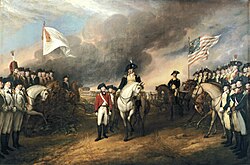
The late 18th and 19th centuries marked the beginning of a global shift toward liberation. The Haitian Revolution (1791–1804) stands as one of the first wars of national liberation, where self-liberated slaves fought against Imperial France. This movement was influenced by the interconnected spirit of the American and French Revolutions, which sparked a rise in national consciousness across the Atlantic world.
Similarly, the Spanish American wars of independence (1808–1833) saw patriots engage in complex conflicts against royalists, eventually leading to the creation of several new Latin American states.
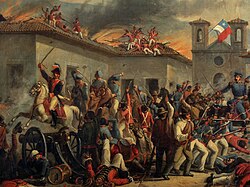
In Europe and Asia, other movements challenged established empires. The Siege of Patras in 1821 catalyzed the Greek War of Independence, which ended Ottoman rule and established the Kingdom of Greece. In India, discontent with British company rule culminated in the Sepoy Mutiny (1857–1858), an event frequently described as the First War of Indian Independence.
The Early 20th Century and the World Wars
The period surrounding the World Wars accelerated the collapse of old empires. In Ireland, the 1916 Easter Rising in Dublin paved the way for the Irish War of Independence (1919–1921), resulting in the formation of the Irish Free State. Following the 1917 Russian Revolution and World War I, the Bolsheviks faced various independence movements; while some were unsuccessful, Finland, Estonia, Latvia, Lithuania, and Poland successfully gained their independence.
The Ukrainian People's Republic also fought for independence from 1917 to 1921, though it was ultimately absorbed into a Soviet republic. Meanwhile, the Turkish National Movement fought a series of campaigns from 1919 to 1922, leading to the withdrawal of Allied forces and the birth of the Republic of Turkey.
Cold War Ideologies and Global Decolonization
Following World War II, the drive for liberation expanded rapidly across Asia and Africa. Conflicts such as the Indonesian War of Independence (1945–1949), the First Indochina War (1946–1954), the Vietnam War (1959–1975), the Bangladesh Liberation War (1971), and the Algerian War (1954–1962) were all framed as national liberation struggles.
Many of these movements were supported by the Soviet Union. This alliance was rooted in the shared objectives of communism and socialism. The theoretical framework for this struggle was largely influenced by Vladimir Lenin's 1916 work, Imperialism, the Highest Stage of Capitalism, which defined imperialism as the expansion of a state's power through diplomacy or military force.
A key figure in this era was Ho Chi Minh, a founding member of the French Communist Party (PCF) in 1921, who founded the Viet-Minh in 1941 and declared Vietnamese independence on September 2, 1945. By 1961, Soviet premier Nikita Khrushchev explicitly pledged support for national liberation wars globally. During the same decade, Cuba, under Fidel Castro, provided support to liberation movements in Angola and Mozambique.
Late 20th Century to Modern Era
The struggle for independence continued into the late 20th century. The Portuguese colonial wars ended in 1975 with the recognition of Guinea-Bissau, Angola, and Mozambique as independent states following the April Carnation Revolution. In Rhodesia, the ZANLA and ZAPU forces engaged in guerrilla warfare and terrorism until the 1979 end of white-majority rule, leading to the independence of Zimbabwe in April 1980 via the Lancaster House Agreement.
More recent conflicts have seen liberation movements target specific regimes or occupations. In 1991, a US-led coalition liberated Kuwait from Iraqi occupation. The breakup of Yugoslavia led to several independence conflicts, including the Ten-Day War and the Croatian War of Independence. In Africa, the AFDL invaded Zaire to overthrow Mobutu, renaming the country the Democratic Republic of the Congo. More recently, the 2011 Libyan Civil War ended 42 years of Muammar Gaddafi's rule, and the Syrian Civil War culminated in December 2024 with the downfall of the Assad regime's 54-year authoritarian rule.
Key Facts
- Haitian Revolution: One of the first national liberation wars, pitting self-liberated slaves against France.
- Ideological Influence: Many 20th-century movements were supported by the Soviet Union and influenced by Lenin's theories on imperialism.
- Key Figures: Ho Chi Minh (Vietnam) and Fidel Castro (Cuba) were pivotal in promoting anti-colonialist and socialist liberation.
- Recent Shifts: Modern liberation movements have shifted from colonial independence to the overthrow of authoritarian regimes, such as in Libya (2011) and Syria (2024).
| Region/Country | Conflict/Movement | Period | Outcome |
|---|---|---|---|
| Haiti | Haitian Revolution | 1791–1804 | Independence from France |
| Latin America | Spanish American Wars | 1808–1833 | Formation of new states |
| Ireland | Irish War of Independence | 1919–1921 | Irish Free State established |
| Vietnam | Vietnam War | 1959–1975 | National liberation |
| Zimbabwe | Rhodesian Bush War | Until 1979 | Independence in 1980 |
| Syria | Syrian Civil War | 2011–2024 | Downfall of Assad regime |
Frequently Asked Questions
What is a national liberation war?
A national liberation war is a conflict fought by a people—often under colonial rule or an authoritarian regime—to achieve political independence and sovereignty over their own territory.
How did the Soviet Union influence these wars?
The Soviet Union provided support to many anti-colonialist movements because the revolutionary goals of socialism and communism aligned with the objectives of leaders seeking to overthrow imperialist powers.
What role did Lenin's theories play in decolonization?
Lenin's 1916 book, Imperialism, the Highest Stage of Capitalism, provided a theoretical framework that helped anti-colonial leaders understand and challenge the economic and political structures of imperialism.
Which movements were part of the Portuguese colonial wars?
The Portuguese colonial wars led to the independence of Angola, Mozambique, and Guinea-Bissau in 1975, following the April Carnation Revolution in Portugal.
What was the result of the Syrian Civil War in terms of liberation?
The conflict culminated in December 2024 with the downfall of the Ba'athist rule and the end of the Assad regime's 54 years of authoritarian control.