Nathaniel Rochester: The Founder of Rochesterville
The story of Rochester, New York, begins not with a city plan, but with the diverse career of a man named Nathaniel Rochester. From the battlefields of the American Revolution to the mercantile hubs of Maryland and the wild frontiers of New York, Rochester's life was defined by leadership, entrepreneurship, and a keen eye for real estate.
Military Service and Political Beginnings
In 1775, as the American Revolution intensified, Rochester emerged as a civic leader in Orange County, North Carolina. Appointed to the Committee of Safety, he was tasked with promoting the revolutionary spirit, securing arms and ammunition, and preventing the sale of East India teas. His commitment to the cause led him to represent Hillsborough at the Third Provincial Congress.
Rochester's military career progressed rapidly. He served as a major in the North Carolina militia and as a paymaster for the minutemen. By 1776, he reached the rank of colonel in the North Carolina Line. During his service, he led forces in pursuit of Tories—loyalists to the British Crown—and successfully captured five hundred retreating Tories following the Battle of Moore's Creek Bridge.
Although illness eventually forced him to resign his military command, Rochester remained a political force. He served in the North Carolina General Assembly as a county clerk and managed the construction of a courthouse and an arms factory, while also helping establish a local academy.
Transition to Business and Maryland Life
In 1778, Rochester shifted his focus toward commerce, entering a mercantile partnership with James Brown and Colonel Thomas Hart, a wealthy land speculator. This period marked the beginning of Rochester's lifelong passion for real estate investment.
Following the British occupation of Hillsborough, Rochester relocated to Philadelphia. After recovering from a bout of smallpox, he moved to Hagerstown, Maryland, where he and Hart partnered in several ventures, including a bank, a farm, a nail and rope factory, and a flour mill.
Rochester spent thirty years in Maryland, integrating himself into the state's governance and finance. He served as a presidential elector, a vestryman of Saint John's Church, and a term in the Maryland General Assembly. In 1807, he became the first president of the Hagerstown Bank.
Venturing into the New York Frontier
The seeds of the future city were sown in 1800 when fellow Hagerstown Bank directors, Colonel William Fitzhugh and Major Charles Carroll, convinced Rochester to prospect for land along the Genesee River in New York. On their first trip to Dansville, Rochester purchased 520 acres.
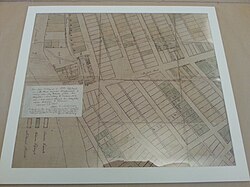
In 1803, the trio returned to the region and discovered an abandoned grist and saw mill near the river's Upper Falls, originally opened in 1789 by Ebenezer “Indian” Allen. Recognizing the strategic value of the site—where goods traveling toward Lake Ontario would need to be unloaded—they purchased a 100-acre tract. The final payment of $1,750 was completed in June 1808.
Establishing a Legacy in the Genesee Valley
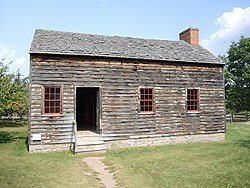
Rochester moved his family to the river valley in May 1810, establishing a homestead in Dansville. He quickly became a prominent figure, launching various mills and businesses. By 1814, he had built a significant portfolio, including the first paper mill in Western New York, which he eventually sold for $24,000 before moving to East Bloomfield.
The Birth of Rochesterville
In 1811, Rochester began transforming the Upper Falls tract into a planned community. He implemented a gridiron pattern (a city layout of straight streets crossing at right angles) and designated specific plots for business, church, and municipal use. He sold quarter-acre lots on Buffalo Street and Mill Street, requiring buyers to build a structure of at least twenty-by-sixteen feet within one year.
The settlement, previously known as "The Falls" or "Falls Town," was renamed Rochesterville. When questioned about the vanity of using his own name, Rochester jokingly noted that using the names of his partners, Fitzhugh or Carroll, would only offend the one left out.
Growth and Incorporation
The first settler, Hamlet Scrantom, arrived on May 1, 1812. He was followed by other pioneers, including Jehiel Barnard, who opened the first tailor shop and meeting house, and Abelard Reynolds, who established the first post office. The War of 1812 accelerated growth, as the village became a vital waypoint and depot for military supplies.
The trajectory of the town changed forever in 1817 when Rochester petitioned the state to route the Erie Canal through the village. The government's approval of this route sparked immense growth. That same year, after a second attempt, the settlement was incorporated as the City of Rochester (the "-ville" suffix was dropped in 1822).
Rochester's final major contributions included organizing St. Luke's Episcopal Church and playing a pivotal role in the 1821 creation of Monroe County, named after President James Monroe. He served as the county's first clerk and its first representative to the New York State Assembly.
Key Facts
- Military Rank: Attained the rank of Colonel in the North Carolina Line.
- Strategic Purchase: Bought a 100-acre tract at the Genesee River Upper Falls for a final price of $1,750.
- Urban Planning: Designed Rochesterville using a gridiron street pattern.
- Economic Catalyst: Successfully petitioned for the Erie Canal to pass through the city.
- Civic Leadership: Served as the first county clerk and State Assembly representative for Monroe County.
| Period | Primary Location | Key Roles & Achievements |
|---|---|---|
| 1775–1777 | North Carolina | Colonel in NC Line; Member of General Assembly |
| 1778–1809 | Maryland | President of Hagerstown Bank; Sheriff of Washington County |
| 1810–1814 | Dansville, NY | Established first paper mill in Western New York |
| 1811–1821+ | Rochester, NY | Founded Rochesterville; First Monroe County Clerk |
Frequently Asked Questions
Why was the city named Rochester?
The settlement was originally called The Falls or Falls Town. The partners agreed to name it Rochesterville to avoid offending any one partner by choosing the name of another, with Nathaniel Rochester noting it was the most diplomatic solution.
How did the War of 1812 affect the growth of the city?
The war drove settlers inland from Lake Ontario and turned Rochesterville into a military supply depot. This increased visibility led many travelers to purchase land in the village.
What role did the Erie Canal play in the city's development?
Nathaniel Rochester petitioned the state to ensure the canal followed a northern route that crossed the Genesee River at his settlement. The government's acceptance of this route was a primary driver of the city's growth.
What was the gridiron pattern used in the city's layout?
The gridiron pattern is a system of urban planning where streets are laid out in a straight grid of parallel and perpendicular lines, creating rectangular blocks for municipal, business, and residential use.
What other roles did Nathaniel Rochester hold in New York?
Beyond founding the city, he was a member of the New York State Assembly and served as the first county clerk for the newly formed Monroe County.