Naram-Sin: The God-King of the Akkadian Empire
In the annals of ancient Mesopotamia, few figures loom as large or as controversially as Naram-Sin. The grandson of Sargon the Great, Naram-Sin presided over the Akkadian Empire at the zenith of its power, expanding its borders to unprecedented reaches and fundamentally altering the relationship between kingship and divinity.
Reigning approximately from 2255 to 2218 BC, Naram-Sin was not merely a political leader but a revolutionary figure who claimed the title "God of Akkad." By declaring himself divine, he broke with the traditions of his predecessors, positioning himself as a patron deity of his capital city, much like the god Enlil was to the city of Nippur.
Key Facts
- Reign: c. 2255 – 2218 BC (Middle Chronology).
- Dynasty: Dynasty of Akkad; grandson of Sargon of Akkad.
- Divine Status: The first Mesopotamian king to claim divinity and the title "God of Akkad."
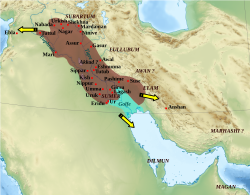
- Imperial Reach: Expanded the empire from Elam in the east to Ebla and Armanum in the west.
- Unique Title: First ruler to use the title "King of the Four Quarters" (or Four Corners of the World).
Imperial Expansion and Military Conquests
Naram-Sin was a formidable military strategist who ensured the Akkadian Empire reached its maximum territorial extent. His campaigns were wide-ranging, stretching from the highlands of modern-day Iran to the plains of Syria and Turkey.
The Conquest of Armanum and Ebla
One of Naram-Sin's most significant achievements was the defeat of Ebla (located southwest of modern Aleppo) and the city of Armanum. Evidence of these victories is preserved in year names, such as "The year the king went on a campaign in Amarnum," and various inscribed artifacts including a marble lamp and a copper bowl. A stele fragment discovered at Tulul al-Baqarat further documents these western campaigns.
Control of Elam and Internal Revolts
Beyond the west, Naram-Sin focused heavily on the east, asserting control over Elam. His reign was not without challenge; he spent significant energy crushing internal revolts to maintain the integrity of the empire. His dominance over these regions is evidenced by various seals and inscriptions found across the Near East.
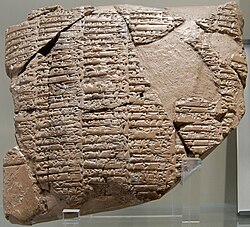
The Victory Stele of Naram-Sin
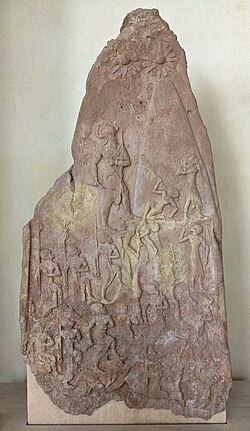
The most iconic remnant of his reign is the Victory Stele of Naram-Sin. This pinkish limestone monument, measuring 2 meters tall and 1.05 meters wide, depicts the king ascending a mountain, triumphing over the defeated Lullubi people and their king, Satuni.
The stele is a masterpiece of ancient art, breaking from traditional horizontal registers to use diagonal tiers to tell its story. Notably, Naram-Sin is depicted wearing a horned helmet, a symbol reserved exclusively for gods in Mesopotamian iconography. The monument also provides some of the earliest known depictions of plate armor and battle standards.
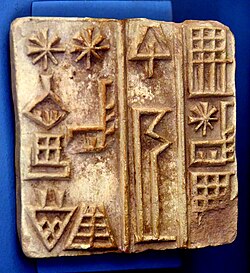
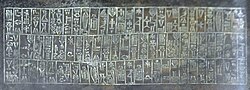
The stele was eventually carried off to Susa by the Elamite king Shutruk-Nahhunte in the 12th century BC, who added his own inscription to the monument before it was later recovered by archaeologists.
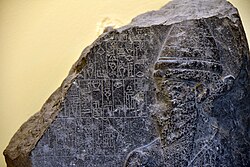
The Curse of Akkad and the Fall of Empire
Despite his earthly success, later Mesopotamian tradition painted a darker picture of Naram-Sin's legacy. The historiographic poem The Curse of Akkad suggests that the empire's eventual collapse was divine retribution.
According to the myth, Naram-Sin angered the chief god Enlil by plundering the Ekur (Enlil's temple in Nippur). In response, Enlil summoned the Gutians from the mountains east of the Tigris, bringing plague, famine, and economic collapse. The poem describes a period of hyperinflation where a single lamb could only purchase a small amount of grain or wool, leading to the eventual destruction of the city of Akkad.
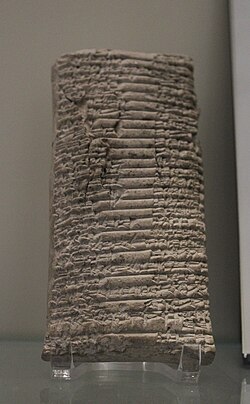
Archaeological Legacy and Nabonidus
Naram-Sin's influence persisted long after his death. Around 550 BC, King Nabonidus—often cited as the first archaeologist—conducted excavations to find the foundation deposits of temples built by Naram-Sin in Sippar and Harran. While Nabonidus's dating of these artifacts was off by roughly 1,500 years, his efforts to restore these ancient sanctuaries highlight the enduring prestige of the Akkadian era.
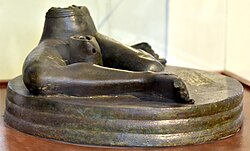
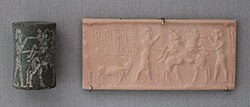
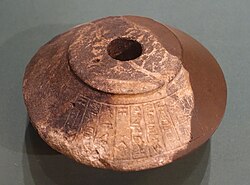
Other surviving artifacts include a mace head dedicated to the goddess Ishtar at Nippur, various cylinder seals, and alabaster vases that continue to bear the title "King of the four regions."
Summary of Naram-Sin's Reign
| Category | Details |
|---|---|
| Titles | God of Akkad, King of the Four Quarters, King of the Universe |
| Key Conquests | Elam, Ebla, Armanum, Lullubi |
| Family | Son of Manishtushu; Grandson of Sargon; Father of Shar-Kali-Sharri |
| Major Artifact | Victory Stele (Louvre Museum) |
| Historical End | Empire eventually fell to the Gutians |
Frequently Asked Questions
Why was Naram-Sin considered unique among Mesopotamian kings?
Naram-Sin was the first Mesopotamian ruler to claim divinity for himself during his own lifetime, taking the title "God of Akkad" and depicting himself with the horned helmet of a deity.
What does the title "King of the Four Quarters" mean?
This title signified Naram-Sin's claim to universal dominion, asserting that his authority extended to the four corners of the known world.
What is the significance of the Victory Stele?
Beyond its artistic innovation in using diagonal composition, the stele serves as political propaganda, visually asserting Naram-Sin's divine status and his military triumph over the Lullubi.
How did the "Curse of Akkad" explain the empire's fall?
The poem claims that Naram-Sin's hubris and his plundering of Enlil's temple led the gods to curse the city of Akkad and invite the Gutian invaders to destroy the empire.
Who was the first person to "archaeologically" study Naram-Sin?
King Nabonidus, ruling around 550 BC, is credited as the first archaeologist for excavating and restoring Naram-Sin's foundation deposits and temples.