Nadiya Savchenko: Detention and Trial in the Russian Federation
The case of Nadiya Savchenko became a global flashpoint for international law and human rights during the conflict in Eastern Ukraine. A Ukrainian servicewoman who transitioned from a prisoner of war to a symbol of national resistance, Savchenko's journey through the Russian legal system highlighted the deep geopolitical tensions between Kyiv and Moscow.
The Arrest and Allegations
In July 2014, reports emerged that Savchenko was being held in a detention center in Voronezh, Russia. Vladimir Markin, a spokesman for Russia's Investigative Committee—a federal agency reporting directly to the Russian President—confirmed her detention. She was charged with complicity in the June 17 killing of two Russian journalists, sound producer Anton Voloshin and correspondent Igor Kornelyuk, who died during a mortar attack on a rebel checkpoint near Luhansk.
Ukrainian officials countered these claims, stating the journalists had not been accredited and failed to follow safety protocols. Savchenko's defense team presented an alibi based on mobile phone billing data from the Ukrainian Security Service, which indicated she had been captured by Russian-backed separatists an hour before the fatal attack occurred.

Contradictions in the Russian Narrative
The Russian government's account of Savchenko's arrival in Russia shifted over time. By late 2015, the Investigative Committee claimed she had crossed the border voluntarily as a refugee without documents. This contradicted earlier reports from the pro-Kremlin channel NTV, which stated she had been captured by rebels and handed over to Russian authorities. Ukrainian officials maintained she had been kidnapped by Russian intelligence services in collaboration with pro-Russian rebels.
In 2016, journalist Semen Zakruzhnyi investigated the route alleged by the Investigative Committee, concluding that the locations mentioned in the indictment had never been visited by Savchenko or the investigators.
Legal Battles and International Outcry
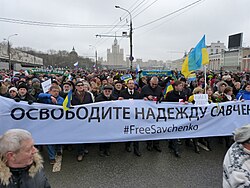
Savchenko's trial was marked by severe conditions. She was held in a courtroom cage—a common Russian practice for defendants without bail—despite rulings from the European Court of Human Rights stating that defendants should not be caged. Her defense was led by Mark Feygin, a lawyer known for representing Pussy Riot, who categorized Savchenko as a prisoner-of-war.
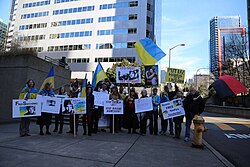
The international community responded with strong condemnation. The European Union and the United States called for her release, with U.S. Secretary of State John Kerry expressing concern over her solitary confinement, interrogations, and forced psychiatric evaluations. In Ukraine, President Petro Poroshenko described her detention as a violation of international law and a symbol of the Ukrainian spirit.
Parliamentary Immunity and PACE
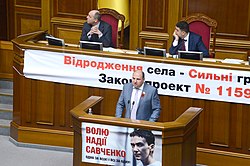
On January 26, 2015, Savchenko became a delegate to the Parliamentary Assembly of the Council of Europe (PACE). This granted her parliamentary immunity in all signatory states, including Russia. While the Russian Duma dismissed this as an attack on Russia, the Russian delegation to PACE expressed support for her release. PACE eventually declared her abduction and imprisonment a "de facto kidnapping" and a violation of international law.
Conviction and Release
Despite her hunger strikes and declarations of innocence, the court in Donetsk found Savchenko guilty on March 21, 2016, of illegally crossing the border and the murder of the two journalists. Savchenko refused to recognize the verdict, calling the trial a "farce played out by Kremlin puppets."
Savchenko was finally freed on May 25, 2016, as part of a prisoner swap for two Russian servicemen. Following a pardon from President Vladimir Putin, she was flown to Boryspil, where she was awarded the Golden Star and the honorary title of Hero of Ukraine.

Key Facts
- Charges: Complicity in the killing of two Russian journalists and illegal border crossing.
- Defense: Mobile phone data provided an alibi showing she was captured before the attack.
- Legal Status: Obtained parliamentary immunity via PACE in January 2015.
- Outcome: Convicted in March 2016; released via prisoner swap in May 2016.
- Honors: Awarded the title of Hero of Ukraine by President Petro Poroshenko.
Case Summary
| Event/Entity | Details |
|---|---|
| Detention Site | Voronezh, Russian Federation |
| Key Defense Lawyer | Mark Feygin |
| International Support | USA, European Union, PACE |
| Russian Verdict | Guilty of murder and illegal border crossing |
| Release Method | Prisoner swap and presidential pardon |
Public Image and Legacy
Savchenko's case sparked polarized reactions. In Ukraine, the #SaveOurGirl campaign portrayed her as a national hero, leading the city of Vatutine to rename Lenin Square to Nadiya Savchenko Square. Conversely, Russian state media demonized her, with publications like Komsomolskaya Pravda calling her a "killing machine in a skirt." However, Russian opposition figures, including Alexei Navalny, criticized the trial as an "obvious stitch-up."
Frequently Asked Questions
Why was Nadiya Savchenko arrested by Russia?
She was accused of complicity in a mortar attack that killed two Russian journalists, Igor Kornelyuk and Anton Voloshin, and of illegally crossing the Russian border.
Did Savchenko have an alibi?
Yes. Her defense team provided mobile phone billing data from the Ukrainian Security Service showing she had been captured by separatists one hour before the attack took place.
What was the significance of her appointment to PACE?
Her appointment as a delegate to the Parliamentary Assembly of the Council of Europe granted her diplomatic immunity in all signatory states, including Russia, though Russia did not release her based on this status.
How was she eventually released from Russian custody?
She was released on May 25, 2016, through a prisoner swap for two Russian servicemen and a pardon granted by President Vladimir Putin.
How did the international community view her trial?
The US and EU condemned her detention, and PACE described her imprisonment as a violation of international law amounting to a de facto kidnapping.