NABI 416 and Ikarus USA Bus History
The evolution of the NABI 416 represents a significant chapter in North American transit history, blending European engineering with American manufacturing requirements. Born from a partnership between the Hungarian Ikarus Bus company and various U.S. entities, these vehicles were designed to provide durable transit solutions while adhering to strict domestic production laws.
The Origins of the SFW Series
To comply with Buy America requirements—regulations ensuring that federally-subsidized transit vehicles are manufactured domestically—the SFW series utilized a unique production method. Rolling shells (the basic structural frame of the bus) were assembled by Ikarus in Hungary and then shipped to the United States for final completion.
Following the end of a partnership with Crown Coach in 1986, Ikarus formed a joint venture with the Union City Body Company (UCBC) of Indiana. This collaboration led to the launch of the Ikarus USA 416, a rigid bus based on the Ikarus 415. Final assembly began in 1989 at the UCBC plant in Anniston, Alabama. The product line expanded in 1991 with the introduction of the Ikarus USA 436, an articulated version designed for higher passenger capacities.
The Jacksonville Transportation Authority received the first 416 delivery in 1989, while the Port Authority of Allegheny County took delivery of the first 436 in 1991.
Innovation and Corporate Transition
In 1991, Ikarus pushed the boundaries of fuel technology by building a prototype 416 powered by liquefied natural gas (LNG). Requested by Metro in Houston, this vehicle is claimed to be the first LNG-powered bus produced in the United States, completed just three days before a competitor's retrofit.
The manufacturing landscape shifted in 1992 when UCBC declared bankruptcy. Production continued in Anniston under a new entity called American Ikarus, which was later renamed North American Bus Industries (NABI) in 1997. To improve durability, NABI introduced a stainless steel frame option for the SFW line in 1998.
The Final Iterations and Retirement
As the market evolved, the articulated 436 model was phased out in 2002, with the final order produced for SamTrans. However, the 416 continued to evolve. In 2008, a "Gen II" restyle was unveiled. This update featured small quarter windows between the windshield and the door or driver's side window, aligning its aesthetic with the NABI LFW Gen II. Notably, NJ Transit was the only agency to order this restyled version.
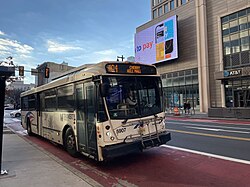
Body production for the 416 remained in Hungary until late 2012, at which point it transitioned entirely to the Anniston facility. The 416 was officially discontinued in 2013 following the acquisition of NABI by New Flyer Industries.
Key Facts
- Manufacturing Process: Shells were built in Hungary and finished in Alabama to meet Buy America laws.
- First Delivery: The 416 debuted with the Jacksonville Transportation Authority in 1989.
- Fuel Milestone: Produced the first U.S.-made LNG-powered bus prototype in 1991.
- Corporate Evolution: Transitioned from UCBC to American Ikarus, then to NABI, and finally to New Flyer Industries.
- Exclusive Design: The "Gen II" restyle of the 416 was used exclusively by NJ Transit.
Model Comparison Summary
| Model | Type | Introduction Year | Key Feature/Status |
|---|---|---|---|
| Ikarus USA 416 | Rigid | 1989 | Discontinued 2013; Gen II variant available |
| Ikarus USA 436 | Articulated | 1991 | Discontinued 2002 |
Frequently Asked Questions
Why were the buses assembled in two different countries?
The buses were assembled in Hungary and finished in the United States to satisfy Buy America requirements, which mandate that federally-subsidized transit vehicles meet specific domestic content thresholds.
What was the significance of the 1991 LNG prototype?
The 1991 prototype is recognized as the first liquefied natural gas (LNG) powered bus produced in the United States, developed at the request of Metro in Houston.
What changes were made in the "Gen II" restyle?
The Gen II restyle added small quarter windows between the windshield and the driver's side window or door, giving it a look similar to the NABI LFW Gen II.
Who eventually acquired NABI?
NABI was sold to New Flyer Industries in 2013, which coincided with the discontinuation of the 416 model.
Which agency operated the Gen II 416 buses?
The restyled Gen II version of the 416 was ordered exclusively by NJ Transit.