Music: The Universal Language of Human Creativity
Music is the intentional arrangement of sound to create combinations of form, harmony, melody, and rhythm. Recognized as a cultural universal, music exists in every known human society, serving as a versatile medium for expressing creativity and emotion. While scholars agree that a few specific elements define music, the exact necessary components remain a subject of academic debate.
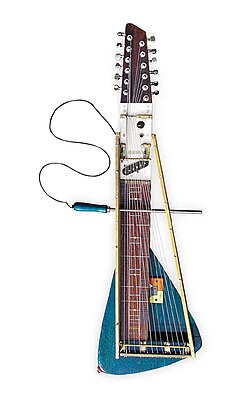
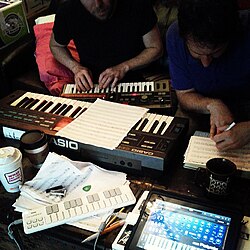
The creation of music generally falls into three categories: composition (the planning of a work), improvisation (creating music spontaneously), and performance (the act of playing the music). This art form can be produced through the human voice, a vast array of musical instruments, or mechanical and electronic means, such as digital audio workstations (DAWs) and music boxes.
Key Facts
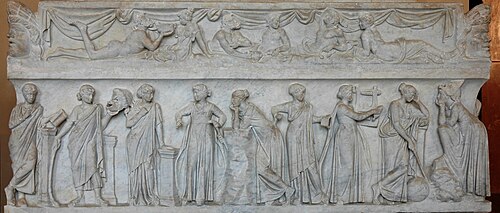
- Cultural Universality: Music is present in all human societies and is often transmitted through cultural traditions.
- Core Elements: Music is primarily built upon pitch, melody, harmony, and rhythm.
- Versatile Application: Beyond entertainment, music is integral to religious ceremonies, social events, and media soundtracks for film and gaming.
- Academic Scope: The study of music spans multiple disciplines, including musicology, psychology, neuroscience, and ethnomusicology.
- Therapeutic Use: Music therapy is utilized to improve mental health and well-being.
The Evolution of Music

Origins and Antiquity
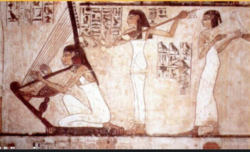
Music's roots stretch back to prehistory, with archaeological finds such as bone flutes dating back approximately 43,150 to 39,370 BP. From the murals of ancient Egypt to the complex traditions of Asian cultures, music has always been intertwined with human civilization.
![Bone flute from Geissenklösterle, Germany, dated around c. 43,150–39,370 BP.[22]](/images/af/d0/afd0fd891c0020c733bff534219f6ca12c864ba1d7a2d47c102587927976c886.jpg)
The Romantic Era (c. 1820–1900)
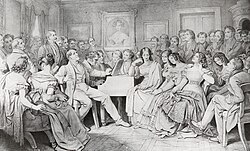
The Romantic period marked a shift away from the rigid structures of the Classical era. Emphasizing emotion, individualism, and the glorification of nature, composers like Wagner and Brahms sought to express deeper human truths. This era introduced symphonic tone poems—instrumental pieces designed to evoke specific images or landscapes—and nationalistic orchestral music inspired by folk traditions.
Modernity and Technology
The 20th and 21st centuries revolutionized how music is recorded and consumed. The transition from sheet music and phonographs to tape machines, and eventually to Compact Discs (CDs) and smartphones, changed the industry. By 1999, CDs held 87.9% of the music sales market share. Today, digital audio workstations allow for complex production and sequencing without the need for traditional instruments.
![Compact Disc Digital Audio (CD-DA) revolutionized audio music formatting. It allowed for music to be played portably without the need to rewind a series of tape. The CD surpassed LP sales in 1988, and cassette tapes in 1991. By 1999, the CD accounted for 87.9% of the entire market share in regard to music sales.[147]](/images/ab/e8/abe856155b3d584369594a9445669801fcbb8c6d2f5d7a98f6946035b3a91574.png)

Fundamental Elements of Music

Harmony and Pitch
Harmony refers to the "vertical" aspect of music—pitches played or sung simultaneously to create a chord. In systems of major-minor tonality, a piece is usually centered around a "home note" known as the tonic. While simple songs may stay in one key, complex works from the Romantic era or Bebop jazz may shift keys every few bars.

Rhythm and Meter
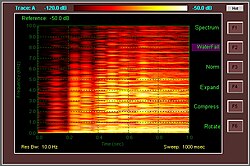
Rhythm is the arrangement of sounds and silences over time. This is organized by meter, which groups pulses into measures or bars. Common Western groupings include 2/4, 3/4 (Waltz time), and 4/4 time. In pop and rock, a "backbeat" often places emphasis on beats two and four, typically driven by the snare drum.
The Rhythm Section
In modern popular music, the rhythm section provides the foundation of a song. This typically consists of chord-playing instruments (guitar, piano), a bass instrument (electric or double bass), and a drum kit.

Music in Society and Science

Academic and Therapeutic Study
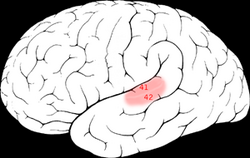
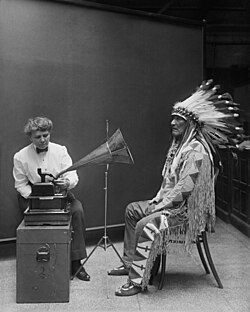
The study of music extends into various scientific fields. Musicology and music theory analyze the structure and history of music, while ethnomusicology studies music within its cultural context. From a biological perspective, neuroscience examines the primary auditory cortex to understand pitch resolution, and evolutionary musicology explores why humans developed musicality.
Music Therapy
Music is not only an art but a tool for healing. Music therapy is used in clinical settings to assist patients with various conditions, including schizophrenia, providing a non-verbal means of emotional expression and mental health improvement.

Summary of Musical Components

| Element | Definition | Key Characteristic |
|---|---|---|
| Melody | A sequence of single notes | The "horizontal" aspect of music |
| Harmony | Simultaneous pitches | Creates chords; the "vertical" aspect |
| Rhythm | Timing of sound and silence | Organized by meter and pulse |
| Timbre | The quality of a sound | Distinguishes different instruments |
| Form | The overall structure | The organization of musical sections |
Frequently Asked Questions










What is the difference between melody and harmony?
Melody is a linear sequence of notes played one after another, while harmony involves multiple notes played simultaneously to create chords, providing a vertical layer of sound.
What defines the "Romantic" style of music?
Romantic music (c. 1820–1900) is characterized by an emphasis on emotion, individualism, and nature, moving away from the rigid forms of the Classical era toward more dramatic and expressive compositions.
What is a tonic in music theory?
The tonic is the "home note" of a piece of music in a specific key. It serves as the central point of resolution for the melody and harmony.
How has technology impacted music consumption?
Technology has shifted music from physical sheet music and vinyl to portable digital formats. The introduction of the CD in the late 20th century and later the smartphone and MP3 players allowed for portable, non-linear access to music.
What is ethnomusicology?
Ethnomusicology is the academic study of music within its cultural and social contexts, focusing on how music functions within different human societies.