Music and Politics: How Sound Shapes Social and Political Change
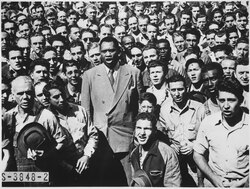
The intersection of music and politics is a complex relationship defined by the power of sound to convey ideology, challenge authority, and unite populations. Historically, political music was often tied to a specific time and place, meaning its relevance could fade quickly once the immediate conflict ended. However, in the modern era, these compositions are increasingly viewed as addressing universal concerns and shared human struggles, allowing them to resonate across generations.
Research utilizing natural language processing suggests that political music serves a unique social function compared to less charged genres. Specifically, it acts as a catalyst, encouraging listeners to engage in active dialogue about the themes presented in the lyrics.
Key Facts
- Universal Appeal: Modern political music has shifted from localized protest to addressing global social issues.
- Catalyst for Dialogue: Political songs are more likely to trigger social discussions than non-political music.
- Genre Versatility: Political expression spans nearly every genre, from classical and folk to hip-hop and reggaeton.
- Regime Resistance: In Latin America, music was a critical tool in fighting authoritarian regimes during the mid-20th century.
The Evolution of Folk and Rock as Political Tools
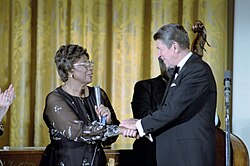
Folk music has long been a vehicle for social commentary. In the United States, the folk revival provided a foundation for artists to tackle systemic issues. A pivotal figure in this movement was Bob Dylan, who in 1962–63 utilized albums such as The Freewheelin' Bob Dylan and The Times They Are a-Changin' (1964) to highlight the evils of racism, poverty, and war.
Dylan's work was heavily influenced by the Beat writers and the political fervor of the youth during the Civil Rights Movement. While he began in the folk tradition, his transition to rock in 1965 expanded the spectrum of subjects acceptable in popular music, influencing the British Invasion bands and fostering an anti-establishment ethos among rock audiences.
Punk and Hardcore Resistance
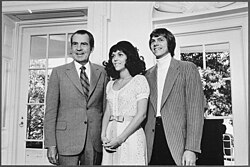
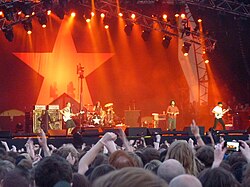
The spirit of rebellion evolved further with the rise of punk rock and later, Latino Rock and Punk. These genres often adopted more aggressive stances against the state. Groups like Rage Against the Machine continued this tradition, blending heavy rock with explicit political critiques.
Global Perspectives on Musical Activism
Beyond the United States, music has played a decisive role in national liberation and human rights movements.
Latin American Resistance
In Latin America, music has been deeply intertwined with political struggle. During the 1950s, 60s, and 70s, protest songs were vital in the fight against authoritarian regimes in Brazil, Argentina, and Chile. This legacy continues today through artists who address corruption, inequality, and immigration.
Economist and musician Sumangala Damodaran notes that lyrics intertwined with activism are actively shaping the region's political landscape and inspiring new genres. This includes the influence of Nueva Canción (New Song), as well as modern iterations in Salsa, Reggaeton (with artists like Bad Bunny and Ivy Queen), and Regional Mexican Music, exemplified by Los Tigres Del Norte.
Anti-Apartheid and Global Struggles
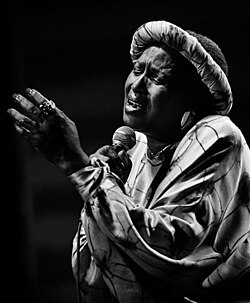
In South Africa, music was a cornerstone of the resistance against apartheid. Artists like Miriam Makeba popularized songs that protested systemic segregation and racial injustice, bringing the struggle to a global audience.
Music in Totalitarian and State Contexts
While music is often used for liberation, it has also been utilized by states for control or propaganda. This is evident in the history of music within Nazi Germany and the Soviet Union, where the state exerted strict control over composition and performance to align with official ideology.
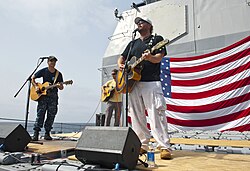
Conversely, music has also been used to project national identity or patriotism. This ranges from the performance of national anthems to artists performing for military personnel, such as Toby Keith's performances for the US Navy.
Summary of Political Music Influence
| Genre/Movement | Primary Political Focus | Key Examples/Artists |
|---|---|---|
| American Folk Revival | Civil Rights, Anti-War | Bob Dylan |
| Latin American Protest | Anti-Authoritarianism, Inequality | Nueva Canción, Los Tigres Del Norte |
| South African Resistance | Anti-Apartheid | Miriam Makeba |
| Punk/Hardcore | Anti-Establishment | Rage Against the Machine |
Frequently Asked Questions
How does political music differ from standard popular music?
Political music is specifically designed to address social, political, or ideological issues. Unlike standard pop music, it often aims to start a dialogue or provoke action regarding shared problems or universal concerns.
What role did Bob Dylan play in the Civil Rights Movement?
Bob Dylan popularized the cause of the Civil Rights Movement through his early folk albums, using his lyrics to critique racism, poverty, and the evils of war, which resonated deeply with the youth of the 1960s.
How has music been used in Latin American politics?
Music served as a critical tool for resistance against authoritarian regimes in Chile, Argentina, and Brazil during the mid-20th century. Today, it continues to be used to tackle issues like corruption and immigration.
Can music be used by the state for political purposes?
Yes. In totalitarian states like Nazi Germany and the Soviet Union, music was often controlled or manipulated by the government to serve as propaganda or to enforce state ideology.
What is the significance of the 'Nueva Canción' movement?
Nueva Canción is a movement of protest songs in Latin America that blended traditional folk music with political activism to challenge social injustice and oppressive regimes.