Mountjoy Prison: A History of Incarceration and Resistance
Mountjoy Prison stands as one of Ireland's most storied correctional facilities, serving as a silent witness to the country's turbulent political and social evolution. From its origins as a transit point for convicts to its role in the Irish struggle for independence, the prison's walls have enclosed some of the most significant figures in Irish history.
Designed by Captain Joshua Jebb of the Royal Engineers, Mountjoy opened its doors in 1850. Jebb modeled the facility after London's Pentonville Prison, utilizing a design focused on separate confinement. In its early years, the prison functioned as the primary stop for men sentenced to transportation—the forced relocation of convicts to penal colonies. Prisoners spent a period of isolation at Mountjoy before being transferred to Spike Island and eventually shipped to Van Diemen's Land.
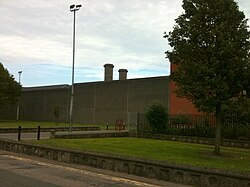
Key Facts
- Architect: Designed by Captain Joshua Jebb and opened in 1850.
- Design Influence: Based on the Pentonville Prison model in London.
- Executions: 46 prisoners were executed within the walls, including the only woman executed by the Irish State.
- Last Execution: Michael Manning was the final person executed in the Republic of Ireland on April 20, 1954.
- Notable Events: Site of the 1923 Irish Hunger Strikes and several high-profile escapes.
Political Unrest and Famous Escapes
Throughout the 20th century, Mountjoy became a focal point for Irish Republicanism. The prison saw numerous attempts by inmates to regain their freedom through both stealth and force. On April 7, 1919, twenty Sinn Féin prisoners, including MPs Piaras Béaslaí and J. J. Walsh, escaped under the planning of Richard Mulcahy and Peadar Clancy.
The prison also witnessed daring external rescue attempts. On May 14, 1921, an IRA team led by Emmet Dalton and Paddy Daly used a captured armoured car to attempt a rescue of Sean McEoin. While the team gained access to the grounds, they were discovered and forced to fight their way out.
Decades later, the prison saw one of its most spectacular breaches. On October 31, 1973, three Provisional IRA prisoners—Joe B. O'Hagan, Seamus Twomey, and Kevin Mallon—escaped using a hijacked helicopter.
Executions and the Death Penalty
Before the abolition of capital punishment, Mountjoy was the site of 46 executions, carried out via firing squads or hanging. The condemned were typically buried in unmarked graves within the prison grounds. These events often drew large crowds to the prison gates, where people would pray and sing for the prisoners.
Among the executed were numerous Irish republicans, including Kevin Barry, Rory O'Connor, and Liam Mellows. Notably, Annie Walsh of Limerick was executed on August 5, 1925, for the murder of her husband; she remains the only woman executed by the Irish State since its founding in 1922. The era of capital punishment at Mountjoy ended with the execution of Michael Manning in 1954.
Summary of Notable Inmates and Events
| Category | Name/Event | Significance |
|---|---|---|
| Notable Inmates | Brendan Behan & Leo Casey | Playwright and Fenian poet, respectively. |
| Protest | 1923 Hunger Strikes | Nearly 500 men protested poor conditions and internment. |
| Execution | Annie Walsh (1925) | Only woman executed by the Irish State. |
| Execution | Michael Manning (1954) | The final execution in the Republic of Ireland. |
| Escape | Helicopter Escape (1973) | Three Provisional IRA prisoners escaped via air. |
Hunger Strikes and Human Rights
The prison was the epicenter of the 1923 Irish Hunger Strikes. Beginning on October 13, 1923, close to 500 prisoners at Mountjoy protested their internment without trial and the poor conditions of the facility. This movement expanded rapidly, eventually involving over 5,000 prisoners across various camps and prisons nationwide. One of the casualties of this protest was Andy O'Sullivan of County Cavan, who died on November 23, 1923.
The Future of Mountjoy
Due to the aging infrastructure of the 19th-century facility, plans for a replacement were initiated. In 2006, a 60-hectare site at Thornton Hall in Fingal was acquired for €30 million. The proposed new facility was designed to house 1,400 prisoners and include modern medical, therapeutic, and court facilities with video-conference links. However, these ambitious plans were later sidelined due to government budget cutbacks.
Frequently Asked Questions
Who designed Mountjoy Prison?
Mountjoy was designed by Captain Joshua Jebb of the Royal Engineers and opened in 1850, based on the design of Pentonville Prison in London.
Who was the last person executed at Mountjoy?
The last execution in the Republic of Ireland took place at Mountjoy Prison on April 20, 1954, when Michael Manning was put to death.
Was any woman ever executed at Mountjoy?
Yes, Annie Walsh from Limerick was executed on August 5, 1925. She is the only woman to have been executed by the Irish State since its establishment in 1922.
What happened during the 1923 Hunger Strikes?
Nearly 500 prisoners at Mountjoy began a hunger strike on October 13, 1923, to protest poor prison conditions and internment without trial. The strike spread nationwide to over 5,000 prisoners, and Andy O'Sullivan died during the protest.
How did the 1973 escape occur?
Three Provisional IRA prisoners—Kevin Mallon, Seamus Twomey, and Joe B. O'Hagan—made a spectacular escape from the prison using a hijacked helicopter on October 31, 1973.