Montreal Protocol: The Global Treaty Protecting the Ozone Layer
In the late 20th century, the world faced a silent but devastating environmental crisis: the thinning of the Earth's ozone layer. To combat this, the international community established the Montreal Protocol on Substances That Deplete the Ozone Layer. This landmark treaty was designed to protect the atmosphere by phasing out the production and consumption of chemicals responsible for ozone depletion.
Since its signing on 16 September 1987, the Protocol has become a cornerstone of global environmental policy. It was the first international treaty to address a global regulatory challenge and the first to embrace the precautionary principle—a strategy of taking action to prevent environmental damage even before full scientific certainty is reached.
Key Facts
- Signed: 16 September 1987 in Montreal.
- Effective Date: 1 January 1989.
- Primary Goal: Phasing out ozone-depleting substances like CFCs and HCFCs.
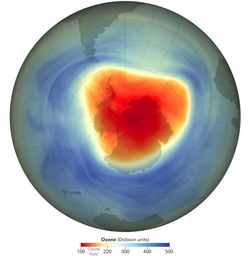
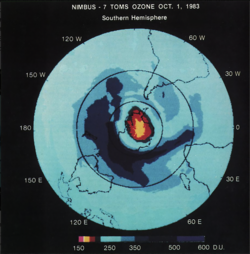
- Recovery Outlook: The ozone layer is expected to return to 1980 levels by 2040 in most regions and by 2066 over Antarctica.
- Health Impact: Protection of the ozone layer is estimated to prevent millions of cases of skin cancer and cataracts.
The Science of Ozone Depletion and Phase-out Plans
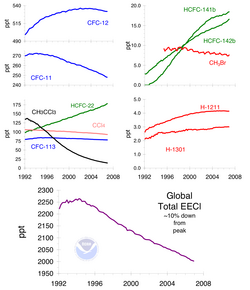
The Protocol targets specific chemical groups that damage the stratospheric ozone layer. The primary focus has been on Chlorofluorocarbons (CFCs), which are highly effective at destroying ozone molecules. Under the Protocol, signatory states accept stepped limits on the production of Group I substances, including CFC-11, CFC-12, CFC-113, CFC-114, and CFC-115.
Managing Transitional Substances (HCFCs)
As CFCs were phased out, Hydrochlorofluorocarbons (HCFCs) were used as transitional replacements. While HCFCs have a lower Ozone Depletion Potential (ODP) than CFCs, they still pose a risk. The Protocol established specific timelines for their reduction:
- Developed Countries: Reduction began in 2004 and 2010, with a 100% reduction target set for 2020.
- Developing Countries: Reduction began in 2015, with a 100% reduction target set for 2030.
HCFCs are commonly used as refrigerants, solvents, blowing agents for plastic foam, and fire extinguishers. They also possess a lower Global Warming Potential (GWP) than CFCs, though they remain significant greenhouse gases.
The Kigali Amendment and HFCs
While Hydrofluorocarbons (HFCs) do not deplete the ozone layer, they are potent greenhouse gases. To address this, the Kigali Amendment came into force on 1 January 2019. Under this amendment, 160 states and the European Union have committed to reducing HFC use by more than 80% over the next 30 years.
Global Cooperation and Compliance
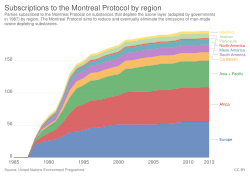
The success of the Montreal Protocol relies on international cooperation. The treaty has undergone numerous adjustments and amendments in cities such as London, Copenhagen, Vienna, Montreal, Beijing, Kigali, and Quito to keep pace with scientific advancements.
Despite its success, monitoring remains vital. In 2018, scientists detected unexpected atmospheric releases of CFC-11 and carbon tetrachloride, likely originating from industrial production in eastern Asia. Such instances highlight the ongoing need for rigorous atmospheric monitoring to ensure all parties adhere to the agreed-upon limits.
Summary of Protocol Milestones
| Substance Category | Primary Use | Key Management Goal |
|---|---|---|
| CFCs | Refrigerants, Solvents | Complete phase-out of Group I substances |
| HCFCs | Transitional refrigerants | 100% reduction (2020 for developed; 2030 for developing) |
| HFCs | Cooling and refrigeration | 80% reduction over 30 years (Kigali Amendment) |
Frequently Asked Questions
How is the Montreal Protocol helping human health?
By protecting the ozone layer from depletion, the Protocol reduces harmful UV radiation reaching Earth. A 2015 U.S. EPA report estimates this will prevent over 280 million cases of skin cancer, 1.5 million skin cancer deaths, and 45 million cataracts in the United States alone.
When will the ozone layer fully recover?
Climate projections suggest the ozone layer will return to 1980 levels across much of the world by 2040. Over the Antarctic region, recovery is expected to take longer, reaching 1980 levels by approximately 2066.
What is the difference between CFCs and HCFCs?
CFCs (Chlorofluorocarbons) have a high Ozone Depletion Potential. HCFCs (Hydrochlorofluorocarbons) were developed as transitional replacements because they have a significantly lower ODP, though they are still being phased out.
What is the Kigali Amendment?
The Kigali Amendment is an addition to the Montreal Protocol that specifically targets the reduction of hydrofluorocarbons (HFCs). Although HFCs do not damage the ozone layer, they are powerful greenhouse gases, and reducing them helps combat climate change.
Has the Protocol been successful?
Yes. The Protocol is considered a major success, as evidenced by the slow but steady recovery of the Antarctic ozone hole and the successful phase-out of many ozone-depleting substances globally.