Montenegro: A Journey Through the Black Mountain's History, Culture, and Geography
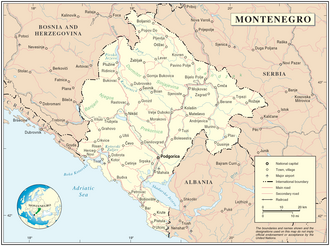
Nestled in the heart of the Balkans, Montenegro (known locally as Crna Gora) is a land of dramatic contrasts, where rugged limestone mountains meet the turquoise waters of the Adriatic Sea. From its ancient roots as a series of tribal territories to its modern status as a unitary parliamentary republic, Montenegro has maintained a fierce spirit of independence and a rich cultural tapestry.
Today, the nation is defined by its pursuit of European integration and its strategic role in the Mediterranean. With its capital, Podgorica, serving as the administrative hub, the country balances a service-based economy with a deep reverence for its historical landmarks and natural biodiversity.
Key Facts
- Capital: Podgorica
- Official Language: Montenegrin (with Albanian, Bosnian, Croatian, and Serbian recognized)
- Government: Unitary parliamentary republic
- Currency: Euro (€)
- NATO Membership: Joined June 5, 2017
- Population: Approximately 623,633 (2023 census)
- HDI: 0.862 (Very High)
Historical Evolution
From Antiquity to the Ottoman Era
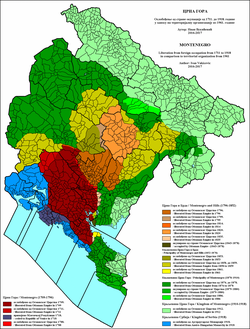
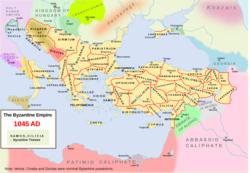
The foundations of the Montenegrin state can be traced back to Duklja in the 10th century, followed by the emergence of Zeta in 1356. By 1421, Zeta was annexed to the Serbian Despotate, but the Crnojević family later established sovereignty, making it the last free monarchy in the Balkans before falling to the Ottoman Empire in 1496.
The Path to Sovereignty
Montenegro's journey toward modern statehood progressed through several stages: the Prince-Bishopric (1516), the Principality (1852), and finally the Kingdom of Montenegro in 1910. Following the Treaty of Berlin in 1878, the nation solidified its international standing.
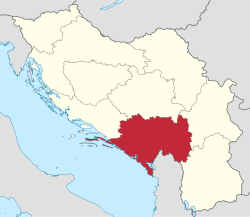
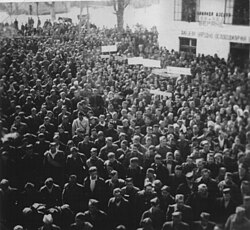
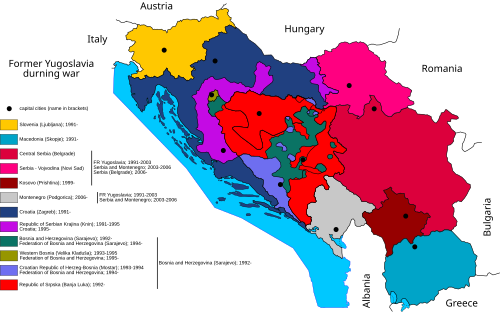
The 20th century brought significant shifts. Montenegro became part of the Kingdom of Yugoslavia in 1918, later transitioning into the Socialist Federal Republic of Yugoslavia after World War II. Notably, some historians cite July 13, 1941, as the date of the first armed uprising against Nazi occupation in Europe.
Independence and Modernity
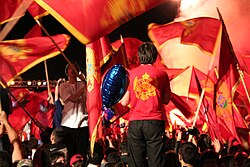
After decades within various Yugoslav unions, Montenegro held a historic referendum on May 21, 2006. With 55.5% of voters favoring independence—narrowly surpassing the required threshold—the country declared its sovereignty on June 3, 2006.
Geography and Administration
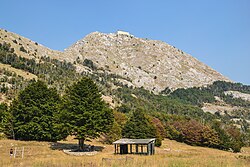
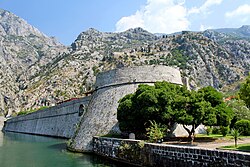
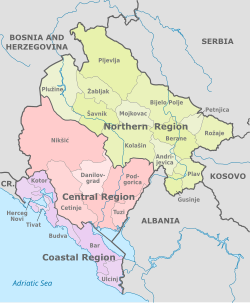
Montenegro is divided into three primary statistical regions: the Northern, Central, and Coastal regions. The landscape is characterized by its mountainous terrain and a stunning coastline featuring UNESCO World Heritage sites.
Regional Breakdown
The Central Region is the most populous, anchored by Podgorica and Nikšić. The Coastal Region is a hub for tourism, featuring cities like Kotor and Budva, while the Northern Region is the largest by area, encompassing rugged peaks and municipalities like Pljevlja and Bijelo Polje.
| Region | Largest Municipality (Area) | Most Populous Municipality | Key Characteristics |
|---|---|---|---|
| Northern | Pljevlja | Pljevlja | Mountainous, rural, large area |
| Central | Nikšić | Podgorica | Administrative and economic hub |
| Coastal | Bar | Bar | Tourism, maritime trade, Adriatic coast |
Economy and Infrastructure
Montenegro possesses a service-based economy in the late stages of transition to a market system. While it does not belong to the euro system, the country is euroised, meaning it uses the Euro unilaterally as its official currency.
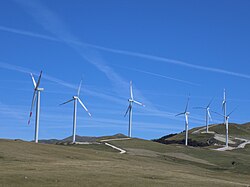
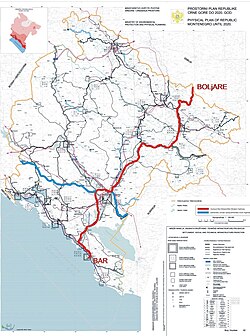
Infrastructure development is a key priority, with ongoing investments in roads and renewable energy, such as the Krnovo Wind farm. The nation has also seen a rise in its Global Innovation Index, ranking 64th in 2025.
Society and Culture
Demographics and Language
The 2023 census reveals a diverse ethnic composition: 41.1% Montenegrins, 32.9% Serbs, 11.1% Bosniaks or Muslims, and 5.0% Albanians. While Montenegrin is the official language, Serbian, Bosnian, Albanian, and Croatian are recognized in official use.
Religion and Literature
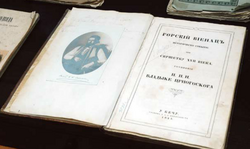
Christianity is the predominant religion (74.9%), with Eastern Orthodoxy being the largest denomination. Islam follows at 19.9%. Culturally, the nation is defined by its poetic traditions, most notably The Mountain Wreath, a chronicle of the struggle for independence from the Ottoman Empire.
Foreign Relations and Law
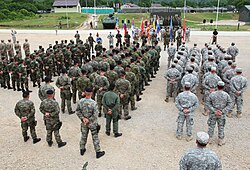
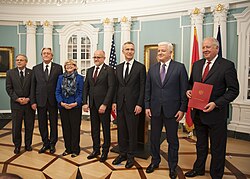
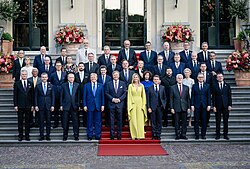
Montenegro's foreign policy is heavily focused on Western integration. The country became a member of NATO on June 5, 2017, and views European Union membership as a high priority, with goals for accession by 2027 or 2028.
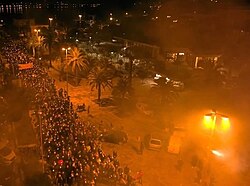
The legal framework is governed by the Constitution ratified on October 19, 2007. Recent years have seen political shifts, including the first government change in the country's history following protests over a 2019 law regarding religious communities.
Frequently Asked Questions
When did Montenegro become an independent country?
Montenegro declared its independence on June 3, 2006, following a referendum held on May 21, 2006, where 55.5% of voters supported the move.
What is the official currency of Montenegro?
Montenegro uses the Euro (€) unilaterally, although it is not a member of the official euro system.
Which international organizations is Montenegro a part of?
Montenegro is a member of NATO (joined in 2017) and is currently pursuing membership in the European Union.
What are the primary languages spoken in Montenegro?
The official language is Montenegrin. However, Serbian, Bosnian, Albanian, and Croatian are also recognized for official use.
What is the significance of the 2023 census?
The 2023 census provides the most current data on the country's ethnic composition, showing Montenegrins at 41.1% and Serbs at 32.9% of the population.