Monmouthshire: The Long Debate Over Its National Identity
For centuries, the status of Monmouthshire remained one of the most curious legal and cultural ambiguities in the British Isles. While geographically and culturally intertwined with Wales, a series of legislative quirks and administrative decisions led to a long-standing debate: was the county truly Welsh, or had it become an English enclave?
The roots of this ambiguity lie in the medieval period. The area roughly corresponds to the core cantrefi (traditional Welsh administrative divisions) of the Kingdom of Gwent, specifically Gwent Uch-coed, Gwent Is-coed, and Gwynllŵg. After the Norman invasion, the region fell under the control of the Marcher Lords—powerful nobles who operated outside the standard English legal system.
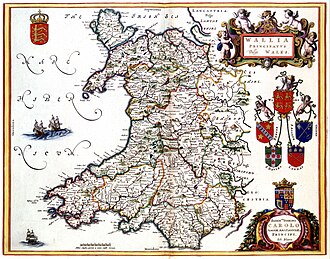
The Legal Seeds of Ambiguity
The confusion began in earnest during the 16th century. The Laws in Wales Act 1535 integrated Wales into the English legal system, creating new shires from former lordships, including Monmouthshire. While this act explicitly placed the county within the "Country or Dominion of Wales," a subsequent act in 1542 listed only twelve Welsh counties, omitting Monmouthshire from the count.
This omission had practical consequences. Monmouthshire became directly responsible to the courts of Westminster rather than the Court of Great Sessions in Wales. Historian John Davies noted that this administrative shift birthed the belief that the county had been annexed by England, though he argued that the people remained Welsh in both language and sentiment.
Parliamentary and Ecclesiastical Anomalies
Further contradictions appeared in political representation. Unlike other Welsh counties, which were granted one knight of the shire, Monmouthshire was given two—a privilege common in English counties. However, it was granted only one borough member, mirroring the Welsh pattern. Ecclesiastically, the county was split: most areas belonged to the Diocese of Llandaff, but the town of Monmouth fell under the Diocese of Hereford.
The Shift Toward an "English" Identity
By the late 17th century, under the reign of Charles II, Monmouthshire was added to the Oxford circuit of the English assizes (periodic courts). This administrative change led many, including the 1911 Encyclopædia Britannica, to regard the county as English. By the 19th century, this perception was reinforced by the local gentry and wealthy industrialists who sought to emphasize their "Englishness" for social aspiration.
Despite these perceptions, the physical and cultural reality remained stubbornly Welsh. George Borrow observed in 1862 that the parish names were Welsh and thousands of residents continued to speak the Welsh language.
The Era of "Wales and Monmouthshire"
For much of the 19th and 20th centuries, the British government adopted a paradoxical phrasing in legislation: "Wales and Monmouthshire." This allowed the state to treat the county as part of Wales for specific social or linguistic policies while maintaining its legal status as part of England in other contexts.
This duality created significant friction. While the 1921 creation of the Diocese of Monmouth aligned the area with the Church in Wales, political figures like the Earl of Plymouth and Lord Raglan fought fiercely to maintain the county's English identity, often opposing Welsh-specific laws such as the Sunday closing of public houses.
The "Make Monmouthshire Welsh" Campaign
By the 1960s, the tension peaked. The establishment of the Welsh Office in 1965 included Monmouthshire in its remit, sparking a wave of protests. While some formed the "Monmouthshire is Welsh" society, others reacted by forming a branch of the Royal Society of St George to assert English identity. The conflict became so visible that "Welcome to Wales" signs erected by the County Council were repeatedly defaced or altered to read "Welcome to Wales and Monmouthshire."
Final Clarification and Legal Resolution
The ambiguity finally ended with the Local Government Act 1972. This legislation explicitly stated that for all acts and instruments passed on or after April 1, 1974, the term "Wales" would include the administrative county of Monmouthshire and the county borough of Newport.
Though the amendment was passed late at night with few MPs present—leading to protests from some who viewed it as an "annexation"—the legal debate was effectively closed. Monmouthshire was officially and permanently recognized as part of Wales.
Key Facts
- Medieval Origin: Based on the core territories of the Kingdom of Gwent.
- Legal Trigger: The Laws in Wales Act 1542 omitted Monmouthshire from the list of Welsh counties, creating centuries of confusion.
- Administrative Split: The county was tied to the English Oxford circuit for legal assizes starting in the late 17th century.
- The "Dual" Phrase: The term "Wales and Monmouthshire" was used in legislation to bridge the gap between legal status and cultural identity.
- Final Resolution: The Local Government Act 1972 formally incorporated the county into Wales as of April 1, 1974.
| Period/Act | Status/Perception | Key Driver |
|---|---|---|
| Pre-16th Century | Welsh (Gwent) | Medieval Kingdom boundaries |
| 1535 Act | Explicitly Welsh | Integration into English legal system |
| 1542 Act | Ambiguous/Omitted | Excluded from the count of 12 Welsh counties |
| 17th–19th Century | Increasingly "English" | Oxford circuit assizes and social aspirations |
| Early 20th Century | "Wales and Monmouthshire" | Hybrid legislative approach |
| 1972 Act | Undisputedly Welsh | Local Government Act 1972 |
Frequently Asked Questions
Why was Monmouthshire considered English for a time?
The perception grew because the Laws in Wales Act 1542 omitted it from the list of Welsh counties, and it was later placed under the English Oxford circuit for legal assizes, making it administratively distinct from other Welsh shires.
What does the phrase "Wales and Monmouthshire" mean?
It was a legislative compromise used when the government wanted to apply a law to Wales but recognized that Monmouthshire's legal status as part of England might prevent the law from applying automatically.
Was the population of Monmouthshire actually English?
While some gentry and industrialists identified as English, historians and observers noted that the county remained Welsh in language, sentiment, and place-names throughout the period of ambiguity.
When did Monmouthshire officially become part of Wales?
The status was legally finalized by the Local Government Act 1972, which took effect on April 1, 1974, removing all remaining legal distinctions between the county and the rest of Wales.
What was the "Make Monmouthshire Welsh" campaign?
It was a 1961 movement aimed at gaining formal parliamentary recognition of the county's Welsh identity, occurring alongside opposing efforts to emphasize its Englishness.