Modoc Conflict: The Roots of Hostility and the Struggle for Land
The history of the Modoc people in the mid-19th century is a tragic cycle of misunderstanding, retaliation, and failed diplomacy. What began as isolated skirmishes between explorers and indigenous groups evolved into a systemic struggle for survival as American settlers pushed westward into the Modoc ancestral lands of Northeastern California and Southern Oregon.
The Spark of Retaliation
The first significant contact between United States explorers and the Modoc region occurred in 1843 with the expedition of John Charles Frémont, Kit Carson, and Billy Chinook. In May 1846, while awaiting news regarding a potential war with Mexico, Frémont's camp was attacked by Native Americans. The assault left three members of the expedition dead.
In a move of blind vindictiveness, Frémont retaliated by attacking Dokdokwas, a fishing village of the Klamath Tribe. This attack completely destroyed the village and resulted in the deaths of warriors, women, and children. However, historical consensus suggests Frémont targeted the wrong people; the attackers were likely from the Modoc tribe, who were bitter enemies of the Klamaths despite their cultural similarities.
Gold and Encroachment
The arrival of the California Gold Rush accelerated the tension. In March 1851, Abraham Thompson discovered gold near Yreka, expanding the rush from the Sierra Nevada into Northeastern California. By April, approximately 2,000 miners were traversing the old Emigrant Trail, cutting directly through Modoc territory.
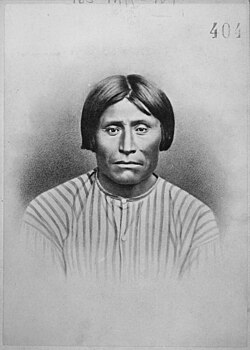
Hostilities escalated when an American militia, misidentifying the perpetrators of a raid by the Pit River Tribe, attacked an innocent Modoc village. Among the survivors was Kintpuash, later known as Captain Jack, who lost several family members in the massacre. In response to this encroachment and violence, some Modoc began attacking settlers, most notably in September 1852 at a site that became known as Bloody Point.
The Great Treaty of Council Grove
By 1864, the United States sought to stabilize the region through the Treaty of Council Grove. The Klamath, Modoc, and Yahooskin bands ceded millions of acres of land to establish the Klamath Reservation in present-day Oregon. Under the leadership of Old Chief Schonchin, the Modoc agreed to leave their lands in the Lost River, Tule Lake, and Lower Klamath Lake regions in exchange for food, blankets, and clothing.
While Old Chief Schonchin remained committed to the peace, his brother and Kintpuash repudiated the treaty and returned to their ancestral lands, leading a small group of followers back to the Lost River.
Systemic Mistreatment and Reservation Failure
Kintpuash and his band of roughly 43 Modocs initially demanded rent from settlers occupying their land. After several failed negotiations, Kintpuash agreed to move to the reservation in 1869 following a council with officials including Alfred B. Meacham, the US Superintendent of Indian Affairs for Oregon.
Life on the reservation proved untenable. The Klamath, longtime rivals of the Modoc, harassed the band and stole their building lumber. Despite complaints, the US Indian agent failed to provide protection. By 1870, Captain Jack and nearly 200 followers abandoned the reservation and returned to the Lost River region, where they found their former lands already occupied by settlers.
The Path to Forced Removal
Alfred Meacham recognized the volatility of the Modoc-Klamath rivalry and recommended a separate reservation at Yainax. However, the Commissioner of Indian Affairs in Washington, D.C., never responded to the request. As settlers complained about Modoc raids—often driven by the US government's failure to provide adequate food supplies—the pressure for forced removal grew.
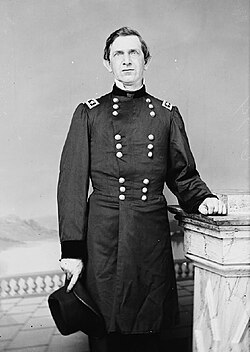
The situation worsened when Meacham was replaced by T. B. Odeneal, a superintendent with no knowledge of the Modoc people or the history of the conflict. In April 1872, Major Elmer Otis held a council with Captain Jack. Though the meeting was inconclusive, Otis resolved to remove the Modoc by force, waiting for reinforcements to ensure the tribe was at a disadvantage.
Key Facts
- Initial Conflict: A 1846 attack on John Charles Frémont's camp led to the mistaken destruction of a Klamath village.
- Gold Rush Impact: The 1851 discovery of gold near Yreka brought thousands of miners through Modoc territory.
- Bloody Point: A site of significant violence following a Modoc attack on a wagon train in 1852.
- Treaty of Council Grove (1864): Established the Klamath Reservation, though some Modoc later rejected it.
- Inter-tribal Rivalry: Severe hostility between the Modoc and Klamath tribes made shared reservation living impossible.
- Administrative Failure: The US government failed to provide promised supplies and ignored requests for a separate Modoc reservation.
| Figure/Event | Role/Significance | Key Outcome |
|---|---|---|
| Captain Jack (Kintpuash) | Modoc Leader | Led the resistance against forced removal to the Klamath Reservation. |
| Old Chief Schonchin | Modoc Chief | Signed the Treaty of Council Grove and pledged peace. |
| Alfred B. Meacham | US Superintendent | Advocated for a separate reservation to avoid Modoc-Klamath conflict. |
| Major Elmer Otis | US Army Major | Determined to forcibly remove the Modoc from Lost River. |
| Treaty of Council Grove | 1864 Agreement | Ceded millions of acres for the creation of the Klamath Reservation. |
Frequently Asked Questions
Why did John Charles Frémont attack the Klamath village?
Frémont attacked the village of Dokdokwas in retaliation for an attack on his camp. However, it is widely believed he targeted the Klamath by mistake, as the actual attackers were likely from the Modoc tribe.
What was the significance of the California Gold Rush to the Modoc?
The discovery of gold near Yreka in 1851 brought thousands of miners directly through Modoc territory, increasing encroachment on their lands and escalating tensions with settlers.
Why did Captain Jack and his band leave the Klamath Reservation?
The Modoc were subjected to constant harassment and theft of their lumber by the Klamath tribe, and the US Indian agent failed to provide the necessary protection to keep them safe.
What was the Treaty of Council Grove?
Signed in 1864, this treaty required the Klamath, Modoc, and Yahooskin bands to cede millions of acres of land in exchange for the establishment of the Klamath Reservation and government supplies.
How did the change in US leadership affect the Modoc?
The replacement of Alfred Meacham, who understood the Modoc's situation, with T. B. Odeneal, who had no background in the region, shifted the government's approach from negotiation to forced removal.