Mitel History: From Lawnmowers to Unified Communications
The story of Mitel is one of the most eclectic journeys in the telecommunications industry. What began as a modest venture involving lawnmowers evolved into a global powerhouse in business communications, navigating decades of technological shifts from analog switches to cloud-based Unified Communications (the integration of various communication methods like voice, video, and messaging into a single interface).
Founding and Early Innovation
Mitel was officially founded on June 8, 1973, by Michael Cowpland and Terry Matthews. According to both founders, the company's name is an acronym for their first intended product: Mike and Terry Lawnmowers. The duo established the corporation with the approval of their employer, Bell Northern Research, specifically to protect the intellectual property rights of a converter design.
The company's start was humble and slightly chaotic; their first shipment of three lawnmowers was lost in transit, and Cowpland later noted that the machines were not well-suited for Canadian lawns. This prompted a swift pivot to telephony. Leveraging Cowpland's Ph.D. thesis, Mitel produced a telephony tone receiver—a tone-to-pulse converter designed for central office use.
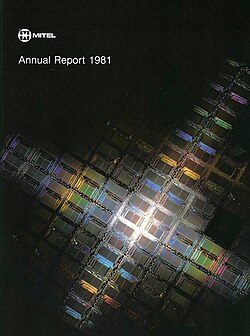
Recognizing the potential of the emerging microprocessor and software technology, Mitel moved into telecom switches, introducing the SX200 PBX (Private Branch Exchange) in 1975. By 1976, the company expanded into semiconductors by acquiring Siltex, a bankrupt ISO-CMOS foundry in Bromont, Quebec. This move created a specialized division for mixed signal and thick film hybrid devices, fueling a growth rate of over 100% per year and pushing annual revenue to $100 million by 1981.
Expansion and Corporate Transitions (1980–2000)
In the 1980s, Mitel sought to redefine the office environment with the SX2000, a large digital PBX. This system was designed as an "Office Controller," aiming to integrate voice and data functions within an organization.
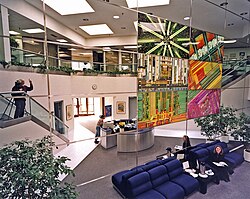
The company faced a financial crisis in 1985, leading the board to sell a 51% controlling interest to British Telecom. When British Telecom eventually exited the equipment business, the stake was sold to Schroder Ventures, an investment firm that installed new management to revitalize the brand. During this era, Mitel diversified its portfolio with the SUPERSET phone terminals, the GX5000 Central Office, and the SMART-1 call controller.
The Digital Pivot and Corporate Splitting (2000–2010)
The turn of the millennium brought a radical restructuring. In 2001, Terry Matthews acquired the communications network division and the Mitel trademark for US$230 million, forming Mitel Networks. This new entity focused on Voice over IP (VoIP), which allows voice calls to be made over the internet rather than traditional phone lines.
The original corporate entity was split into three distinct companies:
- Zarlink Semiconductor: The remaining semiconductor division.
- Mitel Networks: The communications network business.
- BreconRidge: A contract manufacturing arm spun off in 2002.
Mitel Networks continued to grow through strategic mergers. In August 2007, it completed a "merger of equals" with Inter-Tel, doubling the company's size. On April 22, 2010, Mitel went public on the Nasdaq under the symbol MITL at $14 per share, though the IPO was later criticized by analysts for overly optimistic pricing and high debt.
Strategic Acquisitions and Market Shifts (2011–2020)
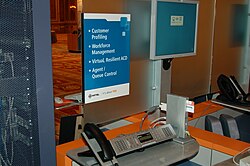
The following decade was defined by aggressive acquisition and a shift toward Unified Communications. Mitel acquired several key players to bolster its portfolio, including:
- prairieFyre Software Inc. (2013): A provider of contact center and business analytics.
- Aastra Technologies (2013): Expanding its global reach.
- OAISYS (2014): A contact center supplier.
- Mavenir Systems (2015): Acquired for $560 million.
- ShoreTel (2017): Acquired for $530 million, bringing the workforce to roughly 4,200 employees.
While a 2016 attempt to buy Polycom for $1.96 billion failed (resulting in a $60 million cancellation fee paid by Polycom to Mitel), the company successfully secured a high-profile deal with Major League Baseball in 2018 to unify communications across all MLB ballparks. By November 30, 2018, Mitel was taken private by affiliates of Searchlight Capital Partners and delisted from the TSX and Nasdaq.
Recent Developments and Restructuring (2020–Present)
In recent years, Mitel has focused on cloud partnerships and strategic growth, partnering with Five9 in 2021 and RingCentral later that year. In October 2023, the company completed the acquisition of Unify from Atos.
However, financial pressures led to a critical juncture in 2025. On March 10, 2025, Mitel filed for Chapter 11 bankruptcy protection, citing debt that was rapidly losing value, with assets and liabilities estimated between $1 billion and $10 billion. The company successfully exited bankruptcy on June 20, 2025, following a restructuring plan that reduced its debt by approximately $1.15 billion and transferred ownership from Searchlight Capital Partners to the company's lenders.
Key Facts
- Founded: June 8, 1973, by Michael Cowpland and Terry Matthews.
- Original Product: Lawnmowers (though they pivoted quickly to telephony).
- Major Pivot: Transitioned from hardware PBX to VoIP and Unified Communications.
- Key Acquisitions: Inter-Tel, Aastra Technologies, and Unify.
- Recent Financial Event: Filed for Chapter 11 bankruptcy in March 2025; exited in June 2025 with $1.15 billion in debt reduction.
| Era | Primary Focus | Key Milestone |
|---|---|---|
| 1970s | Hardware & Semiconductors | Launch of SX200 PBX (1975) |
| 1980s-1990s | Digital Office Systems | Control interest sold to British Telecom (1985) |
| 2000s | VoIP & Networking | Merger with Inter-Tel (2007) |
| 2010s | Unified Communications | Acquisition of ShoreTel (2017) |
| 2020s | Cloud & Restructuring | Chapter 11 Bankruptcy & Exit (2025) |
Frequently Asked Questions
What does the name Mitel stand for?
The name is a combination of the founders' first names and their first intended product: Mike and Terry Lawnmowers.
Why did Mitel pivot from lawnmowers to telephony?
The first shipment of lawnmowers was lost in shipping, and Michael Cowpland noted that the product was not suited for Canadian lawns, leading the company to produce a tone-to-pulse converter based on Cowpland's Ph.D. thesis.
What happened during the 2001 corporate split?
The original Mitel Corporation was divided into three entities: Zarlink Semiconductor (the original corporate entity), Mitel Networks (focused on VoIP), and BreconRidge (a contract manufacturer).
Did Mitel ever go public?
Yes, Mitel became a public company on the Nasdaq (MITL) on April 22, 2010, before being taken private by Searchlight Capital Partners in 2018.
What was the result of Mitel's 2025 bankruptcy?
Mitel filed for Chapter 11 protection on March 10, 2025, and exited on June 20, 2025. The restructuring reduced its debt by approximately $1.15 billion and transferred ownership to its lenders.