MINUSTAH: The UN Stabilization Mission in Haiti (2004–2017)
The United Nations Stabilization Mission in Haiti, widely known by its French acronym MINUSTAH (Mission des Nations Unies pour la stabilisation en Haïti), was a comprehensive peacekeeping operation deployed to Haiti between 2004 and 2017. Established during a period of intense regional instability, the mission sought to restore order, protect civilians, and support the democratic process in a nation facing severe political and social crises.
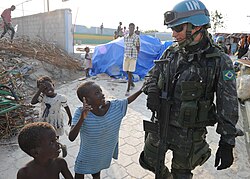
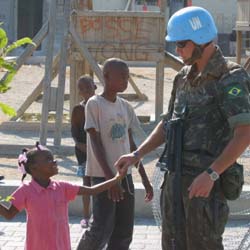
The mission was a massive international effort, comprising 2,366 military personnel and 2,533 police officers. These forces were supported by a diverse team of international civilian personnel, local staff, and United Nations Volunteers. A defining characteristic of MINUSTAH was its military leadership; the military component was led and commanded by the Brazilian Army.
Key Facts
- Duration: June 1, 2004, to October 2017.
- Mandate: Established by UN Security Council Resolution 1542 to maintain public safety and the rule of law.
- Military Lead: The Brazilian Army provided the primary command and leadership for the military component.
- Personnel: A combined force of over 4,900 military and police personnel, supported by civilians.
- Successor: Replaced by the smaller MINUJUSTH (United Nations Mission for Justice Support in Haiti) in 2017.
Mission Origins and Mandate
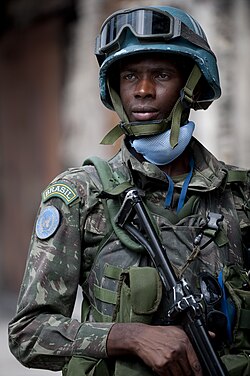
MINUSTAH was created on April 30, 2004, via United Nations Security Council Resolution 1542. The Security Council determined that the situation in Haiti constituted a threat to international peace and security. Operating as a Chapter VII peace enforcement mission, MINUSTAH was granted the authority to use force to achieve its objectives, with an initial military ceiling of 6,700 troops.
The primary goals of the mission included:
- Increasing security and protection during electoral periods.
- Assisting in the restoration and maintenance of the rule of law.
- Ensuring public safety and order across the country.
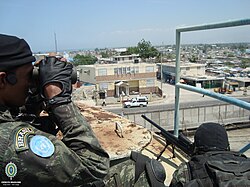
Early operations saw peacekeepers entering volatile areas such as Cité Soleil in an attempt to neutralize gang influence and restore stability to the capital, Port-au-Prince.
Operational History and Challenges
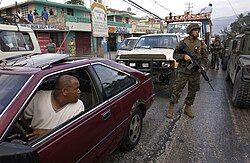
Throughout its thirteen-year tenure, MINUSTAH faced significant operational hurdles. The mission was tasked with patrolling dangerous urban environments and managing complex social dynamics.
The 2010 Earthquake Response
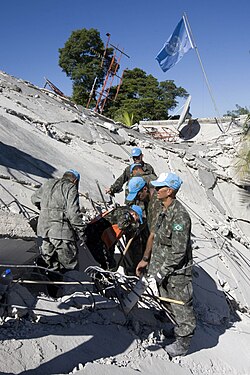
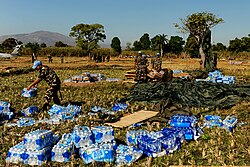
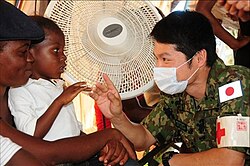
One of the most critical periods for the mission occurred following the devastating earthquake on January 12, 2010. MINUSTAH personnel were instrumental in immediate disaster relief, securing aid drops and providing medical assistance to survivors.
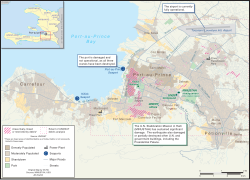
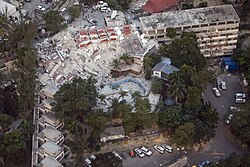
However, the disaster also dealt a blow to the mission's infrastructure. The UN headquarters, along with UNDP and UNICEF offices in Port-au-Prince, suffered catastrophic damage.
Military Leadership and Deployment
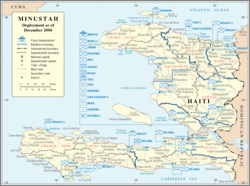
The military component was characterized by a strong Brazilian presence, with a succession of Brazilian Generals serving as Force Commanders from 2004 until 2015. The mission's footprint extended across the country to ensure stability in various provinces.
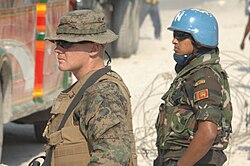
Other nations also contributed vital resources. For example, Nepalese troops were involved in securing aid supplies in Mirebalais, and Japanese medical personnel provided essential healthcare services.
Controversies and Criticism
Despite its stabilization efforts, MINUSTAH's legacy is clouded by several high-profile controversies. The mission faced severe criticism regarding the conduct of its personnel and the unintended consequences of its presence.
The Cholera Epidemic
One of the most enduring controversies was the introduction of cholera to Haiti. Independent reports and subsequent UN admissions linked the outbreak to Nepalese peacekeepers. This led to widespread illness and death, sparking years of legal battles and calls for accountability.
Human Rights and Misconduct
The mission was plagued by reports of sexual abuse and exploitation of the local population. Specific scandals involved personnel from Sri Lanka (2007), Uruguay (2011), and Pakistan (2012), involving the exploitation of children and teenagers in exchange for food and medicine.
The End of the Mission
By 2017, growing controversy over personnel conduct and the evolving security landscape led the UN Security Council to announce the mission's termination. On April 13, 2017, it was decided that MINUSTAH would conclude its operations in October of that year.
It was replaced by MINUJUSTH, a significantly smaller mission focused specifically on justice support rather than large-scale military stabilization. MINUJUSTH eventually concluded its mandate in 2019.
Mission Summary
| Category | Details |
|---|---|
| Active Period | June 2004 – October 2017 |
| Lead Military Nation | Brazil |
| Personnel Strength | ~2,366 Military / ~2,533 Police |
| Legal Basis | UN Security Council Resolution 1542 (Chapter VII) |
| Key Successor | MINUJUSTH (2017–2019) |
Frequently Asked Questions
What was the primary purpose of MINUSTAH?
MINUSTAH was established to stabilize Haiti by increasing security during elections, restoring the rule of law, and maintaining public order and safety.
Which country led the military component of the mission?
The Brazilian Army provided the leadership and command for the military component of the mission for the majority of its duration.
How did the 2010 earthquake affect the mission?
The earthquake destroyed the UN headquarters in Port-au-Prince and shifted the mission's focus toward emergency disaster relief and humanitarian aid distribution.
Why was MINUSTAH replaced by MINUJUSTH?
MINUSTAH was replaced due to growing controversies regarding the conduct of its personnel and a shift in the UN's strategy toward a smaller, justice-focused support operation.
What was the cholera controversy?
The controversy involved the introduction of cholera to Haiti, which was linked to Nepalese UN peacekeepers, leading to a major health crisis and subsequent UN apologies.