Milpa: The Ancient Mesoamerican Agricultural System
In the heart of Mesoamerica, particularly within Mexico's Yucatán Peninsula, exists a sophisticated approach to farming known as the milpa. Derived from the Nahuatl words milli and pan, a milpa is more than just a field; it is a comprehensive crop-growing system rooted in the agronomy of the Maya and other indigenous peoples of the region.
At its most basic level, the milpa is a field used to grow food crops. However, its design reflects a deep understanding of ecology and nutrition, creating a symbiotic environment where different plants support one another's growth and the health of the soil.
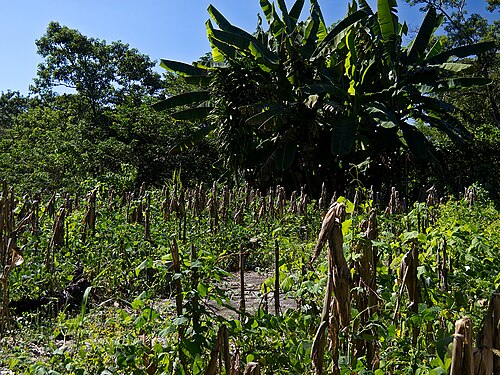
Key Facts
- Origin: Based on the agricultural practices of the Maya and other Mesoamerican cultures.
- Core Crops: Primarily maize, beans, and squash.
- Land Cycle: Typically involves two years of cultivation followed by eight years of lying fallow (leaving land unseeded to restore fertility).
- Nutritional Synergy: Crops are chosen to complement each other's nutritional deficiencies.
- Cultural Role: Serves as a sociocultural construct that binds families and communities together.
The Science of Companion Planting
The milpa system is renowned for its environmental and nutritional complementarity. While maize is the central crop, it is often planted alongside a dozen other varieties, including avocados, melons, tomatoes, chilis, sweet potatoes, jícama, amaranth, and mucuna.
Nutritional Balance
The combination of maize, beans, and squash provides a complete dietary profile. Maize lacks lysine and tryptophan—essential amino acids required by the body to produce proteins and niacin. Beans provide both of these missing amino acids, while squashes contribute a wide array of vitamins and avocados provide necessary fats.
Environmental Sustainability
The system employs a strict land-conservation cycle to prevent soil exhaustion. By cultivating the land for two years and then allowing it to remain fallow for eight, farmers ensure the earth recovers its nutrients naturally. This sustainable rotation is why researcher H. Garrison Wilkes of the University of Massachusetts in Boston describes the milpa as one of the most successful human inventions ever created.
Regional Variations and Cultural Significance
The term "milpa" carries different meanings depending on the geographic location. In the Mexican states of Jalisco and Michoacán, as well as central Mexico and the Guanacaste Province of Costa Rica, the word can denote a single corn plant. Conversely, in Guatemala and El Salvador, it refers specifically to the field for cultivation or the harvested maize crop.
Beyond agriculture, the milpa is a sociocultural construct. The act of creating a milpa is often viewed as a sacred process that connects the farmer to their family, the community, and the universe. In many Mesoamerican Indian societies, the religious and social importance of the milpa exceeds its economic or nutritional value.
This linguistic legacy even extends to North America; the city of Milpitas, California, takes its name from the Nahuatl term "milpa" combined with the Spanish feminine diminutive plural suffix "-itas".
Milpa System Summary
| Feature | Details |
|---|---|
| Primary Crops | Maize, Beans, Squash |
| Additional Crops | Avocados, Chilis, Tomatoes, Melons, Sweet Potato, Jícama, Amaranth, Mucuna |
| Cultivation Cycle | 2 years active / 8 years fallow |
| Key Nutrients Provided | Lysine, Tryptophan, Vitamins, Fats |
| Cultural Origin | Mesoamerica (Maya and Nahuatl influence) |
Frequently Asked Questions
What are the three main crops of a milpa?
The primary crops are maize, beans, and squash, which are grown together to provide mutual environmental and nutritional benefits.
Why is the fallow period important in the milpa system?
The eight-year fallow period allows the land to recover its nutrients after two years of cultivation, ensuring long-term soil health and sustainability.
How do beans and maize complement each other nutritionally?
Maize lacks the amino acids lysine and tryptophan, which are essential for protein and niacin production; beans provide both of these amino acids, making the combination nutritionally complete.
Is the milpa only about food production?
No, it is a sociocultural construct. It serves as a core institution in Mesoamerican Indian society, representing a sacred bond between the community, the land, and the universe.
Where does the word "milpa" come from?
The word is derived from the Nahuatl words milli and pan.