Military Staff Systems: Evolution and Organizational Structures
A military staff, often referred to as a general staff, is a specialized group of officers, enlisted personnel, and civilians who support a commander of a large military unit. Their primary role is to facilitate command and control through meticulous planning, analysis, and information gathering. By coordinating the execution of orders and relaying critical data, the staff ensures that complex, simultaneous operations are managed efficiently.
These organizations are typically divided into functional groups—such as intelligence, logistics, and operations—to manage the multi-directional flow of information between the commanding officer, subordinate units, and external stakeholders. The structure of a staff significantly impacts operational agility: a centralized staff allows for tight top-down control but may slow field responsiveness, while a decentralized staff enhances personal initiative, speed of action, and the OODA loop (Observe, Orient, Decide, Act).
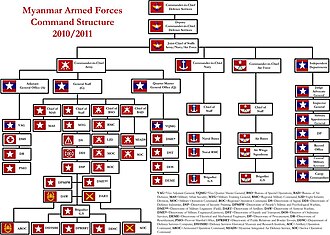
Key Facts
- Purpose: To relieve the commander of administrative and detailed planning burdens, allowing them to focus on the strategic picture.
- Functional Areas: Common divisions include personnel, intelligence, operations, logistics, and communications.
- Continental System: A standardized alphanumeric system (e.g., J1, G2) used by NATO and many modern militaries.
- Commonwealth System: A traditional three-branch structure (G, A, and Q) historically used by the UK and its former colonies.
- Staff Rotation: Many systems rotate officers between line command and staff roles to ensure a balanced professional perspective.
Historical Evolution of Staff Systems
The Austrian Influence
The modern concept of a "great brain" for the army emerged in Austria during the 18th century. Following failures at the Battle of Leuthen, Count Leopold Joseph von Daun advocated for a stronger role for the Generalquartiermeister (Chief of Staff). By 1769, a permanent staff of 30 officers was established under Franz Moritz von Lacy.
Over time, the Austrian system evolved from a purely administrative role to one of operational planning. By 1805, Archduke Charles divided the staff into Political Correspondence, Operations, and Service directorates. This shift established the Chief of Staff as the primary assistant to the Commander-in-Chief, responsible for translating decisions into actionable tasks for subordinates.
The French and Prussian Models
In contrast, Napoleon Bonaparte utilized a more administrative staff system under General Louis Alexandre Berthier. Berthier acted essentially as a "chief clerk," focusing on the rapid issuance of orders. Napoleon personally handled intelligence and operational planning, a workload that eventually became unsustainable.
Prussia adopted and refined the Austrian approach. Gerhard von Scharnhorst integrated intelligence and contingency planning into staff duties and implemented the rotation of officers between command and staff assignments. In 1814, Prussia formally established the Prussian General Staff, a model that influenced many of the world's modern armies.
Modern US and NATO Adaptations
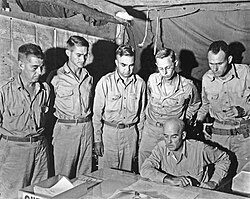
The United States transitioned its approach with the National Security Act of 1947, creating a Joint Staff. Unlike the Prussian career-staff model, US officers rotate into joint positions. The Goldwater-Nichols Act of 1986 further refined this, placing the Joint Staff under the chairman of the Joint Chiefs of Staff, while operational control remains with combatant commanders.
The Continental Staff System
The Continental (or NATO) system uses a standardized numbering system to identify functional branches. This allows for seamless interoperability between different nations and services.
| Number | Functional Area | Description |
|---|---|---|
| 1 | Personnel | Manpower and human resources |
| 2 | Intelligence | Security and information operations |
| 3 | Operations | Current execution of missions |
| 4 | Logistics | Supply, transport, and maintenance |
| 5 | Plans | Future strategy and planning |
| 6 | Signals | Communications and IT |
| 7 | Training | Military education and engineering |
To denote the specific service or type of headquarters, a letter prefix is used:
- A: Air Force
- N: Navy
- M: Marine Corps
- J: Joint (multiple services)
- C: Combined (multiple nations)
For example, an "N1" refers to the personnel officer of a naval headquarters. In larger organizations, this can be further subdivided (e.g., J1.3 for the operations officer within the personnel office of a joint headquarters).
The Commonwealth Staff System
Historically, the United Kingdom and countries like Australia and Myanmar used a three-branch system based on the Esher Committee Report of 1904. This system divided responsibilities into:
- G Branch (General): Focused on operations and intelligence.
- A Branch (Adjutant): Focused on administration and personnel.
- Q Branch (Quartermaster): Focused on logistics and supplies.
In this system, officers were graded (e.g., GSO I, GSO II, GSO III) based on rank and responsibility. While the UK transitioned to the Continental system in 1984 and Australia in 1997 to improve interoperability with NATO and the US, some nations, such as Myanmar, have maintained variations of this structure.
Frequently Asked Questions
What is the primary difference between a centralized and decentralized staff?
A centralized staff provides tighter top-down control from headquarters but can reduce the accuracy of field operations. A decentralized staff encourages personal initiative and faster localized action, improving the speed of the OODA loop.
How does the Continental Staff System identify different services?
It uses letter prefixes: 'A' for Air Force, 'N' for Navy, 'M' for Marine Corps, 'J' for Joint, and 'C' for Combined headquarters. These are paired with numbers (1-7) to identify the specific functional branch.
Why do some militaries rotate officers between staff and line roles?
Rotation ensures that staff officers have practical experience in field command and that line commanders understand the planning and logistical constraints managed by the staff, creating more well-rounded leaders.
What was the role of the Chief of Staff in the early Austrian system?
Initially an administrative role, it evolved into a strategic one where the Chief of Staff became the primary adviser to the Commander-in-Chief, handling operational planning and delegating routine tasks to senior staff officers.