Military Regiments: Evolution, Structure, and Global Variations
A regiment is a fundamental military unit, though its specific role, size, and composition vary significantly depending on the country, branch of service, and specialization. While often thought of as a fixed size, a regiment can range from being smaller than a standard battalion to acting as a brigade-equivalent formation.
In Medieval Europe, the term referred to any large body of front-line soldiers. These troops were typically recruited or conscripted from a specific geographical area by a leader who often served as the feudal lord in capite (the primary tenant of the land). During this era, lesser barons of knightly rank were expected to provide a company or battalion from their own manorial estates.
Key Facts
- Variable Size: Regiments can be smaller than a battalion, equivalent to a battalion, or as large as a brigade.
- Historical Roots: The modern concept evolved from 16th-century French régiments, moving from temporary knightly retinues to permanent forces.
- Oldest Units: Some of the world's oldest active regiments include the French 1st Infantry (1479) and the Spanish "Soria" No. 9 (1505).
- Modern Shifts: Many modern armies, including the British Army, have moved toward "large regiments" that consolidate multiple former battalions.
- Specialization: Regiments can be specialized for specific roles, such as the Philippine Scout Rangers' focus on jungle warfare.
The Evolution of the Regimental System
The French term régiment entered European military usage at the end of the 16th century. This marked a transition from loose collections of retinues following knights to formally organized, permanent military forces. Initially, regiments were named after their commanding colonels and were often disbanded after a specific campaign. Over time, they began to be named by their precedence in the line of battle and recruited from specific districts known as cantons.
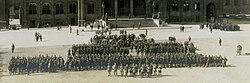
By the 18th century, European continental armies established regiments as permanent units with unique uniforms and titles. A standard infantry regiment typically consisted of two field battalions of approximately 800 men each, or 8 to 10 companies. Cavalry regiments were generally single entities comprising 600 to 900 troopers. Smaller, independent units were sometimes referred to as demi-regiments.
19th Century and World War I Transitions
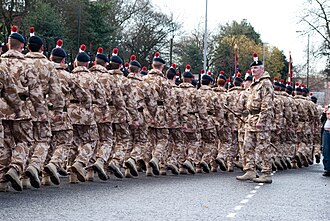
The rise of conscription in the 19th century modified these structures. By the end of the century, infantry regiments in France and Germany typically had three battalions, while Russia and Austria utilized four. Prior to World War I, a French or German regiment could mobilize up to 4,000 men across four battalions. A notable exception was the British line infantry, where two regular battalions of a regiment often alternated between home and foreign service, rarely operating as a single unit.
Global Regimental Variations
Commonwealth and British Armies
Commonwealth nations often employ "large regiments." For example, the Indian Army's Punjab Regiment grew from four battalions in 1956 to 20. In the Pakistan Army, some regiments exceed 50 battalions. The British Army underwent significant amalgamations between the late 1950s and 2006, shifting toward large regiments. As of 2014, only thirteen line infantry regiments remained, though the five Guards regiments maintained their historic separate identities.
The Philippine Scout Rangers
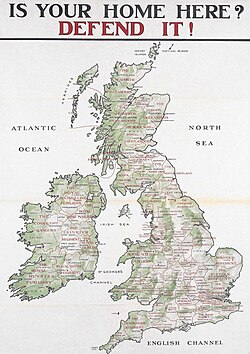
The First Scout Ranger Regiment, formed on November 25, 1950, is a specialized unit focused on anti-guerrilla jungle warfare, sabotage, and urban combat. Modeled after the US Army Rangers and Alamo Scouts, the unit was created to combat the Moro and Communist Rebellions and currently maintains over 2,500 members.
Soviet and Russian Formations
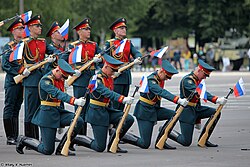
The Soviet Ground Forces utilized several distinct regimental types by the late 1980s:
- Motor Rifle Regiment: A tactical unit of about 2,500 personnel, consisting of three motor rifle battalions (equipped with BMPs or BTRs) and one tank battalion.
- Tank Regiment: Ranging from 1,100 to 1,600 personnel, these units featured three tank battalions and an artillery battalion.
- Divisional Artillery Regiment: Provided fire support using 2S3 Akatsiyas and BM-21 Grads.
- Anti-Aircraft Rocket Regiment: A specialized air defense unit of about 500 personnel utilizing SA-6 Gainfuls and MANPADs (Man-Portable Air-Defense Systems).
The United States Experience
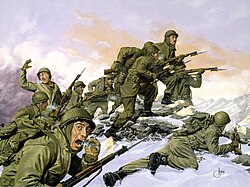
The U.S. Army has historically fluctuated in its organizational structure. In the early days, regiments followed the British model of ten line companies. During the Civil War, new regiments were authorized for three battalions of eight companies each. By 1898, the Army adopted a 12-company, three-battalion structure.
In 1917, the U.S. shifted from a "triangular" plan (three regiments per brigade) to a "square" division plan, which significantly increased troop numbers per unit. However, by 1965, the ROAD (Reorganization Objective Army Divisions) plan eliminated the regiment as a tactical and administrative organization in most combat arms, replacing it with the brigade. Today, the 75th Ranger Regiment remains one of the few units organized as a traditional regiment.
Summary of Regimental Structures
| Regiment Type | Typical Composition/Size | Key Characteristics |
|---|---|---|
| Standard European (18th C) | 2 Battalions (~1,600 men) | Permanent units with distinctive uniforms. |
| Soviet Motor Rifle | ~2,500 personnel | 3 Motor Rifle battalions + 1 Tank battalion. |
| Soviet Tank | 1,100 - 1,600 personnel | 3 Tank battalions + 1 Artillery battalion. |
| US Army (Pre-1917) | 3 Regiments per Brigade | Triangular organizational plan. |
| Commonwealth "Large" | 4 to 50+ Battalions | Administrative focus; common in India and Pakistan. |
Frequently Asked Questions
What is the difference between a regiment and a battalion?
While the terms are sometimes used interchangeably, a battalion is typically a smaller tactical unit. A regiment can consist of one or more battalions, acting as an administrative or tactical headquarters for those sub-units.
How did regiments evolve from the 16th century?
They evolved from temporary retinues of knights into permanent, formally organized military forces. They transitioned from being named after their colonels to being named by their position in the line of battle or their recruiting district.
What is a "large regiment" in Commonwealth armies?
A large regiment is an administrative structure that encompasses many battalions (sometimes dozens) under a single regimental identity, rather than each battalion having its own separate regimental status.
Why did the US Army replace regiments with brigades?
Under the ROAD plan in 1965, the Army shifted to the brigade as the primary tactical and administrative organization to improve flexibility and command structure in modern combat.
What are the roles of Soviet specialized regiments?
Soviet regiments were highly specialized: Motor Rifle regiments provided mechanized infantry, Tank regiments provided heavy armor, and Anti-Aircraft Rocket regiments created air defense networks using SAMs and MANPADs.