Middlesex County, New Jersey: A Hub of Culture, Education, and Growth
Known by its residents as "The Greatest County in the Land," Middlesex County serves as a vital center of academic excellence, economic diversity, and cultural richness within the state of New Jersey. Founded in 1683 and named after Middlesex, England, the county has evolved from its early colonial roots into a bustling modern region that balances urban centers with expanding suburban landscapes.
At the heart of the county is New Brunswick, the seat of government and a renowned center for the sciences and arts. As the home to the flagship campus of Rutgers University, the city is currently undergoing a period of gentrification and high-rise construction, fueling an academic and cultural renaissance.
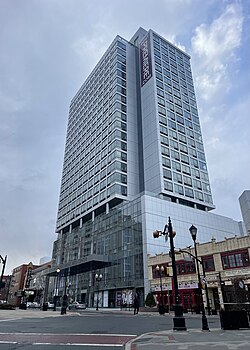
Key Facts
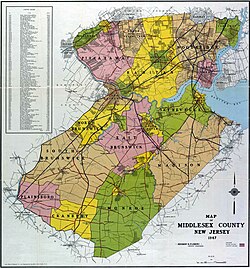
- County Seat: New Brunswick, known as the "Hub City."
- Population: Approximately 863,162 (2020 Census), with a 2025 estimate of 883,335.
- Total Area: 322.87 square miles, consisting of 309.22 square miles of land and 13.65 square miles of water.
- Major Employer: Rutgers University is the largest non-governmental employer.
- Infrastructure: Home to the Governor Alfred E. Driscoll Bridge, the world's widest motor vehicle bridge.
Geography and Urban Evolution
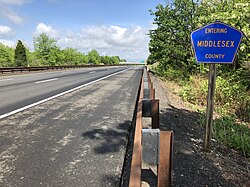
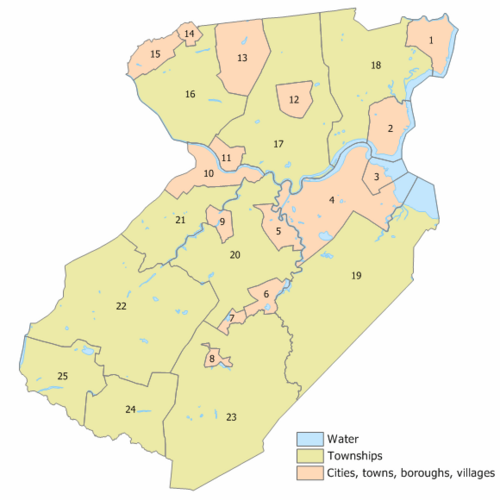
Middlesex County features a diverse geographic layout, ranging from the dense urban corridors of New Brunswick and Perth Amboy to the sprawling residential areas of the south. The region has seen a significant shift in land use over the last few decades. Areas that were once considered exurbs—residential areas located beyond the suburbs—have transitioned into fully suburban environments.
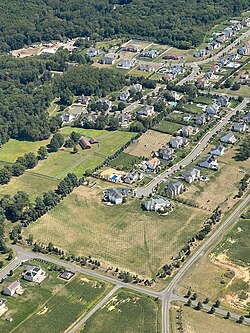
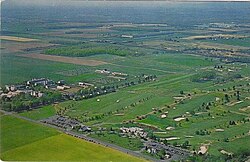
Monroe Township serves as a prime example of this transition. Once a remote tip of the county, significant housing construction has transformed the area into a suburban hub.
The county's infrastructure is anchored by the Garden State Parkway, which provides critical connectivity. A key landmark is the Governor Alfred E. Driscoll Bridge, which spans the Raritan River and connects Woodbridge Township to Sayreville.
![The Governor Alfred E. Driscoll Bridge on the Garden State Parkway crosses the Raritan River near its mouth at the Raritan Bay. The bridge, connecting the communities of Woodbridge Township to the north and Sayreville to the south, is the world's widest and one of the busiest motor vehicle bridges[105]](/images/b4/d4/b4d4d2fb8e330e5f8bf7aa4183cd53b2eec6a71faa3de51ee1d14142275e97dc.jpg)
Demographics and Cultural Diversity
The demographic profile of Middlesex County has shifted dramatically since the late 20th century, reflecting a growing trend of multiculturalism. While the Non-Hispanic White population was 85.96% in 1980, by 2020, the county became significantly more diverse. The Asian population grew from 2.06% in 1980 to 26.41% in 2020, and the Hispanic or Latino community increased from 5.73% to 22.44% in the same period.
This diversity is reflected in the local culture and commerce, most notably in the ubiquity of Indian cuisine throughout the county.

Economy and Education
The economy of Middlesex County is driven by a mix of higher education, healthcare, and corporate headquarters. Rutgers University is the primary economic engine, employing over 9,000 people. Other major employers include Robert Wood Johnson University Hospital, Bristol-Myers Squibb, and Wakefern Food Corporation.
Education is a cornerstone of the region. Beyond Rutgers, the county hosts Middlesex County College, the Forrestal Campus of Princeton University in Plainsboro, and several specialized institutions like the New Brunswick Theological Seminary.
Healthcare Infrastructure
Middlesex County is a regional leader in medical services, boasting several high-capacity acute care and teaching hospitals. New Brunswick is particularly dense with medical facilities, including the Robert Wood Johnson University Hospital and St. Peter's University Hospital.
| Hospital | Town | Type | Beds | Health Network |
|---|---|---|---|---|
| Robert Wood Johnson University Hospital | New Brunswick | Major Teaching | 465 | RWJBarnabas Health |
| St. Peter's University Hospital | New Brunswick | Acute Teaching | 478 | Saint Peters HCS |
| JFK Medical Center | Edison | Acute | 498 | Hackensack Meridian Health |
| Penn Medicine Princeton Medical Center | Plainsboro | Acute Teaching | 305 | Penn Medicine |
Government and Administration
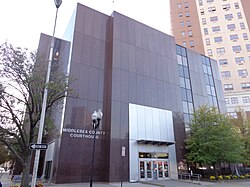
The county is governed by a Board of County Commissioners. As of 2025, Director Ronald G. Rios leads the administration. The county's legal and administrative functions are centered at the Middlesex County Courthouse in New Brunswick.
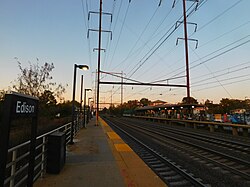
Transportation is managed through a combination of state highways and public transit, with the Edison station serving as a critical stop on New Jersey Transit's Northeast Corridor Line.
Parks and Recreation
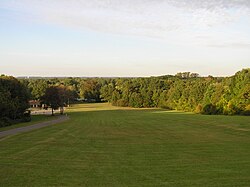
To balance its urban development, the county maintains numerous green spaces. Thompson Park in Monroe Township is one of the most prominent recreational areas, offering residents a reprieve from the suburban bustle.
Frequently Asked Questions
What is the largest municipality in Middlesex County?
In terms of population, Edison is the largest municipality. In terms of land area, Monroe Township is the largest.
Which university has the biggest impact on the county's economy?
Rutgers University is the largest non-governmental employer in the county, with over 9,000 employees.
How has the population of Middlesex County changed recently?
The population has grown steadily, from 809,858 in 2010 to 863,162 in 2020, with estimates reaching 883,335 by 2025.
What is the significance of the Governor Alfred E. Driscoll Bridge?
It is the world's widest motor vehicle bridge and one of the busiest, connecting Woodbridge Township and Sayreville across the Raritan River.
What are the primary racial demographics of the county as of 2020?
As of the 2020 census, the population is approximately 38.6% Non-Hispanic White, 26.4% Asian, 22.4% Hispanic or Latino, and 9.1% Black or African American.