Methane: Properties, Sources, and Environmental Impact
Methane, also known as carbon tetrahydride or marsh gas, is the simplest alkane and the primary component of natural gas. A colorless and odorless gas under standard conditions, methane plays a critical role in both the industrial economy and the Earth's climate system. From its use as a high-energy fuel to its significant impact as a potent greenhouse gas, methane is a molecule of immense scientific and environmental importance.
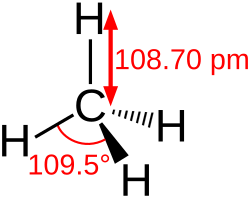
At its most basic level, methane consists of one carbon atom bonded to four hydrogen atoms. This simple structure results in a tetrahedral molecular shape, making it a non-polar molecule with no dipole moment.
Key Facts
- Chemical Formula: CH4
- Molar Mass: 16.043 g·mol
- Appearance: Colorless, odorless gas
- Global Warming Potential (GWP): 82.5 ± 25.8 over a 20-year period; 29.8 ± 11 over a 100-year period.
- Primary Use: Fuel, chemical feedstock, and rocket propellant.
- Boiling Point: −161.49 °C
Chemical Properties and Structure
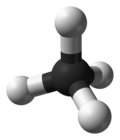
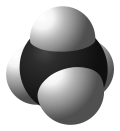
Methane is characterized by its tetrahedral geometry, where the carbon atom sits at the center and the four hydrogen atoms are positioned at the corners of a tetrahedron. This symmetry ensures that the molecule has a dipole moment of 0 D.
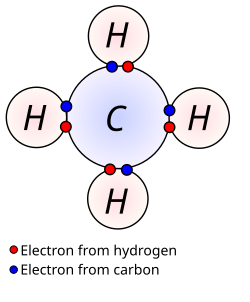
The bonding in methane is covalent, meaning the carbon and hydrogen atoms share electrons to achieve stability.
Physical Constants
Methane remains a gas until it reaches a very low boiling point of −161.49 °C. It is soluble in organic solvents such as ethanol, benzene, and acetone, but it is largely insoluble in water, with a solubility of only 22.7 mg/L.
| Property | Value |
|---|---|
| Molar Mass | 16.043 g·mol |
| Melting Point | −182.456 °C |
| Boiling Point | −161.49 °C |
| Density (gas, 25 °C, 1 atm) | 0.657 kg/m3 |
| Flash Point | −188 °C |
| Autoignition Temperature | 537 °C |
Chemical Reactions and Combustion
Methane is highly flammable and is widely used as a fuel due to its high heat of combustion (55.5 MJ/kg). The combustion process is a multi-step reaction that produces carbon dioxide and water:
CH4 + 2 O2 → CO2 + 2 H2O

Beyond combustion, methane can react with halogen radicals under specific conditions to produce methyl halides. It also serves as a vital chemical feedstock; through steam reforming, it is converted into synthesis gas (a mixture of carbon monoxide and hydrogen), which is then used to produce other chemicals and fuels.
Industrial and Technological Applications
Energy and Fuel
As the main component of natural gas, methane is used globally for heating and electricity generation. Because it is a cleaner-burning fuel than coal or oil, it is often used in compressed natural gas (CNG) vehicles to reduce tailpipe pollutants.
Aerospace Propulsion
Modern aerospace engineering has seen a shift toward methalox—a combination of liquid methane and liquid oxygen. New-generation reusable launch vehicles, such as the SpaceX Starship, prefer liquid methane as a primary propellant due to its efficiency and potential for production on other planets.

Refrigeration
Due to its extremely low boiling point, methane is also utilized as a refrigerant in specialized industrial applications.
Generation and Occurrence
Biological Routes (Methanogenesis)
Methane is produced biologically through methanogenesis, a process carried out by microorganisms (methanogens) in anaerobic (oxygen-free) environments. This occurs in several key areas:
- Wetlands: One of the largest natural sources of methane.
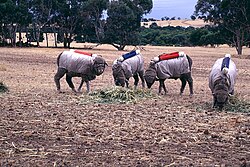
- Ruminants: Animals like sheep and cows produce methane during digestion in their rumen.
- Seafloor Sediments: Microbes in deep ocean sediments generate methane.

Geological and Abiotic Sources
Methane can also be formed through abiotic (non-biological) processes, such as the reaction of water with olivine-rich rocks. These abiotic sources have been identified in over 20 countries and various deep ocean regions.
![Abiotic sources of methane[example needed] have been found in more than 20 countries and in several deep ocean regions so far.](/images/b7/cb/b7cbd7f8fca09a0bd32a1bae2a7f346e1e93be6c4e60d1190e378533f02de9cd.jpg)
Methane Clathrates
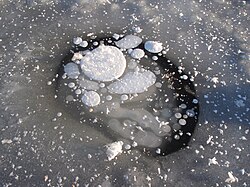
In cold, high-pressure environments, such as the Arctic seafloor or permafrost, methane can become trapped in ice-like lattices of water called clathrates (or methane hydrates).
Environmental Impact and Climate Change
Methane is a powerful greenhouse gas. While it persists in the atmosphere for a shorter time than carbon dioxide, its ability to trap heat is significantly higher. Its Global Warming Potential (GWP) is estimated at 82.5 ± 25.8 over a 20-year period, meaning a leak of one tonne of methane is equivalent to emitting 82.5 tonnes of CO2.
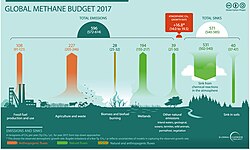
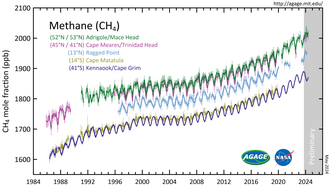
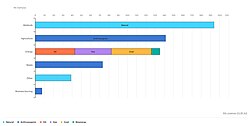
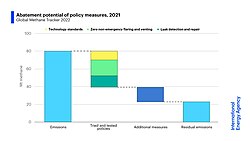
Human activities contribute significantly to methane levels. According to the IEA's 2026 Global Methane Tracker, fossil fuel production accounted for 35% of human-caused emissions, estimated at 124 Mt. Efforts to reduce these emissions include improving leak detection in oil and gas infrastructure and implementing agricultural policies to reduce ruminant emissions.
Methane Beyond Earth
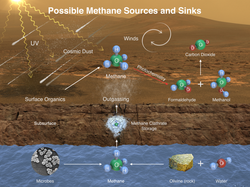
Methane is not unique to Earth. It has been detected in the atmosphere of Mars, where it shows strong seasonal variations, suggesting potential biological or geological sources.
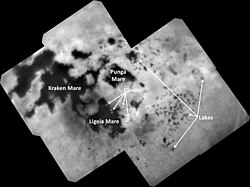
On Saturn's moon Titan, methane is so abundant that it exists as a liquid, forming lakes and rivers on the surface, mirroring the hydrological cycle of Earth but with methane instead of water.
Safety and Hazards
Methane is classified as a dangerous substance primarily due to its flammability. It can form explosive mixtures with air at concentrations between 4.4% and 17%.

Frequently Asked Questions
What is the difference between methane and natural gas?
Methane is the primary chemical component of natural gas, typically making up the vast majority of its composition, though natural gas may also contain small amounts of ethane, propane, and butane.
Why is methane considered more harmful than carbon dioxide?
While it lasts for a shorter duration in the atmosphere, methane is far more efficient at trapping infrared radiation (heat), giving it a much higher Global Warming Potential (GWP) than CO2.
How do cows and sheep produce methane?
Ruminants produce methane through a digestive process called methanogenesis, where microbes in their stomach break down cellulose in a multi-stage process involving hydrolysis, acidogenesis, acetogenesis, and finally methanogenesis.
What is methalox?
Methalox is a propellant combination consisting of liquid methane (fuel) and liquid oxygen (oxidizer), favored by modern reusable rockets for its performance and stability.
Can methane be produced sustainably?
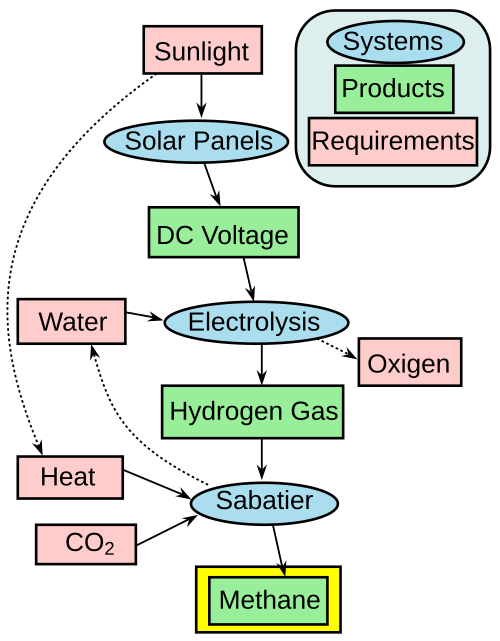
Yes, methane can be produced sustainably through processes like the Sabatier reaction, which combines carbon dioxide and hydrogen (produced via electrolysis) to create methane and water.
Historical Note: The study of gases and electricity was advanced by figures such as Alessandro Volta, whose work laid the foundation for modern electrochemical understanding.