Met Office: The United Kingdom's National Weather and Climate Service
The Met Office, officially known as the Meteorological Office until 2000, serves as the national weather and climate service for the United Kingdom. Operating as an executive agency and trading fund of the Department for Science, Innovation and Technology, it provides critical meteorological predictions across all timescales—ranging from immediate daily weather forecasts to long-term climate change projections.
Led by Chief Executive Penny Endersby, who became the first woman to hold the position in December 2018, the organization employs 2,473 staff as of March 2025. Its mission is encapsulated in its Latin motto, Per scientiam tempestates praedicere, which translates to "predicting the weather through science."
Key Facts
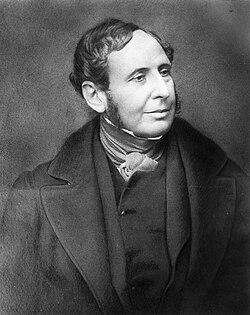
- Founded: 1 August 1854 by Vice Admiral Robert FitzRoy.
- Headquarters: Met Office Operations Centre, Exeter, Devon (since December 2003).
- Primary Role: National weather and climate service for the UK.
- Computing Power: Utilizes high-performance computing, currently leveraging Microsoft Azure with 60 petaflops.
- Specialized Services: Operates the London Volcanic Ash Advisory Centre (VAAC).
A History of Meteorological Innovation
The Met Office began as a small department within the Board of Trade, established by Vice Admiral Robert FitzRoy to assist mariners. A pivotal moment occurred in October 1859, when a violent storm caused the loss of the passenger vessel Royal Charter and 459 lives. This tragedy spurred the creation of the first gale warning service, utilizing a network of 15 coastal stations to provide visual warnings to ships.
The advent of the electric telegraph revolutionized the service, allowing for the rapid spread of warnings and the creation of an observational network for synoptic analysis (the study of weather patterns over a large area at a single moment). By 1861, the Met Office began providing forecasts to newspapers, aided by the photo-barograph invented by Francis Ronalds.
Military and Government Evolution
Following World War I, the Met Office joined the Air Ministry in 1919. This era established a strong link with aviation, leading to the placement of many observation points on RAF airfields—a legacy that persists in modern weather reports. Over the decades, the agency shifted through various government departments, eventually landing under the Department for Science, Innovation and Technology.
Infrastructure and Operations
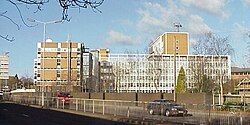
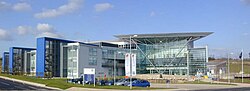
For many years, the organization was based in Bracknell, Berkshire. However, in September 2003, it relocated to a purpose-built £80 million facility at the Exeter Business Park. This state-of-the-art headquarters was officially opened in June 2004.
Weather Prediction and Warning Systems
The Met Office manages the National Severe Weather Warning Service (NSWWS), which issues warnings for events that could endanger lives or disrupt transport. In 2008, the "Advisory" stage was added to this system to improve public communication.
To provide clarity during extreme events, the Met Office partnered with Met Éireann (the Irish meteorological service) in 2015 to introduce a storm naming system. The first named storm, Abigail, was announced in November 2015. The Royal Netherlands Meteorological Institute (KNMI) joined this partnership in 2019.
Advanced Prediction Models
The agency utilizes complex Numerical Weather Prediction (NWP) models to forecast the atmosphere:
- Deterministic Forecasts: The UKV model provides high-resolution data (1.5 km over the UK) up to 120 hours, supported by a global deterministic forecast.
- Ensemble Forecasts: To account for uncertainty, the Met Office runs ensemble models. MOGREPS-UK consists of 18 members at 2.2 km resolution, while MOGREPS-G provides global data at 20 km resolution.
Specialized Aviation and Research Services
Beyond general forecasting, the Met Office operates the London Volcanic Ash Advisory Centre (VAAC). One of nine such centers worldwide, the London VAAC monitors the British Isles, Iceland, and the northeast Atlantic. Using the NAME dispersion model, it forecasts the movement of volcanic ash clouds to ensure aviation safety.
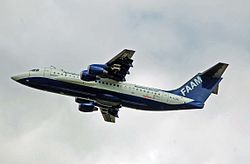
The Facility for Airborne Atmospheric Measurements (FAAM), part of the National Centre for Atmospheric Science, utilizes a modified BAe 146-300 aircraft. This platform allows researchers to conduct studies on tropospheric chemistry, cloud physics, and satellite ground-truth verification.
Supercomputing Power
The massive computational requirements of the Unified Model have led the Met Office to employ some of the world's most powerful supercomputers. The transition from early machines like the Ferranti Mercury to modern cloud-based infrastructure represents a massive leap in processing capability.
| Year | Computer | Calculations per Second | Horizontal Resolution (Global/Local) | Vertical Levels |
|---|---|---|---|---|
| 1959 | Ferranti Mercury | 3 kiloflops | N.A. / 320 km | 2 |
| 1982 | CDC Cyber 205 | 200 megaflops | 150 km / 75 km | 15 |
| 1997 | Cray T3E 900/1200 | 430 gigaflops | 60 km / 12 km | 38 |
| 2015 | Cray XC40 | 16 petaflops | 10 km / 1.5 km | 70 |
| 2025 | Microsoft Azure | 60 petaflops | 10 km / 1.5 km | 70 |
Frequently Asked Questions
Who leads the Met Office?
The Met Office is led by Chief Executive Penny Endersby, who took office in December 2018 and is the first woman to lead the agency.
How does the storm naming system work?
Introduced in 2015, the system is a collaborative effort between the Met Office, Met Éireann, and the KNMI to provide a single, authoritative name for storms affecting the UK, Ireland, and the Netherlands.
What is the role of the London Volcanic Ash Advisory Centre?
The London VAAC provides forecasts of volcanic ash clouds for the aviation industry, covering the British Isles, Iceland, and the northeast Atlantic to prevent aircraft from flying into hazardous ash.
Does the BBC still use Met Office forecasts?
While the BBC moved to MeteoGroup in 2015 for most output, it continued to use Met Office data for severe weather warnings and the Shipping Forecast. In July 2025, the BBC announced a renewed partnership with the Met Office.
What is the FAAM?
The Facility for Airborne Atmospheric Measurements (FAAM) uses a modified BAe 146 aircraft to conduct atmospheric research, including studies on cloud physics and tropospheric chemistry.