Mestizo Identity: History, Genetics, and Global Distribution
The term Mestizo (feminine: Mestiza) refers to individuals of mixed ancestry, most commonly the union of European (primarily Spanish) and Indigenous American heritage. While the term is most closely associated with Latin America, the legacy of mestizaje—the process of racial mixing—extends to the United States, Spain, and the Philippines.
From the early days of Spanish colonization to modern genomic studies, the identity of the Mestizo has evolved from a rigid colonial category into a broad cultural and ethnic marker for millions of people across the globe.
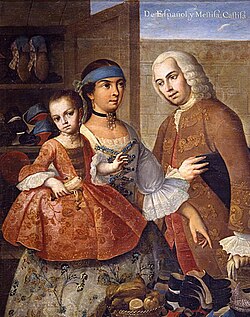
Key Facts
- Origin: Emerged during the Spanish colonization of the Americas as a label for people of mixed Spanish and Indigenous descent.
- Global Presence: Significant populations exist in Latin America, the Philippines, the United States, and Spain.
- Colonial Hierarchy: Historically categorized within the casta system, a complex racial hierarchy used by the Spanish Empire.
- Genetic Diversity: Admixture varies wildly by region, with some populations showing higher European influence and others higher Indigenous or African ancestry.
- Cultural Impact: In the Philippines, Mestizos were central to the ilustrados (educated class) and the development of Filipino nationalism.
The Colonial Casta System

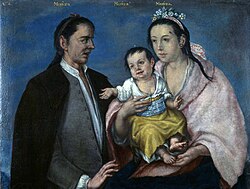
During the colonial era, the Spanish Empire implemented a detailed social hierarchy to categorize individuals based on their racial purity and ancestry. This system was often documented in casta paintings, which served as visual records of these racial combinations.
Primary Colonial Divisions
- Peninsular: Spanish descendants born in Spain who settled in the Americas.
- Criollo: Spanish descendants born in the Americas.
- Mestizo: Individuals of mixed Spanish and American Indian ancestry.
- Indio: Individuals of pure American Indian ancestry.
- Mulato: Individuals of mixed Spanish and African ancestry.
- Zambo: Individuals of mixed African and American Indian ancestry.
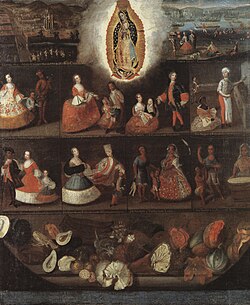
The Complexity of Racial Labeling
The casta system became increasingly granular over time. For example, the union of a Spaniard and a Mestiza produced a Castiza; a Castizo and a Spaniard produced an Española. Other specific labels included Morisca, Albino, and Loba, reflecting the empire's obsession with tracking racial lineage.
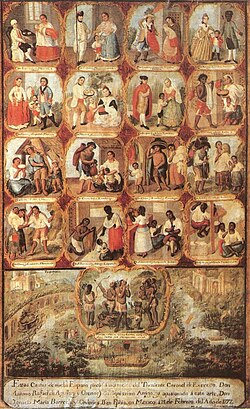
Historical Development and Policies
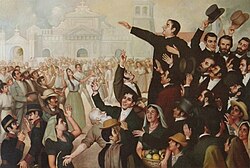
The Spanish crown encouraged mestizaje as early as 1503, with Governor Nicolás de Ovando receiving orders to increase intermarriage. By 1514, these policies were reiterated via a real cédula (royal decree).
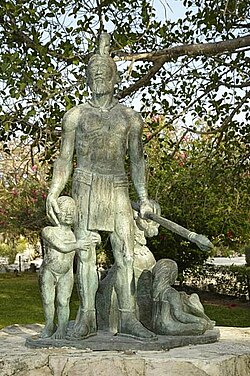
Early social dynamics were often determined by paternal recognition. Children recognized by their Spanish fathers were typically raised in the Hispanic world, while those who were not remained within their mother's Indigenous community. In 1533, Emperor Charles V mandated that the Audiencia (high court) remove children of Spanish men and Indigenous women from their mothers to ensure they were educated in the Spanish sphere.
Genetic Admixture in the Americas
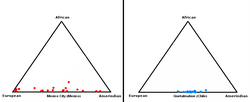
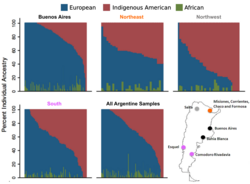
Modern science reveals that the "Mestizo" label covers a vast spectrum of genetic backgrounds. Admixture—the genetic mixing of previously isolated populations—varies significantly by country and region.
| Country | % Identified as Mixed | European Ancestry | Amerindian Ancestry | Sub-Saharan African Ancestry |
|---|---|---|---|---|
| Honduras | 90% | 40% | 38% | 22% |
| El Salvador | 86.3% | 15% | 75% | 10% |
| Ecuador | 85.2% | 42% | 52% | 6% |
| Bolivia | 68% | 20% | 78% | 2% |
| Mexico | 40%–90% | 45% | 50% | 5% |
| Brazil | 45.3% | 71% | 10% | 19% |
| Argentina | 11.4% | 78% | 20% | 2% |
Regional Variations in Mexico
In Mexico, genetic studies show a clear geographic trend. Indigenous American ancestry is more predominant in the southern regions, while European ancestry is higher in the north and west. A 2012 study found that the average paternal (Y-chromosome) ancestry of Mexican mestizos was 64.9% European, 30.8% Indigenous American, and 4.2% African.
Mestizaje Across Different Nations
Central America
In El Salvador, the term Pardo was historically used for those of tri-racial descent (Indigenous, European, and African). Due to a lack of a Caribbean coast and specific racial laws under President Maximiliano Hernández Martínez, the African population remained small. Most Pardos eventually merged into the general Mestizo population.
South America
- Chile: Once a Mestizo majority, continuous European migration in the 19th and 20th centuries shifted the population toward a castizo (predominantly European) majority.
- Colombia: Estimates vary because the census does not always provide "Mestizo" as an option, but genetic studies suggest an average admixture of roughly 50.8% European, 40.7% Indigenous, and 8.5% African.
- Peru: The 2017 census indicated that Mestizos make up approximately 60.2% of the population aged 12 and older.
The Philippines
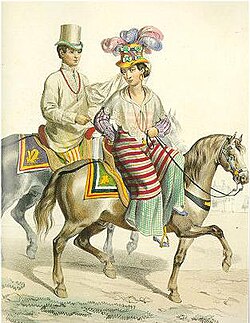
In the Spanish East Indies, mestizos de español and mestizos de sangley (Chinese mestizos) often belonged to wealthy, educated families known as ilustrados. These groups were pivotal in the Propaganda Movement (1880–1895) and the subsequent rise of Filipino nationalism.
Modern Cultural Identity
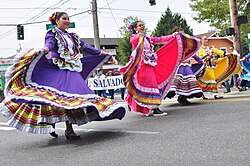
Today, Mestizo identity is often celebrated as a symbol of national unity and cultural synthesis. In Mexico, this was promoted post-revolution as a way to forge a cohesive national identity.
Frequently Asked Questions
What is the difference between a Mestizo and a Castizo?
A Mestizo is a person of mixed Spanish and Indigenous American ancestry. A Castizo is the offspring of a Mestizo and a Spaniard, meaning they have a higher proportion of European ancestry.
How did the casta paintings function in colonial society?
Casta paintings were visual taxonomies used to illustrate the various racial combinations possible in the colonies, reinforcing the social hierarchy and the perceived status of different mixed-race groups.
Is the term Mestizo used outside of Latin America?
Yes, it was historically used in the Philippines to describe people of mixed Spanish or Chinese descent, and it is used in the United States to describe individuals of mixed Hispanic/Indigenous heritage.
How does genetic ancestry differ from self-identification as Mestizo?
Self-identification is often based on culture, language, and social perception, whereas genetic admixture provides a biological percentage of ancestry from different continental populations, which may not always align with how a person identifies.