Meskheti: A Historical Journey Through Samtskhe-Javakheti
The region of Meskheti holds a storied place in the annals of Caucasian history. As the ancestral home of the Meskhetians, the first known inhabitants of the modern Samtskhe-Javakheti region, this land has served as a crossroads of empires, kingdoms, and shifting political boundaries for millennia.
Ancient Origins and Early Kingdoms
The early history of Meskheti is defined by its integration into powerful ancient states. From the 2nd millennium BC until the 4th century BC, the region was part of the Kingdom of Diauehi. Following this period, Meskheti transitioned into the Kingdom of Iberia, where it remained until the 6th century.
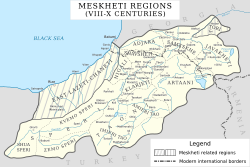
The Medieval Era and the Path to Independence
Between the 10th and 15th centuries, Meskheti was integrated into the united Georgian Kingdom, marking a period of cultural and political cohesion. By the 16th century, the region emerged as the independent Principality of Samtskhe. However, this autonomy was short-lived, as the region was eventually occupied and annexed by the Ottoman Empire.
Modern Transitions: From Empire to Republic
The 19th and 20th centuries brought rapid administrative changes. From 1829 to 1917, the region was administered as part of the Tiflis Governorate. Following the collapse of the imperial system, it briefly became part of the Democratic Republic of Georgia between 1918 and 1921.
The subsequent era was defined by the Soviet Union, with the region forming part of the Georgian SSR from 1921 until 1990. Today, Meskheti exists as a vital component of the Samtskhe-Javakheti region, alongside the areas of Javakheti and Tori.
Key Facts
- First Inhabitants: The ancient tribe of Meskhetians.
- Early Affiliations: Kingdom of Diauehi (2nd millennium BC – 4th century BC) and Kingdom of Iberia (until the 6th century).
- Medieval Status: Part of the united Georgian Kingdom (10th–15th centuries).
- Independence: Existed as the Principality of Samtskhe in the 16th century.
- Modern Composition: Now part of the Samtskhe-Javakheti region, together with Tori and Javakheti.
| Period | Political Affiliation / Status |
|---|---|
| 2nd Millennium BC – 4th Century BC | Kingdom of Diauehi |
| 4th Century BC – 6th Century | Kingdom of Iberia |
| 10th – 15th Centuries | United Georgian Kingdom |
| 16th Century | Principality of Samtskhe (Independent) |
| Post-16th Century | Ottoman Empire (Annexation) |
| 1829 – 1917 | Tiflis Governorate |
| 1918 – 1921 | Democratic Republic of Georgia |
| 1921 – 1990 | Soviet Union (Georgian SSR) |
Frequently Asked Questions
Who were the first known inhabitants of the region?
The first known inhabitants of the modern Samtskhe-Javakheti region were the ancient tribe of Meskhetians.
Which ancient kingdoms controlled Meskheti before the 6th century?
Meskheti was first part of the Kingdom of Diauehi (from the 2nd millennium BC to the 4th century BC) and later the Kingdom of Iberia until the 6th century.
When was Meskheti an independent entity?
In the 16th century, the region existed as the independent Principality of Samtskhe before its annexation by the Ottoman Empire.
What was the administrative status of the region during the Soviet era?
Between 1921 and 1990, the region was part of the Soviet Union as part of the Georgian SSR.
What areas currently make up the Samtskhe-Javakheti region?
The modern Samtskhe-Javakheti region consists of Meskheti, Javakheti, and Tori.