Merlo History: From Colonial Outpost to Urban Hub
The story of Merlo is a narrative of transformation, evolving from a wild frontier inhabited by hunter-gatherers into a vital part of the Greater Buenos Aires metropolitan area. Its journey is marked by the influence of powerful landowners, the arrival of the railway, and waves of international immigration that shaped its cultural and social fabric.
The Early Colonial Era and Villa San Antonio del Camino
In the early 17th century, the region now known as the Merlo partido was part of the Pago of Las Conchas (a country district). The area was defined by the Reconquista River, then called the Río de las Conchas (River of Shells). This land was originally inhabited by the taluhet people of the het nation, a hunter-gatherer society commonly referred to by the exonym querandi.
By 1636, Governor Pedro Esteban Dávila began dividing the territory into haciendas (large landed estates) granted to influential residents of Buenos Aires. These estates focused on cattle-raising and agriculture, utilizing the fertile soil for orchards and wheat. The largest of these grants went to the Company of Jesus, providing the Jesuits with the funds necessary to maintain their schools in Buenos Aires.
Mid-18th century accounts from Jesuit priests Thomas Falkner and Florian Paucke describe a wild landscape where feral cattle and horses roamed the plains, pursued by packs of wild dogs that posed a threat to travelers.
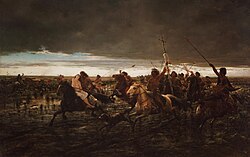
During the 18th century, the region faced instability due to malones—unexpected horse-mounted raids conducted by Araucanian people moving from the Andes to the Pampas to loot cattle and horses.
Seeking security, settlers gathered around the fortified ranch-house of Spanish businessman Francisco de Merlo. This small hamlet grew until Merlo obtained authorization from King Philip V of Spain to officially found a town. On October 28, 1755, Villa San Antonio del Camino was established.
The Influence of Juan Dillon
Following the death of Francisco de Merlo, the town entered a period of isolation. The land eventually passed to the Mercedarian Order, was expropriated by the State of Buenos Aires in 1821, and was later purchased in 1852 by English businessman Thomas Gibson Pearson. The estate was subsequently managed by Pearson's stepson, Juan Dillon.
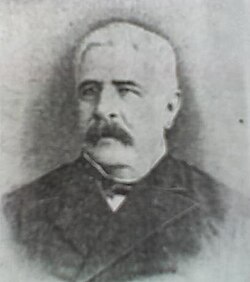
Born in Buenos Aires in 1819 to an Irish immigrant father and a local mother, Juan Dillon was a prominent businessman and public official. His father, John Dillon, had been a pioneer in the River Plate region, establishing the country's first brewery and supporting the war for independence with his fleet of boats.
Juan Dillon served in various capacities, including Justice of Peace and Mayor of Morón. Later, he took charge of the family estate in Merlo, where he worked to rebuild the town. His influence extended to the national level when President Avellaneda appointed him Chief Commissioner of Immigration in 1875, a role in which he welcomed the first waves of Welsh, Volga German, and Friulian Italian immigrants.
1864: Autonomy and the Railway Boom
The trajectory of Merlo changed forever with the arrival of the steam locomotive. In 1857, the Camino de Hierro de Buenos Aires al Oeste opened Argentina's first public railway. Recognizing the potential for land speculation, Juan Dillon commissioned architect Pedro Benoit in 1859 to redesign the town using a rectangular grid of streets and blocks.
The town was modernized with a municipal palace, a train station (opened August 11, 1859), a school, and a church. This development led Dillon and other prominent neighbors to petition for the creation of a separate district.
On October 11, 1864, the legislature of Buenos Aires passed Law 422, officially creating the Partido of Merlo. Initially covering approximately 400 km², the district included what is now the Partido of Marcos Paz until 1878.
The late 19th century saw a population surge. Cholera and yellow fever outbreaks in Buenos Aires (1867 and 1871) drove residents to the countryside, bringing skilled Spanish, Basque, Italian, and French immigrants to Merlo. Additionally, a British community of white-collar railway workers settled in the area.
Urbanization and the Modern Era
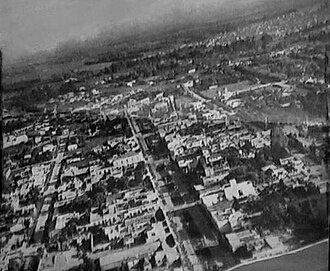
Until the late 1940s, Merlo remained a rural retreat. It was a popular destination for Buenos Aires residents seeking weekend getaways in cottages, picnicking by the river, or visiting the Ituzaingó Golf Club and local gliding clubs. The landscape was characterized by scattered farms and estancias.
Between 1947 and 1960, the district underwent a massive transformation. An influx of immigrants from other Argentine provinces caused the population to quintuple, leading to rapid urbanization. This shift integrated Merlo into Greater Buenos Aires and coincided with the rise of Peronism, establishing the district as a political stronghold for the movement.
Key Facts
- Founded: October 28, 1755, as Villa San Antonio del Camino.
- Key Figure: Juan Dillon, who redesigned the town and served as its first Justice of Peace.
- Autonomy: Established as the Partido of Merlo on October 11, 1864, via Law 422.
- Infrastructure: The railway station opened on August 11, 1859, sparking rapid growth.
- Demographics: Population quintupled between 1947 and 1960 due to internal migration.
| Period | Key Development | Primary Influence |
|---|---|---|
| Early 17th Century | Pago of Las Conchas | Taluhet/Querandi people |
| 1755 | Foundation of Villa San Antonio del Camino | Francisco de Merlo |
| 1859-1864 | Railway arrival and autonomy | Juan Dillon & Pedro Benoit |
| Late 19th Century | Immigration surge | European settlers & railway workers |
| 1947-1960 | Rapid urbanization | Internal migration & Peronism |
Frequently Asked Questions
Who was the founder of the original town in Merlo?
The town of Villa San Antonio del Camino was founded on October 28, 1755, by Francisco de Merlo, a Spanish businessman who established a large estancia in the region.
How did the railway affect the development of Merlo?
The railway brought land speculation and economic growth. It led to the redesign of the town into a grid system and the creation of several "railway towns" such as San Antonio de Padua, Mariano Acosta, and Libertad.
What role did Juan Dillon play in Merlo's history?
Juan Dillon was a pivotal figure who rebuilt the town, commissioned its urban layout, and served as the Juez de Paz (Justice of Peace) when the Partido of Merlo was created in 1864.
Why did many European immigrants move to Merlo in the late 1800s?
Many immigrants, including Spaniards, Italians, and French, moved to Merlo to escape cholera and yellow fever epidemics that hit Buenos Aires in 1867 and 1871, bringing a highly qualified workforce to the district.
When did Merlo become part of Greater Buenos Aires?
Merlo was incorporated into Greater Buenos Aires in the second half of the 20th century, specifically between 1947 and 1960, following a period of rapid urbanization and population growth.