Merchants Square: A Pioneer of Planned Shopping Districts
Located in the heart of Williamsburg, Merchants Square stands as a testament to early 20th-century urban planning. Conceived in 1927, it is recognized as one of the first, if not the very first, planned shopping districts in the United States. The project was designed to consolidate small shops from across the city into a single, centrally located hub that complemented the surrounding historical environment.
The Visionaries Behind the Design
The creation of Merchants Square was a collaborative effort led by John D. Rockefeller Jr. and Reverend W. A. R. Goodwin. Their goal was to create a commercial space that existed in harmony with the character of the broader Williamsburg Restoration. To achieve this aesthetic cohesion, they enlisted William G. Perry, the chief architect of the Williamsburg Restoration, to design the district.
Architectural Integration and Location
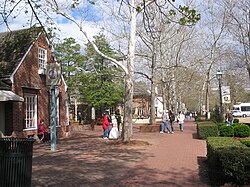
The district is primarily situated on Duke of Gloucester Street (DoG St.), positioned directly across from the campus of The College of William & Mary. Because the area is integrated into a historic restoration zone, significant effort was made to ensure that modern necessities did not detract from the colonial atmosphere.
To maintain historical accuracy, the developers implemented several discreet infrastructure solutions:
- Underground Utilities: All telephone wires were placed beneath the ground to avoid visual clutter.
- Visual Screening: Modern equipment, including air-conditioning ducts and garage machinery, was concealed using strategic shrubs and plantings.
Key Facts
- Established: Conceived in 1927.
- Key Figures: Founded by John D. Rockefeller Jr. and Reverend W. A. R. Goodwin.
- Lead Architect: Designed by William G. Perry.
- Primary Location: Duke of Gloucester Street, opposite The College of William & Mary.
- Significance: One of the first planned shopping districts in the U.S.
| Category | Details |
|---|---|
| Year Conceived | 1927 |
| Architectural Style | Harmonious with Williamsburg Restoration |
| Primary Street | Duke of Gloucester Street |
| Key Innovators | Rockefeller Jr. & Rev. Goodwin |
Frequently Asked Questions
When was Merchants Square conceived?
Merchants Square was conceived in 1927.
Who were the primary founders of the district?
The district was the vision of John D. Rockefeller Jr. and Reverend W. A. R. Goodwin.
Who designed the architecture of Merchants Square?
William G. Perry, who served as the chief architect of the Williamsburg Restoration, designed the shopping district.
Where is Merchants Square located?
Most of the shops are located on Duke of Gloucester Street, directly across from the campus of The College of William & Mary.
How is historical accuracy maintained in the district?
Historical accuracy is preserved by placing telephone wires underground and using shrubs and plantings to hide modern air-conditioning ducts and garage equipment.