Mer OS: The Evolution of an Open Source Mobile Core
The landscape of mobile operating systems is often dominated by a few giants, but beneath the surface, a complex history of community-driven innovation has shaped how we think about open-source mobile platforms. One of the most pivotal, yet often overlooked, projects in this journey is Mer. Originally conceived as a free alternative for early Nokia hardware, Mer evolved into a critical core that powered several subsequent mobile initiatives.
The Origins of Mer
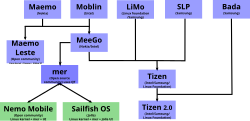
Mer began with a clear mission: to provide a completely free alternative to the Maemo operating system. Maemo was the software powering Nokia Internet Tablets, specifically the N800 and N810 devices (collectively referred to as the N8x0 series). Initially based on Ubuntu 9.04, the project's goals shifted with the release of Maemo 5/Fremantle, as developers sought to port as much of the Fremantle environment as possible to the N8x0 hardware.
However, as the industry shifted, so did the project. Development of Mer was suspended at release 0.17 when the community's focus pivoted toward building MeeGo—a more widely supported project—for the N800 and N810 devices.
The Collapse of MeeGo and the Rise of Tizen
The stability of the mobile ecosystem was shaken in February 2011 when Nokia changed its corporate strategy. This shift led to a decline in the governance of MeeGo, which many developers felt was being managed behind closed doors. Concerns grew that MeeGo relied too heavily on large corporations that could withdraw support at any moment.
These fears were realized when Intel, Samsung, and the Linux Foundation announced the creation of Tizen. Tizen initially pivoted away from Qt (a cross-platform application framework) in favor of HTML5 and the Enlightenment Foundation Libraries (EFL) for native applications. It wasn't until May 14, 2014, that Tizen:Common announced the reintegration of Qt.
The Revival: MeeGo Reconstructed
In response to the Tizen announcement, a group of developers revived the Mer project. This new iteration was presented as a meritocracy—a system where progress is based on ability and contribution—developed and governed entirely in the open. Unlike its predecessors, this version of Mer aimed to provide only the core system components without a default User Interface (UI).
By providing the necessary APIs for third-party development, Mer supported Qt, EFL, and HTML5. This flexible core quickly attracted open-source developers and became the foundation for several new projects:
- Nemo Mobile: A reference handset UX rebased on Mer.
- Cordia: A tablet UX that reimplemented the Maemo 5 Hildon interface.
- Plasma Active: Another tablet-focused UX built atop the Mer core.
The ultimate ambition of the community was for Mer to become "MeeGo 2.0," fulfilling the original promises of the MeeGo project once it complied with all Linux Foundation requirements.
The Final Transition to Sailfish OS
The journey of Mer as a standalone brand concluded in early 2019. To streamline operations and unify the ecosystem, it was announced that Mer and Sailfish OS would merge under the single Sailfish OS brand, effectively discontinuing the use of the Mer name.
Key Facts
- Original Base: Ubuntu 9.04.
- Target Hardware: Nokia N800 and N810 (N8x0 devices).
- Core Philosophy: Open governance and meritocracy.
- Supported Frameworks: Qt, EFL, and HTML5.
- Successor Projects: Nemo Mobile, Cordia, and Plasma Active.
- Final Outcome: Unified into Sailfish OS in 2019.
| Project | Primary Focus | Key Technology/UI | Relationship to Mer |
|---|---|---|---|
| Maemo | Nokia Internet Tablets | Hildon | Original inspiration/alternative |
| MeeGo | Open Mobile Platform | Qt | Preceded and influenced Mer |
| Tizen | Corporate-led OS | HTML5 / EFL | Catalyst for Mer's revival |
| Nemo Mobile | Handset UX | Mer Core | Built on top of Mer |
| Sailfish OS | Commercial/Open Core | Mer Core | Final merged entity |
Frequently Asked Questions
What was the primary goal of the original Mer project?
The original goal was to create a completely free alternative to the Maemo operating system for Nokia N800 and N810 Internet Tablets.
Why was Mer revived after the collapse of MeeGo?
Developers were dissatisfied with the closed-door governance of MeeGo and the corporate dependency that led to its instability, especially after Nokia's strategy shift and the announcement of Tizen.
Does Mer include its own user interface?
No, the revived Mer project was designed to provide only the core system and APIs, allowing other projects like Nemo Mobile and Plasma Active to build their own UIs on top of it.
Which application frameworks are supported by Mer?
Mer supports Qt, the Enlightenment Foundation Libraries (EFL), and HTML5 for third-party application development.
What happened to Mer in 2019?
In early 2019, Mer and Sailfish OS unified their operations under the Sailfish OS brand, and the Mer name was discontinued.