Mendoza Province: Argentina's Hub of Wine, Mountains, and History
Located in the west-central part of Argentina within the Cuyo region, the Province of Mendoza is a land of dramatic contrasts. From the towering peaks of the Andes to the sprawling vineyards of its valleys, Mendoza serves as a critical economic and cultural pillar for the nation. Bordering Chile to the west, San Juan to the north, and La Pampa, Neuquén, and San Luis to the south and east, it is a region defined by its rugged geography and resilient spirit.
Covering 148,827 square kilometers, Mendoza is the seventh largest province in Argentina. As of the 2022 census, it is home to over 2 million inhabitants, making it the fifth most populated region in the country.
Key Facts
- Highest Point: Aconcagua, the highest mountain in the Americas (6,959 meters).
- Economic Engine: Produces 70% of Argentina's 1.5 billion liters of wine.
- Human Development: Boasts a very high HDI of 0.848 (ranked 6th nationally).
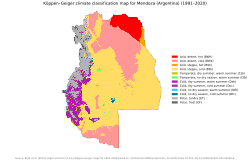
- Climate: Continental, sunny, and arid, characterized by significant temperature swings.
- Capital: The city of Mendoza.
A Journey Through History
Pre-Columbian and Colonial Eras
Human presence in Mendoza dates back to the Holocene, with sites like Agua de la Cueva and Gruta del Indio estimated to be 12,000 to 13,000 years old. By 300 BC, the Agrelo culture—ancestors of the Huarpes—settled the Atuel River basins, practicing hunting and the cultivation of maize, beans, and pumpkins. This region later came under the influence of the Inca Empire in the 15th century.
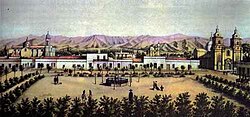
Spanish colonization began around 1550, and the city of Mendoza was officially founded by Pedro del Castillo in 1561. Initially part of the Captaincy General of Chile, the region eventually transitioned to the Viceroyalty of the Río de la Plata in 1776.
The Path to Independence and Growth
Mendoza played a pivotal role in South American liberation. In 1813, José de San Martín became the first governor of the Province of Cuyo. He utilized Mendoza as a base to organize the Army of the Andes, leading the historic 1817 crossing of the mountains to end Spanish rule in Chile.
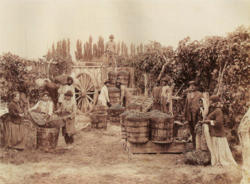
The 19th century brought both devastation and progress. A massive earthquake in 1861 nearly destroyed the capital city, necessitating a total reconstruction. However, the arrival of the railway in 1885 revolutionized the economy by connecting local wineries to the trade hub of Buenos Aires. By 1900, the booming wine industry attracted tens of thousands of European immigrants, particularly from Spain.
Modern Political Evolution
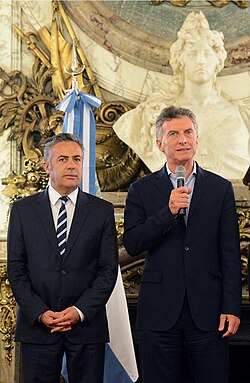
The 20th century was marked by political volatility, ranging from the conservative influence of the Democratic Party in the 1960s to the Peronist reforms of the 1970s. The province has since developed a reputation for political independence, often electing centrist Radical Civic Union (UCR) or Justicialist Party lawmakers. Notable figures include Julio Cobos, who served as Governor before becoming Vice President of Argentina.
Geography and Climate
Mendoza's landscape is a descending slope from the summit of Aconcagua down to the semi-flat eastern plains. The region is carved by several vital rivers, including the Mendoza, Tunuyán, Diamante, and Atuel, which are fed by Andean glaciers.
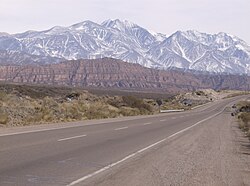
The climate is continental—meaning it is characterized by dry air and significant temperature differences between day and night. Annual precipitation is low (150–350mm), making the soil naturally arid. This environment supports xerophytes (plants adapted to dry conditions) and requires sophisticated irrigation for agriculture. A unique weather phenomenon is the Zonda wind, a warm, dry downslope wind that can cause temperatures to soar suddenly.
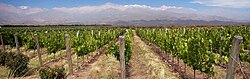
In the higher altitudes of the south, such as Malargüe, the weather is significantly colder, with frequent snow and temperatures that can drop to -23°C. Conversely, the high mountain passes provide world-class skiing in resorts like Las Leñas and Penitentes.
Economic Powerhouse
While globally famed for viticulture (the study and production of grapes), Mendoza's economy is highly diversified. It ranks as Argentina's fifth-largest economy, driven by three primary sectors:
- Agriculture: Beyond wine, the province produces apples, pears, olives, and cherries. Apiculture (beekeeping) is also a growing industry due to the dry climate.
- Mining and Energy: Mendoza holds 14% of Argentina's petroleum reserves and is a major producer of lime and uranium.
- Tourism: The province attracts roughly 700,000 visitors annually. Enotourism (wine tourism) is a major draw, with visitors flocking to the Fiesta de la Vendimia (grape harvest festival) and various winery tours.
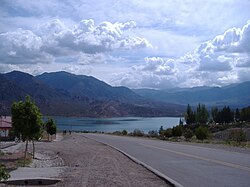
The Potrerillos Reservoir in Luján de Cuyo stands as a testament to the region's water management and scenic beauty.
Provincial Overview
| Category | Detail |
|---|---|
| Total Area | 148,827 km² |
| Population (2022) | 2,014,533 |
| GDP (2019) | 571 billion pesos (US$12.2 billion) |
| Administrative Divisions | 18 Departments / 205 Districts |
| Highest Peak | Aconcagua (6,959m) |
Frequently Asked Questions
What is the significance of Aconcagua in Mendoza?
Aconcagua is the highest mountain in both the Americas and the Southern Hemisphere, reaching an elevation of 6,959 meters. It is a primary attraction for mountaineers and a defining feature of the province's geography.
Why is Mendoza so famous for wine?
Mendoza produces 70% of Argentina's total wine output. The combination of sunny, dry continental weather, glacial water from the Andes, and fertile river basins creates ideal conditions for high-quality viticulture.
What is the Zonda wind?
The Zonda is a warm, dry wind that blows downslope from the Andes. It can cause rapid increases in temperature and is a characteristic weather event of the Cuyo region.
How is the province administratively organized?
Mendoza is divided into 18 departments, each led by a mayor (intendente) and a deliberative body. These departments manage local services in accordance with the provincial constitution.
What are the main tourist attractions besides wineries?
Key attractions include the Las Leñas ski center, the Atuel Canyon, Puente del Inca, and the Christ the Redeemer of the Andes statue located on the border with Chile.